EUR/USD Trading Strategy Explained: Rules, Timing, and Risk
Discover how to build a systematic EURUSD trading strategy using session timing, technical filters, and risk controls. Read the full guide.
By Trader Faculty Team
Direct Answer
A EURUSD trading strategy is a rule-based framework for trading the euro against the U.S. dollar. It combines session timing, with a focus on the busy London and New York overlap, with trend indicators and strict position sizing to help manage volatility.
A EUR/USD trading strategy is a structured set of rules that defines entry, exit, and risk parameters for trading the euro against the U.S. dollar.
Trading the foreign exchange (forex) market without a defined system often leads to inconsistent results, because volatility can shift sharply between European and American trading hours. A rule-based framework helps reduce emotional decision-making by setting clear conditions for session timing, technical confirmation, and news exposure.
This guide explains how to build a systematic EUR/USD strategy, find the busiest trading windows, and manage key execution risks. If you've searched for "what is eurusd trading strategy" or "eurusd trading strategy meaning," you'll find both answers below. This is an educational guide, not a recommendation to trade.
Quick Takeaways
- The EUR/USD currency pair tends to offer high liquidity and narrow spreads (the gap between the buy and sell price), which suits rule-based execution during the London and New York session overlap.
- Systematic strategies combine technical trend filters (such as moving averages) with breakout-and-retest rules to look for directional moves, though no filter is reliable on its own.
- Execution risk management means planning for spread widening and slippage (getting a different price than you expected) around central bank interest rate announcements and major news releases.
- Position sizing works best when you calculate it from a fixed account risk percentage instead of a static lot size.
What Is a EUR/USD Trading Strategy?

A EUR/USD trading strategy is a systematic approach to trading price moves between the euro and the U.S. dollar. Many traders type it as "eurusd trading strategy" when they search, and it means the same thing.
The U.S. dollar was on one side of 88% of all FX trades in April 2022, and the euro was on about 30.5%, according to the BIS Triennial Survey. That heavy activity is one reason the pair usually has deep liquidity and tight bid-ask spreads (the gap between the buy and sell price) in normal conditions.
A rules-based framework helps remove subjective bias by establishing predefined criteria for three core elements:
- Market State Identification: Determining whether price is trending or consolidating.
- Execution Rules: Defining exact technical triggers for opening and closing positions.
- Risk Boundaries: Calculating position size, stop-loss distance, and profit targets relative to current volatility.
Unlike discretionary trading, where decisions rely on real-time intuition, a systematic framework helps enforce consistency across changing session dynamics.
Core Components of a Systematic Strategy
Building a reliable strategy takes two things: a good execution window and clear technical filters.
Session Timing and Volatility Windows
Foreign exchange markets operate 24 hours a day on weekdays, but trading activity isn't spread evenly. The EUR/USD pair often sees its highest volume and narrowest spreads during session overlaps. The times below are approximate, and they shift with daylight saving time:
- London open (about 3:00–5:00 AM ET): Large banks and funds start trading, and price often breaks out of the quieter Asian session range.
- London/New York overlap (about 8:00 AM–12:00 PM ET): The busiest window, when major U.S. and euro area economic data often lands while both London and New York traders are active.
Trading outside these busier windows can mean choppier, range-bound price action and wider bid-ask spreads.
Trend Identification and Technical Filters
To avoid trading against the dominant trend, many systematic models use trend filters. A common approach uses two exponential moving averages (EMAs, which are averages of recent prices that give more weight to the latest bars):
- 20-period EMA: Tracks short-term momentum.
- 50-period EMA: Identifies intermediate trend direction.
When the 20 EMA sits above the 50 EMA and both slope upward, the model only looks for long setups. When the 20 EMA sits below the 50 EMA with a downward slope, it only looks for short setups. Treat this as an example filter, not a recommendation.
Breakout-and-Retest Execution Rules
Instead of chasing sudden price surges, a structured strategy waits for price to confirm a level before entering:
- Breakout: Price crosses above key resistance (a price area where sellers have stepped in before) or below support (where buyers have stepped in) on strong volume.
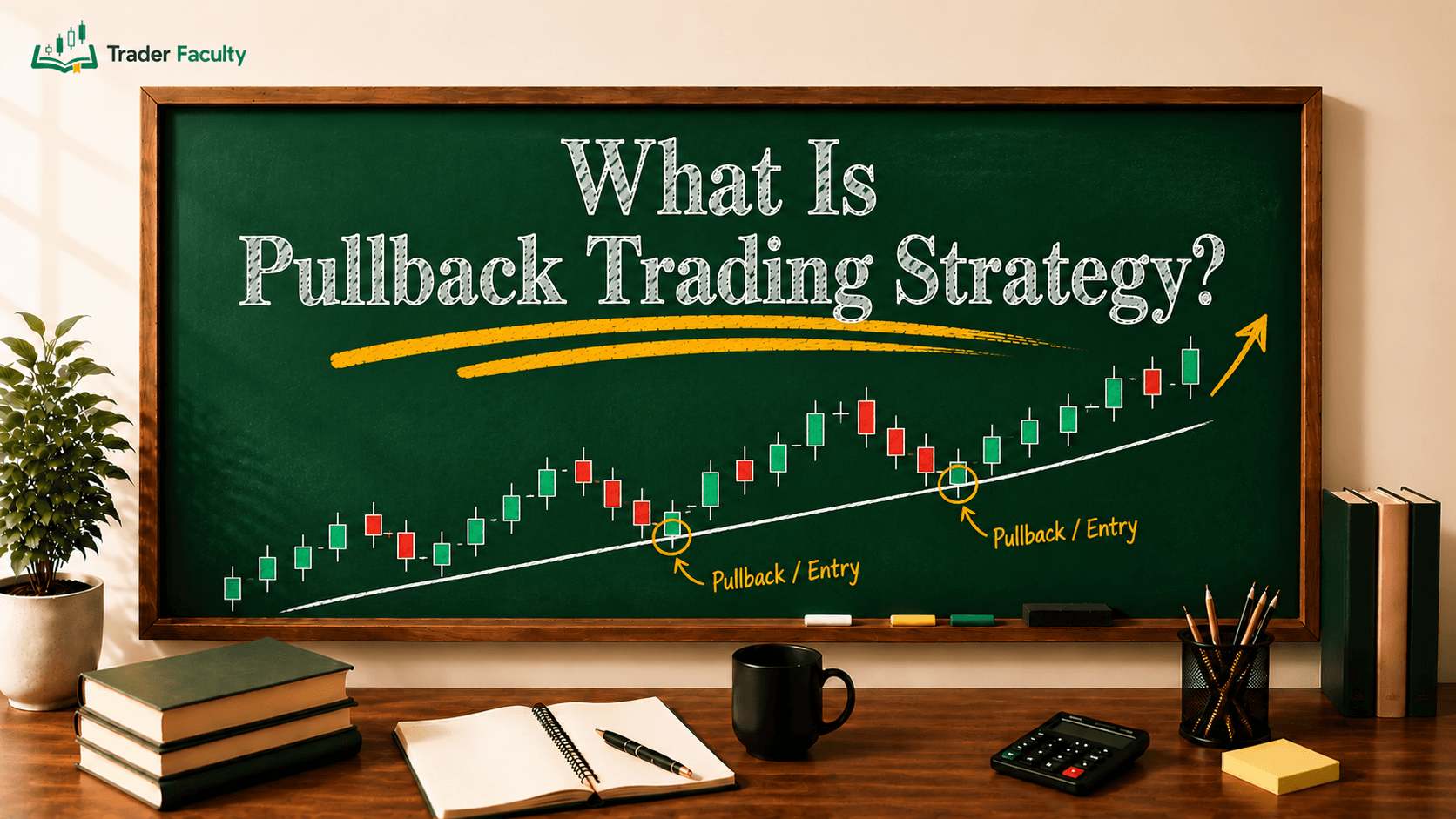
- Retest: Price pulls back to test the broken level, which may now act as support or resistance.
- Confirmation: A reversal candlestick pattern (such as a bullish pin bar, a candle with a long lower wick, or an engulfing candle) forms at the test level.
Managing Risk in EUR/USD Execution
Risk management often decides whether a trading strategy survives a long run of trades.
Position Sizing and Pip Risk
Keep your risk constant across trades, whatever the stop-loss distance is in pips (a pip is 0.0001 in most EUR/USD quotes). This standard formula gives the maximum lot size for your account:
Position Size = (Account Capital × Risk Percentage) / (Stop Loss in Pips × Pip Value)
Say you have a $10,000 account, risk 1% ($100), and use a 20-pip stop loss. One standard lot (100,000 units) moves about $10 per pip on EUR/USD:
Position Size = 100 / (20 × 10) = 0.5 Lots
Using a fixed risk percentage protects your capital when volatility calls for wider stops.
Dynamic Stop-Loss Placement
A static pip stop can't adapt when volatility shifts. The Average True Range (ATR) indicator, which measures the typical size of recent price swings, offers a dynamic alternative. One common example uses:
Stop-Loss Distance = 1.5 × 14-period ATR
Placing stops beyond key swing highs or lows, padded by ATR, may reduce the chance of being stopped out by routine market noise, though it can't remove the risk of a loss.
Execution Risk Factors: Slippage and Spread Widening
Backtests (tests of a strategy on past data) often assume perfect fills, but real execution is messier:
- Spread Expansion: Brokers can widen bid-ask spreads during the low-liquidity daily rollover window (around 5:00 PM ET) and around high-impact news.
- Slippage: Your order may fill at a different price than requested when the market moves fast. Examples include Non-Farm Payrolls (NFP, the monthly U.S. jobs report) and interest rate decisions by the Federal Reserve and the European Central Bank (ECB).
To manage execution risk, some traders avoid placing market orders for about 15 minutes before and after tier-one economic releases (the most market-moving data and central bank decisions). Slippage and spread widening belong in your risk model, too.
Common EUR/USD Strategy Mistakes
Even well-designed frameworks can underperform when traders repeat these execution errors:
- Ignoring Session Transitions: Trying breakout setups late in the U.S. session, when volume dries up, can produce more false signals.
- Over-Leveraging Low Volatility: Raising lot sizes during tight consolidation can expose your account to deep drawdowns (peak-to-trough losses) when volatility suddenly spikes.
- Neglecting Interest Rate Differentials: If you ignore the gap between Federal Reserve and ECB policy, you could end up positioned against the longer-term macro trend.
Conclusion
A successful EUR/USD trading strategy relies on clear rules that align session timing, technical confirmation, and risk limits. With the eurusd trading strategy explained above, you can focus on the busiest windows and apply trend filters, but no approach removes the risk of loss.
Trading foreign exchange always carries a risk of losing money because of volatility and leverage (borrowed exposure that magnifies gains and losses), and past performance doesn't guarantee future results. Treat these rules as educational examples for building your own tested system. To keep building your rules and risk models, explore our guide on trading strategies.
Frequently Asked Questions
What is a EURUSD trading strategy?
A EUR/USD trading strategy is a systematic set of rules for entering, managing, and exiting trades in the euro/U.S. dollar pair. It sets out market conditions, entry triggers, and position sizing, which can help reduce emotional decisions.
What is the best time of day to trade EUR/USD?
The busiest time to trade EUR/USD is usually the London and New York session overlap, roughly 8:00 AM to 12:00 PM ET. This four-hour window often brings the highest volume and tightest bid-ask spreads, but conditions vary day to day.
Is EUR/USD better for day trading or swing trading?
EUR/USD can suit both day trading and swing trading because of its high liquidity. Day traders may benefit from lower transaction costs during session overlaps, while swing traders can follow interest rate trends over days or weeks.
How do Federal Reserve and ECB decisions impact EUR/USD strategies?
Interest rate policy from the Federal Reserve and the European Central Bank (ECB) drives much of the pair's longer-term trend. Many strategies track the gap between the two rates and pause entries around policy announcements to limit slippage and surprise volatility.
How should you manage risk when trading EUR/USD?
Risk a fixed percentage of your account on each trade (such as 1% or 2%), set stops with the Average True Range (ATR), and consider pausing entries around major news releases, when spreads can widen.
Keep learning
Build Your Trading System
Turn scattered tactics into one system you can actually follow.
8 lessons quiz
Build your systemThe Trader Faculty Team writes and reviews every guide together — pairing hands-on market experience with a curriculum-first approach to trading education. One good syllabus, taught in the order that makes you better.