How to Start Trading: The Complete Guide for New Traders

Direct Answer
To start trading requires deploying financial capital into global markets to systematically exploit short-term asset price fluctuations. Successful execution relies on mastering key market mechanics, including liquidity friction, strategic order routing types, and leverage margin limits. Active risk management, such as setting mandatory stop-loss orders, remains critical to protecting your overall trading balance from severe drawdown.
When exploring how to start trading, it means learning to deploy your capital into financial markets to capture short-term price fluctuations through systematic execution. It is the process of acting as an active market participant, buying and selling financial instruments based on strict structural rules rather than long-term asset accumulation.
Most beginners blow their accounts by chasing complex charts and random tips, completely skipping market basics. You don't need a finance degree to learn how to start trading, but you must understand order routing, leverage risk, and capital protection. This guide maps out the exact foundational building blocks you need before risking real money.
Quick Takeaways
- Trading is a game of probability and execution logistics, not predictive guesswork.
- Understanding market liquidity and transaction friction protects you from hidden execution penalties.
- Risk parameters like stop loss orders and leverage settings must be locked in before any trade goes live.
- A structured learning path prevents the fatal operational mistakes that wipe out early retail accounts.
Market Liquidity and Transaction Dynamics
Market environments dictate how easily you can enter or exit a position without price disruption. When learning how to start trading, you must realize you are interacting with a network of global participants whose shifting order flow directly determines your transaction speed and overall execution costs.
Understanding Market Liquidity and Slippage
The absolute baseline of any market environment is liquidity, which measures how quickly an asset can be bought or sold at a stable price.
- High Liquidity: In deeply liquid environments, like major currency pairs or large-cap stocks, a massive volume of buyers and sellers move assets every second. This depth lets you execute large trades instantly with minimal friction.
- Low Liquidity: In thin or illiquid environments, finding a counterparty to take the other side of your trade becomes difficult. If you attempt to execute orders when market depth is shallow, you'll experience slippage, meaning your positions fill at prices far worse than intended.
The Hidden Cost of the Bid-Ask Spread
The bid-ask spread is the difference between the highest buyer price (bid) and the lowest seller price (ask). It functions like a retail markup: you buy at the higher ask and sell at the lower bid, creating an immediate transaction cost you must overcome just to break even.
While this gap remains razor-thin in liquid markets, spreads can widen drastically during high-volatility news events. Learning to navigate this structural friction without draining your account balance is a vital milestone when mastering how to start trading.
Order Types and Execution Logistics
Order routing is simply the set of instructions you send to your brokerage platform that tells it exactly how to fill your trades. Retail platforms give you a digital dashboard of buttons, but behind those buttons lie distinct architectural pipelines. Selecting the wrong order type can result in catastrophic execution errors.
Entry Orders: Market vs. Limit
When you want to open a position, you have two primary options:
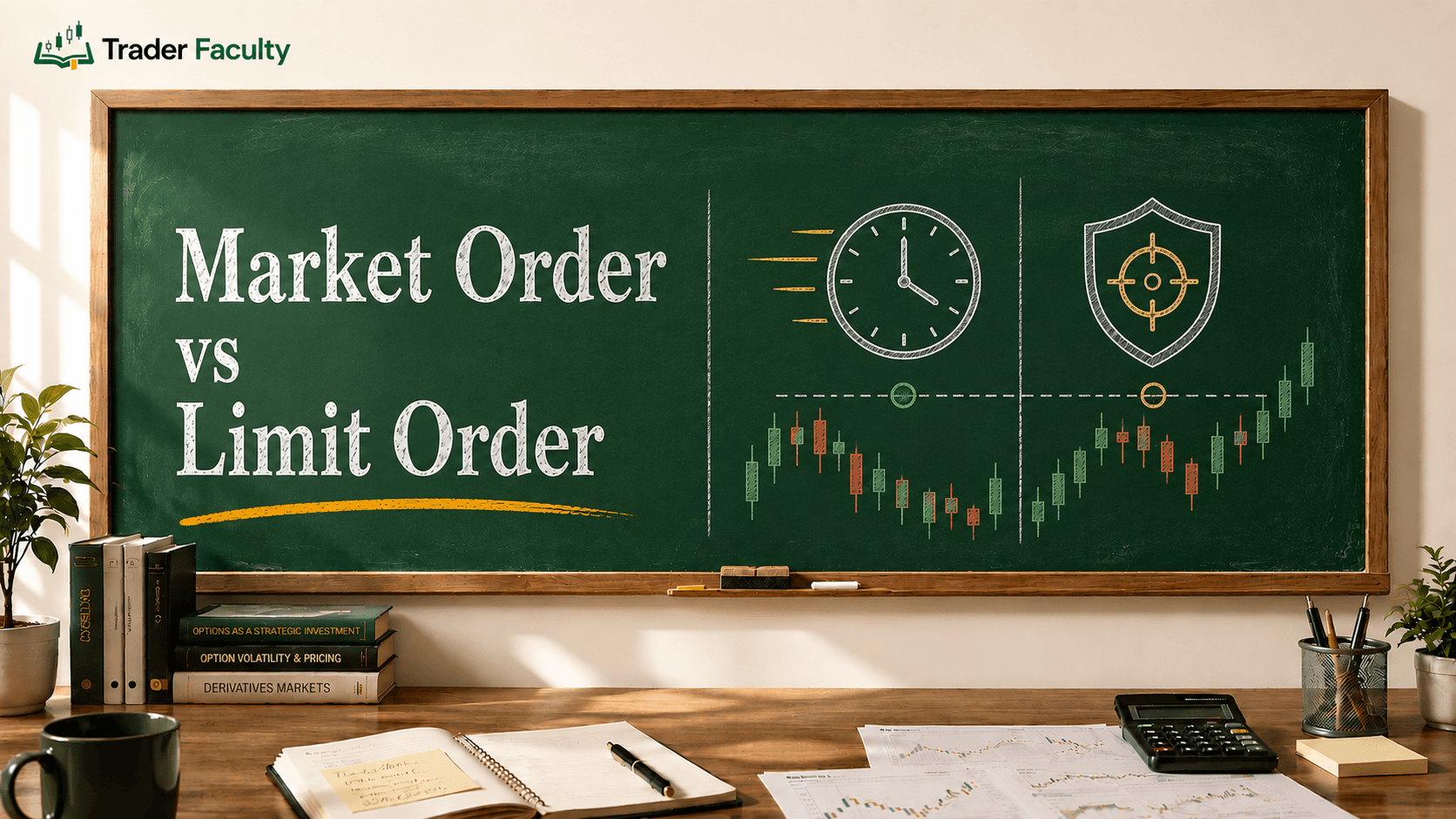
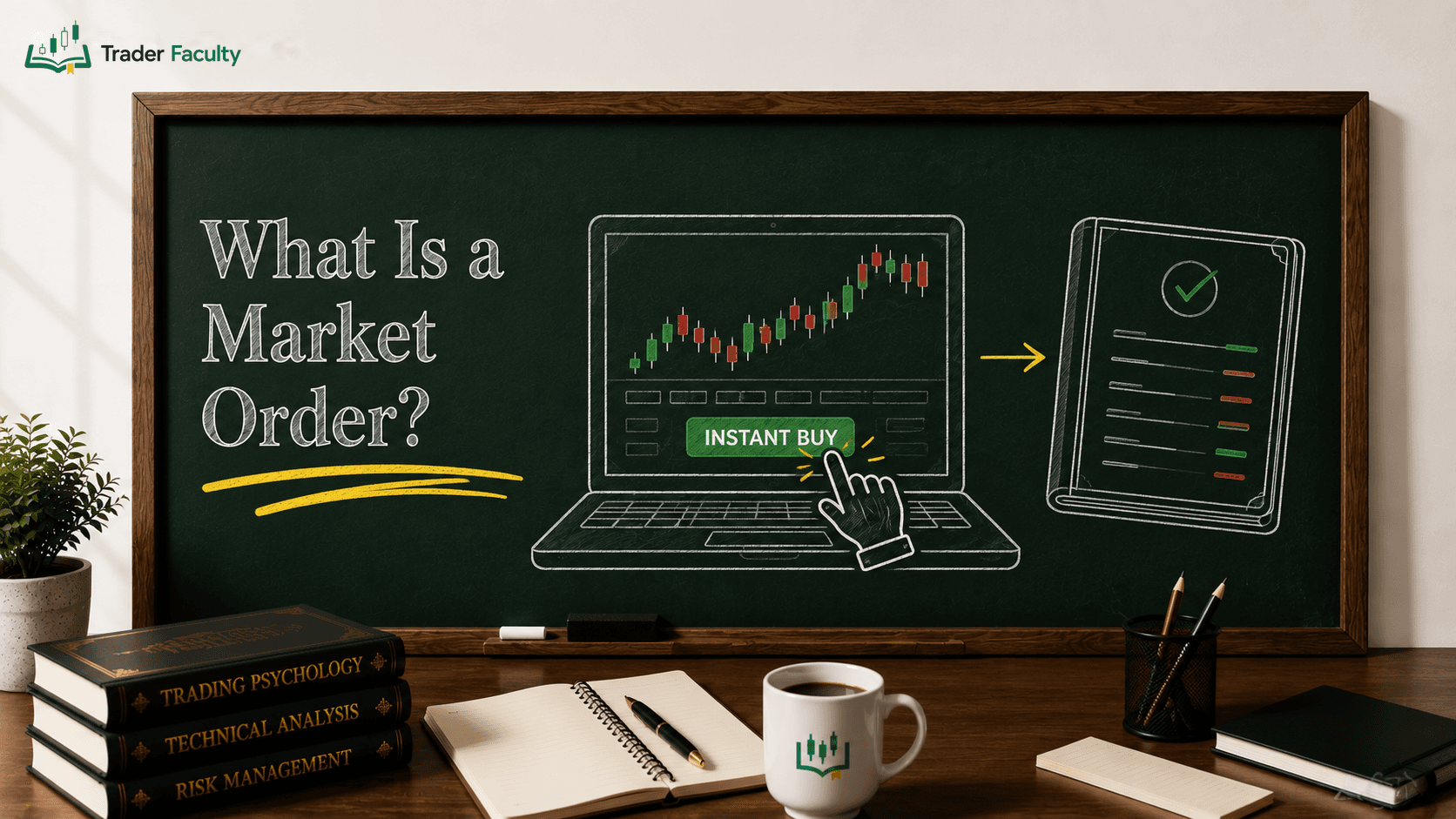
- Market order: This tells the broker engine to fill your trade instantly at the best available current price. It guarantees your trade will execute, but it offers no price protection. If the market gaps, your fill price could be vastly different from the last quote you saw.
- Limit order: This specifies the exact maximum price you are willing to pay, or the minimum price you will accept to sell. It eliminates the risk of slippage upon entry, but it does not guarantee execution. If the market price misses your limit by a single cent and reverses, your trade will remain unfilled.
- Stop limit order: This is a two-step conditional instruction. Once a specific "stop price" is breached, it automatically triggers a brand-new limit order. Breakout traders use this to enter only when momentum is proven, while simultaneously locking in a price ceiling.
Exit Orders: Capital Protection
No trader should ever open a position without a built-in safety net.
- Stop loss order: This is your structural emergency brake. It automatically liquidates your position if the market moves against you by a predetermined amount. It transforms a potentially account-ending catastrophe into a controlled, calculated business expense.
- Trailing stop loss: If you want to protect your accrued gains dynamically, use a trailing stop. It automatically climbs or descends at a set distance behind the current market price. If the market reverses, the trailing stop remains locked in place, executing the exit the moment the price touches its line.
Leverage, Margin, and Capital Parameters
Leverage settings control how much buying power your account actually has. They dictate how much market exposure your account can control relative to your actual cash balance. When used correctly, they optimize your capital efficiency. When misunderstood, they act as an economic accelerator that can destroy a funded account within minutes.
Understanding Leverage and Margin
At the center of this dynamic is leverage in trading. This is essentially capital borrowed from your brokerage platform to control a significantly larger position size than your cash deposit would naturally allow.
For example, using 10:1 leverage means a $1,000 account balance can control $10,000 worth of market assets. Leverage does not change the market's percentage movements; it amplifies the financial value of those movements relative to your equity.
To gain access to this expanded exposure, you must participate in margin trading. This requires you to lock up a fraction of your account equity as a collateral bond for your open positions. Your account must constantly maintain enough free equity to cover these minimum requirements, meaning your usable operational cash is tied directly to the size and volatility of your open trades.
Asset-Specific Risk Rules
The specific rules governing these parameters vary dramatically depending on the financial instrument you choose to trade:
- The Forex Environment: Currency fluctuations are incredibly small, typically tracked via forex pips (the fourth decimal place in most major pairs). Because these movements are minor, leverage in forex trading is frequently scaled much higher than in standard equity markets. To manage these positions safely, you must fully understand your forex lot size, which represents the standardized volume units of your trade.
- The Futures Environment: If you transition into derivative products, you will encounter leverage in futures trading. Unlike forex, futures contracts do not use standardized fractional lots or pips. Instead, they operate on fixed exchange-traded margin bonds and tick values. You are required to post an initial margin to open a contract, and maintain a strict maintenance margin balance daily.
Risk Exposure and Capital Protection
No matter how accurate your strategy looks on paper, market distributions guarantee you will experience strings of consecutive losing trades. Managing the depth of these losses is what separates surviving professionals from bankrupt beginners. When mapping out how to start trading sustainably, protecting your capital from severe drawdown must be your absolute priority.
Understanding Trading Drawdown
Every active account undergoes periods of trading drawdown, which is the peak-to-trough decline in your equity curve before hitting a new peak. For instance, if your starting capital drops from $10,000 down to $9,000 during a tough week, your account has experienced a 10% drawdown.
Drawdown is a standard structural cost of doing business, not a sign of failure. Your goal is never to reduce drawdown to zero—that is mathematically impossible. Instead, your goal is to strictly contain drawdown through rigid position sizing so that your losses remain small enough to recover from efficiently.
The Danger of Margin Calls and Liquidation
If you lose control of your risk parameters and allow your account equity to drop below the broker's absolute risk threshold, you will trigger an automated margin call. This is the operational point of no return where the broker's risk engine steps in to protect its own capital from your escalating losses.
Once triggered, the system enforces a strict two-step liquidation process:
- Immediate Demand: The broker issues a demand to deposit additional funds instantly to support your open exposure.
- Forced Liquidation: If the market continues to deteriorate and your equity hits the maintenance requirement, the broker automatically closes your positions at prevailing market prices.
This forced closure locks in your catastrophic losses immediately, leaving your account completely hollowed out.
How These Foundations Connect: The Learning Order
Foundational trading concepts do not exist in isolation; they form a sequential operational chain where a failure in one link immediately breaks the next. To build a safe, sustainable strategy for how to start trading, you must learn and apply these mechanics in their natural logical order.
- Environment First: Market liquidity and the bid-ask spread dictate your underlying transaction costs and execution speed.
- Order Routing Execution: Once you understand how a market moves, you select the correct tool for entry and exit: pairing a market order or limit order with a mandatory stop loss order or trailing stop loss to define your maximum dollar risk per trade.
- Capital Amplification: Only after mastering basic order execution should you introduce leverage in trading and adjust your margin trading parameters. This is based on specific asset class rules—whether that means calculating forex pips and forex lot sizes or managing the contract margins of leverage in futures trading.
- Equity Curve Protection: Managing your leverage directly determines your total exposure and subsequent trading drawdown. If your position sizes are perfectly aligned with your account balance, your drawdowns remain small and manageable; if your leverage is too high, a sudden adverse price move will bypass your parameters entirely, triggering a catastrophic margin call and forcing total account liquidation.
Where to Start Your Curriculum
If you are ready to take your first structured steps and build a long-term roadmap for how to start trading, your immediate goal is to master basic execution mechanics in a zero-risk environment. The transition from theory to practice must be slow, deliberate, and tightly controlled.
- Open a Demo Account: Choose a reputable brokerage platform that offers a paper trading environment that mirrors real-world data flow, spreads, and execution speeds without requiring a cash deposit.
- Master Order Entry Precision: Practice entering the market exclusively using limit orders and stop limit orders until you can place trades exactly where your strategy dictates without making operational input errors.
- Implement Rigid Risk Architecture: Commit to a strict rule: never click an entry button without hardcoding a corresponding stop loss order directly into the broker's system. Practice keeping your individual trade risk limited to a tiny fraction of your total demo balance.
- Gradually Introduce Advanced Mechanics: Once your basic order routing is second nature, slowly study asset-specific parameters like leverage in forex trading or leverage in futures trading, ensuring you can manually calculate your required margin before a trade is filled.
Conclusion
Building a professional trading career requires treating the market as a systematic operational business rather than a shortcut to quick wealth. By structuring your education around core market logistics—from liquidity and order routing to leverage management and drawdown boundaries—you insulate your capital from the common structural errors that remove most retail participants from the game early. Master these operational mechanics step by step, protect your capital above all else, and let probability work in your favor.
Frequently Asked Questions
How much capital do I realistically need to start trading?
The capital required depends entirely on the asset class you trade. While some retail forex or stock accounts allow you to begin with as little as $100, futures contracts typically demand thousands in margin requirements. Regardless of the market, you should only deploy capital that you can afford to lose without disrupting your personal financial security.
Can you learn to trade completely on your own?
Yes, you can learn to trade independently, provided you follow a highly structured educational curriculum rather than consuming random pieces of market content. Independent learning requires intense personal discipline to master order logistics, mathematical risk constraints, and emotional impulses. Utilizing simulated demo accounts allows you to build these skills safely without financial risk.
What are the structural mechanics that wipe out beginner accounts?
Most beginner accounts are wiped out by excessive leverage, unchecked account drawdowns, and emotional execution errors. When a trader opens position sizes that are far too large for their capital base, a tiny adverse market movement can easily bypass their risk parameters. This triggers a catastrophic margin call and subsequent forced liquidation by the broker.
What is the difference between market and limit orders when starting out?
A market order instructs your broker to execute a trade instantly at the best available current price, prioritizing execution speed over price control. A limit order specifies the exact price boundary you are willing to accept, prioritizing price control over execution certainty. Beginners should favor limit orders to avoid unexpected execution slippage in volatile market environments.
How does leverage affect account drawdown?
Leverage acts as an economic multiplier that directly amplifies the financial value of any market movement relative to your account balance. While using leverage optimizes capital efficiency, it exponentially accelerates account drawdown when the market moves against your position. Meticulous control of position sizes is necessary to keep drawdowns manageable.
The Trader Faculty Team writes and reviews every guide together — pairing hands-on market experience with a curriculum-first approach to trading education. One good syllabus, taught in the order that makes you better.