Forex Trading Strategies: Complete Guide for Beginners
Learn core forex trading strategies with clear rules and risk management. Read the full guide.
By Trader Faculty Team
Direct Answer
Forex trading strategies are rule-based systems that define entry, exit, and risk parameters for trading currency pairs. They help traders eliminate emotional decision-making by using technical indicators, price action, or fundamental drivers to evaluate market opportunities across different timeframes.
Forex trading strategies are structured systems of rules that tell traders when to buy or sell currency pairs. These systems define entry conditions, exit levels, and position sizing to keep decisions objective.
Many new traders enter the foreign exchange market making trades based on feelings or sudden price moves. Without a plan, fear and greed often lead to premature exits or heavy losses. Having a clear methodology helps you manage risk and deal with changing market conditions with confidence.
Quick Takeaways
- Forex strategies fall into four main categories: trend following, range trading, breakout systems, and fundamental carry trades.
- A complete trading plan combines technical triggers with strict stop loss placement and account risk controls.
- Transaction costs like spreads and overnight swap fees directly impact strategy performance across different timeframes.
- Strategy selection depends on your daily schedule, risk tolerance, and personal trading goals.
What Are Forex Trading Strategies?
If you are wondering what is forex trading strategies in simple terms, think of it as a rulebook — forex trading strategies meaning a documented process for entries, exits, and risk control rather than random guesses. A forex trading strategy is a set of objective guidelines used to identify trading opportunities in the foreign exchange market. Rather than relying on guesswork, a strategy outlines exact conditions for opening a position, setting stop loss levels, taking profits, and managing trade size.
Understanding what forex trading strategies mean starts with recognizing the role of discipline. In currency markets, prices move constantly in response to economic data, interest rates, and global trade flows. Without a defined system, emotional reactions to price swings can cause you to enter trades late or hold losing positions too long.
Before building a strategy, you should understand what forex trading is and how currency pairs move in global markets. Currency trading always involves pairs, such as EUR/USD or GBP/JPY. A strategy helps you determine whether the base currency is likely to strengthen or weaken against the quote currency, providing a repeatable process for every trade.
How Forex Trading Strategies Work: Timeframes vs. Market Conditions

To choose the right strategy, you need to separate your trading style into two parts: how long you hold trades (timeframe) and what price action you look for (market condition).
1. Selection by Timeframe
Your holding period dictates how often you check charts and how fast you must react to price changes:
- Scalping: Trades last seconds to minutes. Scalpers target small price movements throughout the day, requiring constant attention and tight spreads.
- Day Trading: Positions open and close within the same day. Day traders avoid overnight holding risks and interest charges.
- Swing Trading: Trades last from a few days to several weeks. Swing traders seek to capture medium-term price swings without monitoring charts every hour.
- Position Trading: Positions remain open for months or even years. Position traders focus on long-term economic trends and interest rate differentials.
2. Selection by Market Condition
Once you choose a timeframe, you apply an execution trigger based on current price behavior:
- Trending Markets: Price moves steadily in one direction, forming higher highs or lower lows.
- Ranging Markets: Price bounces between clear horizontal support and resistance levels.
- Breakout Conditions: Price moves beyond an established range or chart pattern with expanding volume.
4 Core Types of Forex Trading Strategies Explained
Now that we have forex trading strategies explained by timeframe and condition, let us examine the four primary strategy frameworks used by market participants.
1. Trend Following Strategy
Trend following aims to capture profits by joining an established market direction. Traders use tools like moving averages, trendlines, and the Average Directional Index (ADX) to confirm direction and momentum.
- Entry Trigger: Price pulls back to a key moving average (such as the 50-day EMA (Exponential Moving Average)) in an uptrend.
- Exit Trigger: Price crosses back over the moving average or hits a trailing stop loss.
- Best Suited For: Trending markets driven by economic trends.
2. Range Bound Strategy
Range trading relies on identifying price zones where buying or selling interest repeatedly stops market movement. Traders identify support (the price floor) and resistance (the price ceiling) and trade between them.
- Entry Trigger: Price touches support while an oscillator like the Relative Strength Index (RSI) shows oversold conditions.
- Exit Trigger: Price reaches the opposing resistance level.
- Best Suited For: Quiet markets without major economic news drivers.
3. Breakout Strategy
Breakout trading seeks to enter the market as price moves beyond a defined support or resistance area. These moves often happen after price consolidates within a narrow range or chart pattern, such as a triangle or rectangle.
- Entry Trigger: Price closes outside a key level with an increase in trading activity.
- Exit Trigger: A predetermined target based on the height of the consolidated pattern.
- Best Suited For: Volatile periods following economic announcements or pattern completions.
4. Carry Trade & Fundamental Strategy
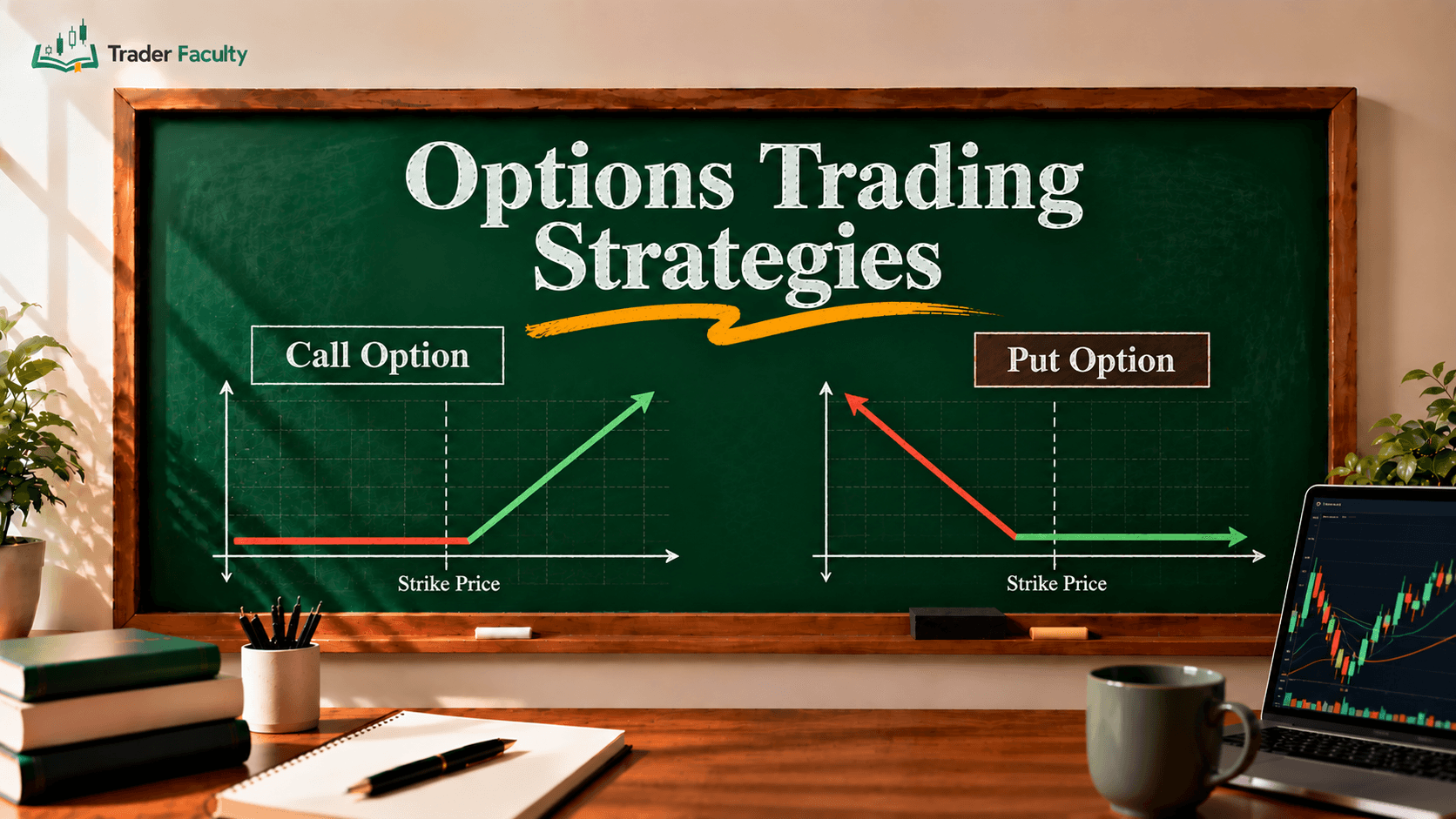
The carry trade strategy takes advantage of interest rate differentials between two currencies. Traders buy a currency with a higher interest rate while selling a currency with a lower interest rate, earning daily swap credits. While equity investors frequently use options trading strategies to manage portfolio risk, spot forex traders often rely on carry trade setups combined with strict stop loss levels to capture long-term macro trends.
| Strategy Type | Ideal Market Condition | Typical Holding Period | Primary Tool / Indicator | Main Risk Factor |
|---|---|---|---|---|
| Trend Following | Strong directional trend | Days to weeks | Moving averages, Trendlines | Trend reversals, whipsaws |
| Range Trading | Sideways, bounded price | Hours to days | Support/Resistance, RSI | Sudden trend breakouts |
| Breakout | Volatile expansion | Minutes to hours | Chart patterns, Volume | False breakouts |
| Carry Trade | Stable macro environment | Months to years | Interest rate policy | Currency depreciation |
FX Execution Realities: Spreads, Swaps, and Session Liquidity
A strategy that looks good on paper can fail in live trading if you ignore market execution costs and liquidity cycles.
Session Liquidity Peaks
The global forex market operates 24 hours a day, but liquidity varies across sessions:
- Asian Session (Tokyo): Lower volatility, ideal for range trading on regional currency pairs like AUD/JPY.
- European Session (London): High liquidity and volatility, excellent for breakout and trend strategies.
- North American Session (New York): High volatility, especially during the London/New York overlap (13:00 to 16:00 UTC).
Spreads and Rollover
The spread is the difference between the bid (buy) and ask (sell) price. Spreads widen significantly during low-liquidity hours and major news releases. Around daily rollover (21:00 UTC), spreads can expand, triggering stop loss orders unexpectedly.
Overnight Swap Rates
Holding positions overnight incurs or earns a swap fee based on central bank interest rate differences. If you hold a trade against the rate differential, daily swap charges can erode your profits over time.
In many jurisdictions, regulators such as the Commodity Futures Trading Commission enforce leverage limits on retail accounts to help limit extreme risk.
Common Mistakes in Forex Strategy Selection
Even with a well-designed methodology, traders frequently make errors that hurt performance:
- Mismatching Strategy and Schedule: Trying to day trade or scalp while working during active session hours leads to rushed decisions.
- Misusing Leverage: Trading with excessive leverage expands small market moves into account-clearing losses. Always calculate trade size based on risk per trade rather than maximum balance.
- Ignoring Spreads During News Events: Entering trades immediately before major economic announcements (like non-farm payrolls) risks severe slippage and spread expansion.
- Strategy Hopping: Switching to a new system after two or three losing trades prevents you from giving any approach enough time to show its statistical validity.
Risk Calculation Formula:
Position Size = (Account Capital × Risk Percentage) / Stop Loss Distance in Pips
Be wary of anyone who markets a strategy or signal service as a guaranteed win rate. No legitimate trading system removes the risk of loss, and promises of guaranteed results are a common warning sign of a forex scam.
Conclusion
Selecting the right forex trading strategy requires matching a rule-based methodology with your daily availability and risk tolerance. Whether you choose trend following, range trading, or breakout methods, long-term consistency comes from risk management and emotional discipline rather than finding a perfect system.
As you build your overall trading strategies, start with a single framework on a demo account before risking real capital. Focus on executing your entry, exit, and risk rules consistently across varying market conditions.
Frequently Asked Questions
What are forex trading strategies and how do they work?
Forex trading strategies are systematic sets of rules used to determine when to buy or sell currency pairs. They rely on technical analysis, fundamental economic data, or price patterns to establish clear entry points, stop loss levels, and profit targets.
What is the best forex trading strategy for beginners?
There is no single best strategy for all beginners. Trend following and range trading are often popular starting points because they rely on clear technical signals and established support or resistance levels rather than rapid, high-frequency execution.
What is the difference between technical and fundamental forex strategies?
Technical strategies analyze historical price charts, moving averages, and market indicators to identify trading setups. Fundamental strategies focus on macroeconomic factors, interest rate policy changes, economic data releases, and geopolitical events.
How do you choose a forex trading strategy that fits your schedule?
Strategy choice depends on your daily availability. Full-time workers often prefer swing trading or position trading using daily charts, while traders who can monitor live markets continuously may choose day trading or scalping.
How do spreads and overnight swaps affect forex strategies?
Spreads represent the cost of executing a trade, which directly impacts high-frequency strategies like scalping. Overnight swap fees are interest charges or credits applied when holding positions overnight, which affects swing and carry trade profitability.
Keep learning
Build Your Trading System
Turn scattered tactics into one system you can actually follow.
8 lessons quiz
Build your systemThe Trader Faculty Team writes and reviews every guide together — pairing hands-on market experience with a curriculum-first approach to trading education. One good syllabus, taught in the order that makes you better.