Future and Options Trading: How Derivatives Work for Traders
Learn how future and options trading works, including rights versus obligations, leverage, and key risks. Read the full guide.
By Trader Faculty Team
Direct Answer
Future and options trading (F&O) involves trading financial derivative contracts whose value derives from an underlying asset, such as stocks, indices, commodities, or currencies. Futures contracts obligate both parties to complete a transaction at a set price on a future date. Options contracts give the buyer the right, but not the obligation, to buy or sell the asset at a fixed strike price before expiration.
That's the future and options trading meaning in plain terms: contracts that lock in a price or grant the right to trade an underlying asset at a set price on a future date.
Some new traders hear about big gains in derivative markets and then find the contract terms and leverage mechanics confusing. Understanding how these instruments work is important before you place your first trade.
If you've ever asked "what is F&O trading?", this guide covers the F&O trading meaning, how futures and options differ, key benefits and risks, and the common mistakes beginners make. Searchers often type "F&O trading explained" when they want the basics without jargon, so we keep the terms simple.
Quick Takeaways
- Futures mandate a legally binding obligation to buy or sell an asset at a set price on a future date.
- Options grant the buyer the right, but not the obligation, to execute a trade at a set strike price before expiration.
- Futures expose both parties to losses that can exceed the initial margin, while option buyers' risk is limited to the premium paid.
- Both instruments rely on leverage, which amplifies both potential profits and potential capital losses.
What Is Future and Options Trading? Plain Language Definition

These contracts are financial agreements whose value derives from an underlying asset (the stock, index, commodity, or currency the contract is based on). Instead of buying physical assets or spot shares (assets bought for immediate delivery) directly, derivative traders trade the rights or obligations attached to price movements over a specific timeframe.
In derivative markets, market participants split into two main groups: hedgers (who manage existing price risk) and speculators (who trade market direction to seek profit). Because these contracts use leverage (a small deposit controls a much larger position), losses can grow quickly, so risk management matters from day one.
How Futures and Options Work: Obligations vs. Rights
To understand F&O trading, you need to grasp the difference between a binding obligation and a flexible choice.
| Feature | Futures Trading | Options Trading |
|---|---|---|
| Legal Duty | Binding obligation for both buyer and seller | Right for buyer; obligation for seller if assigned |
| Upfront Cost | Margin requirement | Option premium |
| Buyer Risk | Large; losses can exceed initial margin | Capped at premium paid |
| Seller Risk | Potentially unlimited for a short position | Very large; unlimited for naked short calls |
Futures Trading Mechanics
A futures contract is an agreement to buy or sell an underlying asset at an agreed-upon price on a specified settlement date. Both the long buyer and short seller assume a binding commitment.
To open a trade, you deposit an initial margin (a good-faith deposit your broker requires). Daily price moves trigger mark-to-market accounting, which credits or debits your account balance every trading session. If the market moves against your position, your broker may issue a margin call (a demand to add funds) requiring additional capital promptly. In the U.S., the CFTC (Commodity Futures Trading Commission) regulates derivatives markets with a mission to promote their integrity and resilience, while exchanges and clearinghouses set the margin requirements.
Options Trading Mechanics
An options contract gives the buyer the right—without any obligation—to buy or sell an underlying asset at a fixed strike price (the price written into the contract) on or before an expiration date.
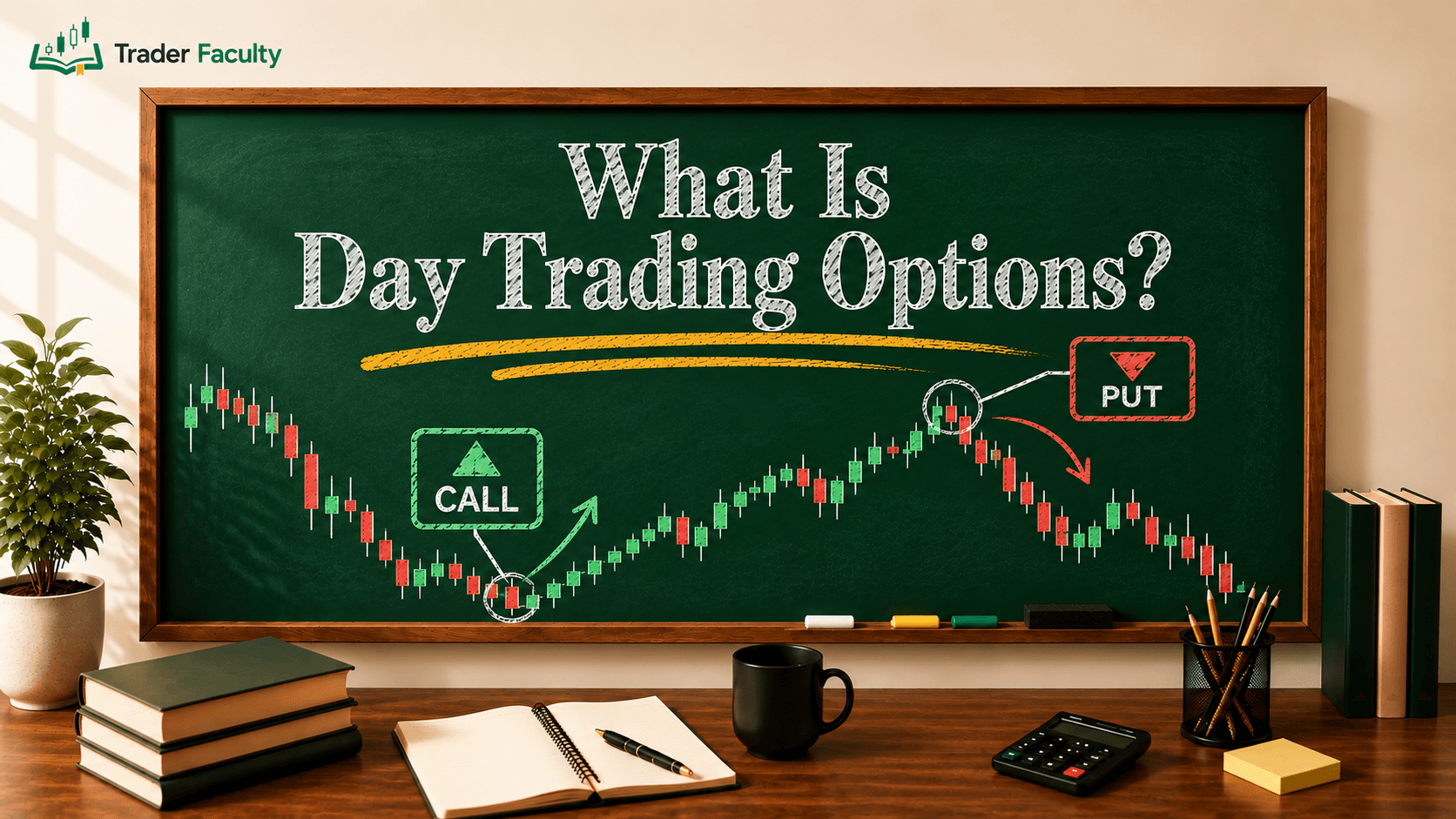
- Call Options: Give the holder the right to buy the underlying asset.
- Put Options: Give the holder the right to sell the underlying asset.
The buyer pays an upfront, non-refundable fee called the premium. In exchange, an option buyer's maximum loss is limited to that premium, though that can mean losing all of it. Option sellers (writers) take on assignment (being required to fulfill the contract) if the buyer exercises, or uses, the option.
Why F&O Trading Matters for Active Traders
Derivative contracts offer market functions that spot markets don't provide in the same way.
- Capital Efficiency Through Leverage: Traders can control large market exposure with a small margin outlay or premium fee, which also magnifies losses.
- Two-Way Directional Opportunity: Entering short futures positions or buying put options lets traders seek profit in falling markets as well as rising ones, though losses are possible in either direction.
- Portfolio Hedging: Portfolio managers may use index futures or put options to help offset price drops in their stock holdings without selling them.
Key Differences Between Futures and Options Trading
While both fall under F&O trading, their cash flows and risk profiles diverge significantly.
Upfront Capital and Cash Flows
Futures require margin deposits that fluctuate daily based on price movements. Options require an upfront cash payment (the premium) from the buyer, which moves directly to the option writer.
Risk Asymmetry vs. Symmetry
Futures are symmetrical: every point move in the underlying asset creates an equal profit or loss for both sides. Options are asymmetrical: option buyers risk only their premium while preserving directional upside, whereas unhedged option sellers face substantial liability for a limited premium reward.
Here's a simple, made-up illustration. Say an options contract lets you buy 100 shares at a $50 strike price and costs a $2 premium per share. As the buyer, your maximum loss is $200 ($2 × 100 shares), even if the shares fall to zero. A futures position on the same 100 shares has no premium, but a $10 drop against a long position costs you $1,000 ($10 × 100 shares), which can exceed your initial margin.
Time Decay (Theta)
Options carry time decay — that is, the loss of option value as the expiration date approaches — meaning their value decreases over time even if the underlying asset stays flat. Futures do not suffer from time decay; their price tracks the underlying spot price plus cost of carry (financing and storage costs) until expiration.
Common Mistakes Beginners Make in F&O Trading
- Misjudging Leverage Exposure: Sizing positions on initial margin requirements instead of total nominal contract value (the full market value the contract controls) can lead to rapid account losses.
- Ignoring Time Decay on Options: Buying short-dated, out-of-the-money options (options whose strike price is far from the current price) and expecting fast moves can result in losing the entire premium.
- Holding Unhedged Short Options: Writing options without owning or hedging the underlying asset exposes sellers to very large, potentially unlimited losses during unexpected market shocks.
- Failing to Track Expiration Dates: Forgetting settlement or delivery rules can result in unexpected physical assignment or cash settlement charges.
For detailed breakdowns of each specific instrument, explore our dedicated guides on options trading and futures trading.
Conclusion
With future and options trading explained above, you can see how these tools support leverage, hedging, and two-way speculation. By understanding the structural differences between binding futures commitments and flexible option rights, you can compare which contract type may fit your own plan.
Trading derivatives always carries the risk of loss due to leverage and volatility, so treat everything here as an educational foundation for your own research rather than financial advice. To keep building your knowledge, explore our beginner's overview of markets and instruments.
Frequently Asked Questions
What is the F&O meaning in trading?
F&O stands for Futures and Options. It refers to trading standardized derivative contracts on exchanges, which lets traders speculate on or hedge against price moves of an underlying asset without owning it directly. You may also see people search for "F&O trading in trading," which simply refers to this same derivatives segment.
What is the main difference between futures and options contracts?
The main difference lies in legal obligation. A futures contract creates a binding obligation for both buyer and seller to fulfill the trade at expiration. An options contract gives the buyer the right, but not the obligation, to trade, while placing an assignment obligation on the seller if exercised.
Is options trading safer than futures trading?
For contract buyers, options cap the risk at the premium paid, though you can lose that entire premium. Futures carry symmetrical risk, where losses can exceed initial margin if the market moves sharply against the position. Selling unhedged options carries significant downside liability.
Can beginners start trading futures and options?
Beginners can trade futures and options, but they should first learn spot market basics and practice (paper trade) derivative mechanics. Because of leverage and time decay, derivative positions call for careful position sizing and predefined risk controls.
What happens when an F&O contract reaches its expiration date?
At expiration, F&O contracts settle either through physical delivery of the underlying asset or through cash settlement based on the final market price, depending on the specific exchange rules for that contract.
Keep learning
What is Trading?
New to this? Start from the beginning and learn what to trade.
8 lessons quiz
Start with the basicsThe Trader Faculty Team writes and reviews every guide together — pairing hands-on market experience with a curriculum-first approach to trading education. One good syllabus, taught in the order that makes you better.