Gold Options Trading: What Traders Need to Know
Learn how gold options trading works, key risks, and how contracts differ from physical metal. Read the full guide.
By Trader Faculty Team
Direct Answer
Gold options trading is the process of using derivative contracts to buy or sell gold at an agreed strike price before an expiration date. Buyers pay an upfront cash premium to gain price exposure or hedge physical metal, with their downside strictly capped at that premium. Sellers receive this fee upfront while taking on the legal obligation to settle or deliver the underlying contract if exercised.
Gold options trading involves buying or selling derivative contracts that give you the right to trade gold at a fixed price before a set date, without requiring physical metal ownership.
Many new traders look at gold options for safe-haven exposure, only to watch their positions lose value every day as time passes. Unlike physical bars stored in a secure vault, options are wasting contracts with strict expiration dates. This guide breaks down the core mechanics of gold options, compares futures options with ETF options, and outlines the risk habits required to manage trading capital responsibly.
Quick Takeaways
- Gold options grant you the right, but never the obligation, to buy or sell gold at an agreed strike price before expiration.
- Contracts lose value daily through time decay, which means out-of-the-money options can expire completely worthless.
- Option buyers face defined downside capped at the premium paid, while uncovered sellers take on large, open-ended risk.
- Micro gold futures options and gold ETF options provide smaller contract sizes for traders with limited account balances.
What Is Gold Options Trading?
Gold options trading is the exchange of contracts that give market participants the right to buy or sell gold at a predetermined price within a specified timeframe. The buyer pays a cash fee called a premium to the seller in exchange for this right.
To understand the gold options trading meaning, you must look at how the two primary contract types operate:
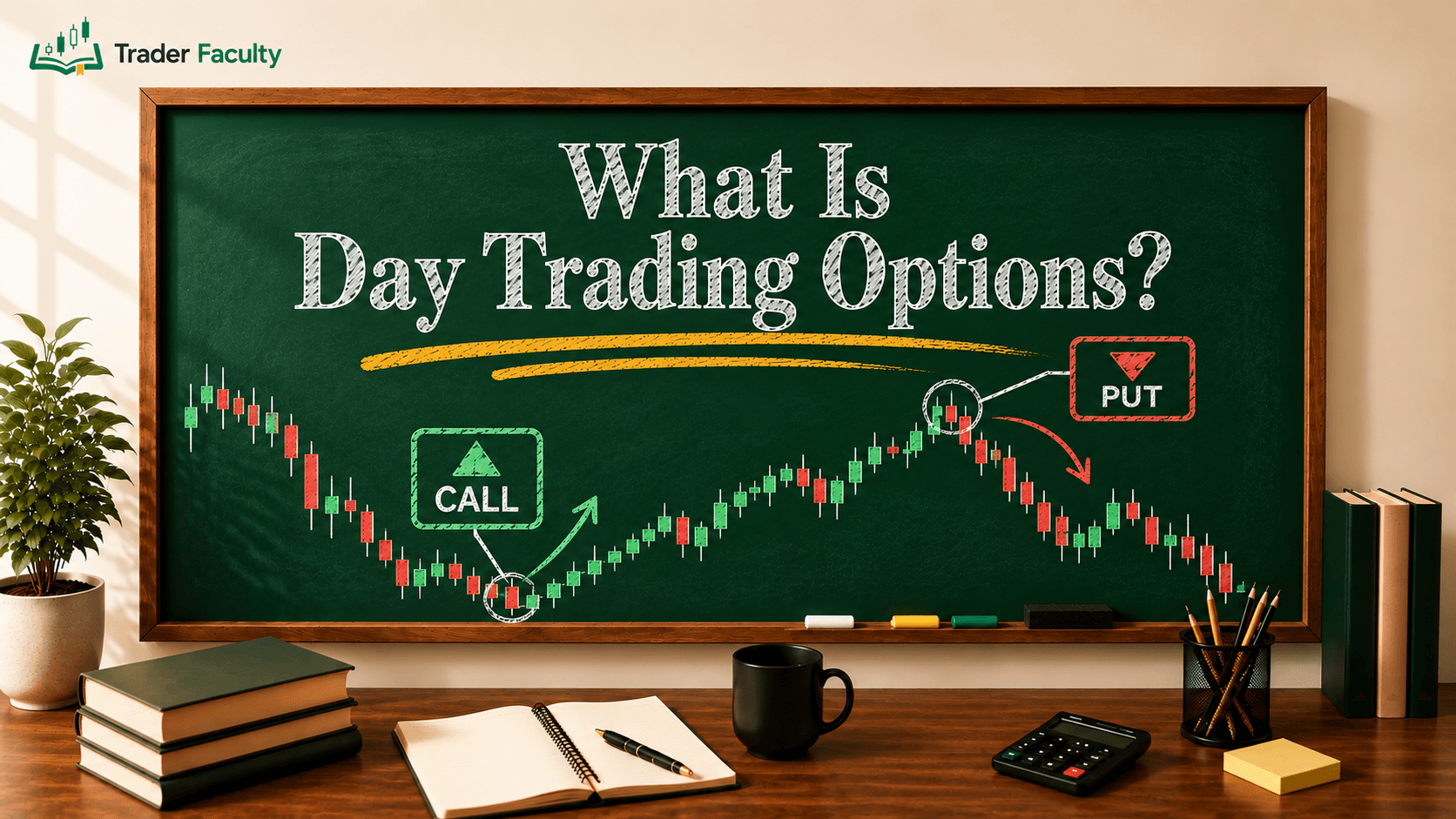
- Call options: Give the contract holder the right to buy gold at the strike price. Traders buy calls when they expect gold prices to climb.
- Put options: Give the contract holder the right to sell gold at the strike price. Traders buy puts when they expect gold prices to drop, or when they want downside protection for an existing investment.
Trading options is completely different from owning physical bullion. When you purchase physical coins or bars, you own a tangible asset with no expiration date, but you must pay for storage, insurance, and dealer markups. Gold options, by contrast, are financial derivatives. They offer leverage and flexibility, but they carry a fixed lifespan. If spot gold does not move past your strike price before the contract ends, the option expires with zero market value.
How Gold Options Work: Key Mechanics

Gold options function through three core terms set at the time of the trade: the strike price, the premium, and the expiration date. When exploring gold options trading explained step by step, these three factors determine contract pricing and profitability.
- Strike price: The agreed price per ounce at which the option holder can buy or sell the underlying asset.
- Premium: The market price the buyer pays upfront to the seller. This cash payment is non-refundable and represents the maximum financial loss for a long option buyer.
- Expiration date: The final trading day on which the contract remains valid. After this cutoff point, the contract settles or expires worthless.
Another critical element is the contract multiplier. Standard gold futures options on the Commodity Exchange, Inc. (COMEX), a division of CME Group, control 100 troy ounces of gold. Because of this 100-ounce multiplier, every $1 move in the price of gold equals a $100 change in the total value of the underlying contract. For a retail trader with a smaller balance, CME Group also offers Micro gold options controlling 10 troy ounces, where a $1 price change equals $10.
Exercise and settlement rules also differ by contract. Most commodity futures options feature American-style exercise, meaning you can exercise your right on any business day before expiration. In practice, retail traders rarely take physical delivery of metal. Instead, exercising a COMEX option results in an open position in the underlying gold futures contract, which traders generally close out before physical delivery schedules take effect.
Gold Futures Options vs. Gold ETF Options
Traders access gold options through two distinct vehicles: commodity futures options traded on derivatives exchanges, and stock-style options traded on gold exchange-traded funds (ETFs).
| Feature | COMEX Gold Futures Options (/GC) | Gold ETF Options (GLD) |
|---|---|---|
| Underlying Asset | COMEX Gold Futures Contract | SPDR Gold Shares ETF Shares |
| Standard Contract Size | 100 troy ounces of gold | 100 shares of the GLD ETF |
| Settlement Style | Underlying futures contract | Physical delivery of ETF shares |
| Daily Trading Hours | Nearly 24 hours per day (Sunday–Friday) | Standard US stock exchange hours |
| Account Requirement | Approved futures margin account | Standard stock and options brokerage account |
Futures options offer deep liquidity and direct alignment with global commodity market hours. However, their large contract size demands significant account margin and strict attention to commodity market swings. ETF options, such as those written on the SPDR Gold Shares fund, trade like standard stock options. They settle into ETF shares, trade during normal market hours, and allow market participants to build positions in smaller dollar increments.
Why Traders Use Gold Options
Market participants trade gold options for two primary reasons: protecting existing asset positions against sudden drops, or speculating on price direction with defined dollar risk.
Commercial producers, jewelry manufacturers, and long-term investors frequently use put options as an insurance policy. If an investor owns physical bullion or shares in gold mining companies, buying a put option locks in a minimum selling price. If gold falls sharply, the rising value of the put option helps offset the decline in the investor's physical holdings.
For directional speculation, buying options allows traders to participate in price trends without committing the full cash value of 100 ounces of gold. Because a long call or put buyer only risks the premium paid at entry, downside loss remains capped even during extreme market gaps.
Advanced market participants also build multi-leg option combinations to target specific price ranges. For example, setting up a butterfly spread lets a trader combine three different strike prices to pursue gains in a quiet, range-bound market while capping both the upfront cost and the maximum downside.
What Moves Gold Option Prices?
Gold option premiums fluctuate continuously based on three underlying factors: the price of gold, the remaining time until expiration, and expected market volatility.
First, price movement directly shifts the intrinsic value of an option. As the underlying gold price climbs, call options become more valuable, while put options lose value. Delta measures how much an option's premium changes for every $1 shift in the price of gold.
Second, time decay—measured by theta—works against option buyers every day. Options lose value simply because the clock is running down. This daily erosion accelerates as the contract approaches its expiration date, meaning an option position can lose money even if the price of gold stays flat.
Third, implied volatility—measured by vega—reflects the market's expectation of future price swings. Geopolitical tensions, central bank rate decisions, and currency shocks often cause implied volatility to spike. When volatility expectations jump, all option premiums become more expensive, regardless of direction. In the United States, the Commodity Futures Trading Commission (CFTC) oversees commodity options markets to enforce transparent trading rules and protect participants from abusive practices.
Common Mistakes in Gold Options Trading
Beginners often run into trouble by treating options like physical metal or underestimating the math behind derivative positions.
- Ignoring the contract multiplier: Entering a standard 100-ounce COMEX futures option without calculating notional exposure can lead to rapid capital drawdowns. A sudden $20 price drop in gold translates into a $2,000 shift in the underlying position's value.
- Holding dying contracts into expiration: Holding out-of-the-money calls hoping for a miraculous last-minute rally rarely works. Time decay accelerates dramatically in the final two weeks of an option's life, erasing remaining value quickly.
- Selling uncovered call options: Selling calls without holding the underlying asset or a protective long call exposes your account to open-ended losses if gold stages a sudden, parabolic surge.
Conclusion
Gold options give you a flexible way to hedge physical bullion or trade commodity swings without handling metal storage. Success with these contracts requires matching your account size to the right contract multiplier, keeping a close eye on daily time decay, and choosing between futures options and ETF options based on your goals. If you want to build a strong foundation across all financial markets, make sure you understand the general mechanics of options trading before placing live trades on precious metals. Trading options involves leverage and the real risk of losing your entire investment, so treat this guide as educational information rather than personal financial advice.
Frequently Asked Questions
What happens if my gold option expires out of the money?
If a gold option finishes out of the money at expiration, it ceases to exist with zero market value. The buyer loses 100% of the premium paid at entry, but incurs no further debt or margin obligations, while the seller keeps the full premium received upfront as profit and all contractual commitments end immediately.
Do gold options settle in physical bullion or cash?
Retail gold options rarely settle into physical bullion bars or coins. On commodity derivatives exchanges like CME/COMEX, exercising a standard option results in an open position in the underlying gold futures contract rather than physical delivery, while with gold ETF options like GLD, exercising results in the delivery of standard ETF fund shares.
Can you lose more money than you invest in gold options?
If you only buy call or put options, your maximum possible loss is strictly limited to the initial premium paid to enter the trade. However, if you sell uncovered or naked options without holding the underlying asset, your potential financial loss is open-ended and can significantly exceed your initial margin deposit.
What is the main difference between gold futures and gold options?
Gold futures create a binding legal obligation for both sides to buy or sell gold at a set date, exposing traders to continuous gains and losses on every tick. Gold options grant buyers the right, but never the obligation, to trade, and long option buyers cap downside risk at the premium paid, while futures traders face open-ended margin risk.
Why do gold options lose value if gold prices do not move?
Gold options are wasting assets subject to daily time decay, measured by the Greek metric theta, because every day that passes reduces the remaining time the contract has to become profitable. Even if spot gold prices stay completely flat, option premiums steadily decline, with decay accelerating rapidly during the final weeks before expiration.
Keep learning
What is Trading?
New to this? Start from the beginning and learn what to trade.
8 lessons quiz
Start with the basicsThe Trader Faculty Team writes and reviews every guide together — pairing hands-on market experience with a curriculum-first approach to trading education. One good syllabus, taught in the order that makes you better.