How Does Inflation Affect Interest Rates? A Guide for Traders
Learn how inflation dictates global interest rates and shifts capital across forex, stocks, and bonds. Read the full guide.
By Trader Faculty Team
Direct Answer
Inflation affects interest rates because central banks deliberately raise borrowing costs to cool consumer demand when prices climb too quickly. By shifting baseline rates, policymakers attempt to restore purchasing power and stabilize long-term economic growth.
Inflation directly dictates interest rates because central banks raise the cost of borrowing to cool down consumer demand when prices climb too fast. By adjusting these baseline rates, policymakers attempt to balance purchasing power and stabilize long-term economic growth.
Imagine sitting at your desk, watching a currency pair or equity index chart drop rapidly during a major macroeconomic release because you misjudged how policymakers would react. Understanding this fundamental relationship helps you anticipate institutional capital shifts before they show up on a technical chart.
This guide breaks down the core mechanics of how inflation drives interest rates, why central banks take aggressive action, and how money moves across different asset classes.
Quick Takeaways
- Central banks manipulate interest rates as their primary monetary tool to preserve purchasing power and curb escalating consumer prices.
- Sustained high inflation forces central banks to implement rate hikes, which lowers the aggregate money supply by increasing the cost of commercial and retail credit.
- Professional traders prioritize tracking real interest rates rather than nominal interest rates to evaluate where global capital will flow.
- Diverging interest rate paths between global economies create major macro trends across the foreign exchange, fixed-income, and equity markets.
What Is the Relationship between Inflation and Interest Rates?
The relationship between inflation and interest rates is historically tied through a balancing loop where rising inflation forces central banks to lift interest rates, while cooling inflation allows them to lower them. To understand why this happens, you have to look at how institutional market participants view the time value of money. When inflation scales up, the cash backends of corporate profits, bond yields, and consumer savings lose their purchasing power.
To evaluate the true value of an investment asset, fundamental analysts track specific macroeconomic updates through high-impact economic indicators. These data points reveal whether the economy is running too hot or starting to contract. The underlying math that connects these forces is expressed through the Fisher Equation, which isolates the real return on capital:
Real Interest Rate = Nominal Interest Rate - Inflation
If inflation rises while nominal interest rates remain unchanged, the real interest rate falls into negative territory. Institutional investors will not willingly hold depreciating cash or low-yielding debt when their real returns are negative. Consequently, they demand higher nominal yields to compensate for the purchasing power risk. Central banks step in to engineer these shifts by lifting their benchmark policy rates, effectively establishing a structural floor for the entire economy's yield environment.
Inflation vs Interest Rates: Understanding the Core Differences
Inflation measures the rate at which the purchasing power of a currency is eroding, whereas interest rates represent the structural cost of borrowing that money or the net reward for saving it. While they move in a highly correlated cyclical pattern, they represent two entirely different sides of the macroeconomic equation.
Traders often confuse the cause with the effect. Inflation is typically driven by broad market forces, such as consumer demand, wage increases, corporate pricing power, or supply chain shocks. Interest rates, on the other hand, are a deliberate policy choice controlled directly by a nation's monetary authority.
| Feature | Inflation | Interest Rates |
|---|---|---|
| Core Measurement | The percentage rate at which consumer goods and services increase in cost over time. | The percentage charged by lenders or paid to savers for the use of capital. |
| Primary Driver | Aggregate consumer demand, production expenses, raw material costs, and currency supply. | Central bank monetary policy committees and global bond market mechanics. |
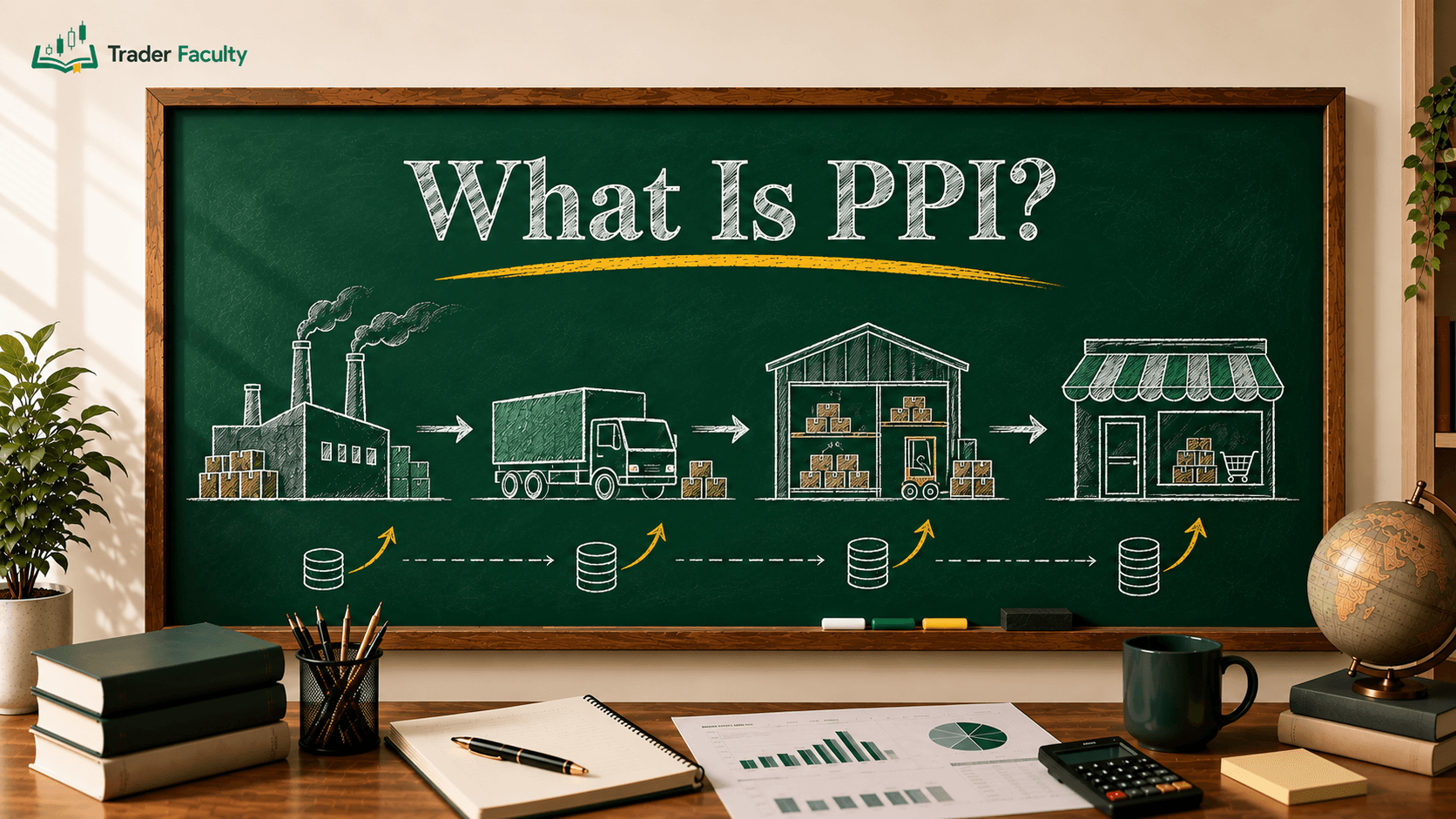
| Key Metrics to Watch | Consumer Price Index (CPI), Producer Price Index (PPI), Personal Consumption Expenditures (PCE). | Federal Funds Rate, ECB Main Refinancing Rate, Sovereign Bond Yields (e.g., US 10-Year Treasury). |
The Central Bank Mandate: Why Are Interest Rates So High?
Interest rates become high when central banks deliberately tighten monetary policy to break persistent inflationary cycles and bring consumer demand back in line with economic supply. Most major global central banks — including the Federal Reserve and the European Central Bank — operate under a strict mandate to maintain price stability, which they have publicly defined as a structural inflation target of roughly 2% per year.
When inflation breaks far above that 2% threshold—as witnessed globally during the macro shifts between 2022 and 2026—policymakers are forced to act aggressively to avoid an uncontrolled wage-price spiral. They do this by raising the benchmark overnight lending rate. When this rate climbs, commercial banks face higher costs to clear capital, which they immediately pass down to the wider economy.

As mortgages, credit cards, and corporate loans become more expensive, both consumers and businesses naturally cut back on spending. Corporations put expansion plans on hold, reducing their demand for raw materials and labour. This cooling effect filters directly into the nation's gross domestic product (GDP), intentionally lowering overall economic output to prevent the engine from overheating. While this cooling process can be painful for corporate earnings, it reduces aggregate demand, eventually forcing prices to settle back down toward target levels.
Cross-Asset Capital Flows: How This Relationship Drives Markets
Shifting expectations around inflation and interest rates alter the discounted value of future cash flows, forcing institutional money to continuously reallocate capital across the global financial markets. When you trade fundamentally, you are tracking the path of least resistance for this global liquidity.
The Fixed-Income Market
Bonds are highly sensitive to the inflation-interest rate dynamic. When a central bank hikes interest rates to combat inflation, newly issued bonds come to market offering higher coupon payments. This structural shift instantly reduces the value of existing bonds that feature older, lower fixed coupons.
As a result, bond prices fall when interest rates rise. If inflation remains sticky and higher than the bond's yield, the real return becomes negative, triggering an institutional sell-off across long-duration debt instruments.
The Forex Market
In foreign exchange trading, capital chases yield. If the Federal Reserve raises interest rates faster or higher than the European Central Bank due to hotter domestic inflation, institutional funds will flow out of the Euro and into the US Dollar to capture the wider interest rate differential. This process triggers sustained capital flows, driving long-term currency trends based purely on macro yields.
The Equities Market
High interest rates compress corporate stock valuations in two main ways. First, higher borrowing costs directly reduce profit margins by increasing operational debt expenses. Second, equity analysts calculate a company’s present value by discounting future earnings against current interest rates. When benchmark rates rise, the discount factor climbs, which automatically lowers the fair value calculation of stock multiples—particularly in high-growth technology sectors.
Common Mistakes Traders Make When Analysing Inflation Data
Navigating high-impact economic releases requires an understanding of market psychology and structural liquidity. Many developing traders treat fundamental releases like simple binary triggers, which often leads to severe execution errors.
1. Falling for the Deterministic Fallacy
The biggest mistake you can make is assuming that a high inflation print must cause an immediate, automatic drop in risk assets. Markets operate entirely on forward-looking expectations. If the consensus forecast expects a CPI reading of 4% and the data prints exactly at 4%, the entire macro implication has already been integrated into bond and equity pricing weeks in advance. The market frequently moves in the opposite direction of the raw data print if short-term speculators overextend their positions relative to what was already priced in.
2. Disregarding Central Bank Forward Guidance
Data releases do not happen in a vacuum. A hot inflation number matters only if it alters the projected trajectory of central bank policy. For example, if inflation prints higher than expected, but the central bank has explicitly stated they view the increase as temporary due to seasonal supply blockages, interest rate expectations may not change. Always read the accompanying policy statements and watch the dot plots (the central bank's chart showing each policymaker's individual interest rate projections) rather than trading the raw headline data point alone.
3. Executing Trades During the Initial Flash
Trying to buy or sell within the first 60 seconds of a high-impact inflation release exposes your account to structural market dangers. During these macro events, algorithmic liquidity providers pull their limit orders from the book to mitigate their own risk. This creates a liquidity vacuum. Even if your directional bias turns out to be correct, execution spreads will widen massively, resulting in heavy slippage that can execute your stop-loss order far beyond your intended risk boundaries.
Conclusion
The structural interplay between inflation and interest rates serves as the foundational engine for all long-term macro trends across the global financial markets. Inflation acts as the economic catalyst, while the central bank's interest rate policy serves as the regulatory lever designed to keep the system stable. Rather than treating these metrics as disconnected reports, successful fundamental analysts view them as a continuous feedback loop that dictates the pricing of debt, equity, and currency pairs worldwide.
To build a reliable approach around macro data, you must transition from analysing historical reports to reading forward-looking market expectations. Understanding this framework prepares you to progress directly into evaluating how broader market themes tie together across asset classes. Your next step in mastering fundamental analysis is learning how to map out structural shifts by exploring our comprehensive breakdown of fundamental analysis.
Frequently Asked Questions
Why are interest rates so high right now?
Interest rates rise significantly when global economies face persistent, above-target inflation. Central banks elevate their benchmark lending rates to deliberately increase the cost of credit for businesses and consumers. This policy slows down economic activity, suppresses consumer demand, and forces consumer prices back toward stable levels.
How do higher interest rates actually lower inflation?
Higher interest rates increase the financial cost of mortgages, credit cards, and corporate loans. This structural shift encourages consumers to save rather than spend, while businesses put expansion plans on hold. As aggregate consumer demand pulls back, retail businesses lose pricing power, which cools price growth across the economy.
What happens to the stock market when interest rates go up?
Rising interest rates typically compress stock market valuations by increasing operational corporate borrowing costs and eating into net profit margins. Furthermore, institutional analysts discount future corporate cash flows at a higher rate, which automatically reduces the current fair value multiples of growth and technology stocks.
How does the relationship between inflation and interest rates affect currency values?
Foreign exchange markets rely heavily on relative interest rate paths. If a country raises its benchmark rates faster than its trading partners to combat sticky inflation, institutional capital moves into that currency to capture the widening yield spread. This capital shift increases market demand, causing the local currency to strengthen.
What is the difference between nominal interest rates and real interest rates?
Nominal interest rates represent the raw percentage return stated on a financial instrument or savings account without adjusting for price increases. Real interest rates subtract the current inflation rate from that nominal figure, revealing the actual purchasing power gain or loss that an investor experiences over time.
Keep learning
Fundamental Analysis for Traders
See how the economy actually moves your charts, step by step.
9 lessons quiz
Start the courseThe Trader Faculty Team writes and reviews every guide together — pairing hands-on market experience with a curriculum-first approach to trading education. One good syllabus, taught in the order that makes you better.