What Is a Call Option? A Beginner's Guide
Learn what a call option is, how strike prices work, and how to calculate profit and risk. Read the full guide.
By Trader Faculty Team
Direct Answer
A call option is a financial derivative contract that gives the buyer the right, but not the obligation, to purchase 100 shares of an underlying asset at a specified strike price before an expiration date. To acquire this right, the buyer pays an upfront premium to the seller. Call options provide leveraged profit potential while capping maximum risk at the premium paid.
A call option is a financial contract that gives the buyer the right, but not the obligation, to purchase an underlying asset at a specified strike price within a set timeframe.
Many new traders hear about options because of their potential leverage, but jumping in without understanding how contract math and expiration dates work often leads to unexpected losses. This guide explains how these contracts work, how to calculate your break-even price, and how long buyers and covered call sellers handle risk.
Quick Takeaways
- A call option gives you the right to buy 100 shares of stock at a set strike price before an expiration date.
- Buying a call limits your risk to the upfront premium paid while offering unlimited potential profit if the asset price rises.
- Selling or writing a call carries higher risk because you take on an obligation to sell the asset if the buyer exercises the contract.
- To break even at expiration, the underlying stock price must rise above the strike price plus the premium paid per share.
What Is a Call Option? Definition and Basics
When learning what is a call option, it helps to start with the core contract structure. It is a derivative contract between two parties: a buyer and a seller. The buyer pays an upfront fee to secure the right to purchase an asset at a predetermined price. The U.S. Securities and Exchange Commission (SEC) defines standard options as derivative contracts that derive their value from an underlying market asset.
Every contract contains four core parameters:
- Underlying Asset: The underlying stock, ETF, or index that the contract tracks.
- Strike Price: The fixed price at which the option holder can buy the underlying asset.
- Expiration Date: The final date on which the option contract can be exercised. After this date, the contract becomes void.
- Option Premium: The cash price paid upfront by the buyer to the seller for the rights granted by the contract.
In standard equity markets, a single option contract represents 100 shares of stock. When you see an option priced at $3.00, the total cost to purchase one contract is $300 ($3.00 multiplied by 100 shares).
Option value splits into two parts: intrinsic value and extrinsic value (also called time value). Intrinsic value is the actual profit built into the contract if exercised today. Extrinsic value reflects the remaining time until expiration and market volatility.
A call is in-the-money (ITM) when the stock's market price is above the strike price, at-the-money (ATM) when the two are about equal, and out-of-the-money (OTM) when the stock price is below the strike price. For put options, it works the other way around. An OTM call has zero intrinsic value and consists entirely of extrinsic value.
How a Call Option Works: Long vs. Short Positions

Trading calls involves two main sides: buying a call (going long) or selling a call (going short). Each position carries completely different risk profiles and expectations.
Buying a Call Option (Long Call)
When you buy a call, you expect the price of the underlying asset to rise before expiration. You pay the premium upfront to the seller.
- Maximum Risk: Limited to the initial premium paid. If the stock price stays below the strike price through expiration, the option expires worthless, and you lose only what you paid to enter.
- Maximum Reward: Theoretically unlimited. As the underlying stock price climbs higher above your strike price, your profit grows dollar-for-dollar alongside it.
Selling a Call Option (Short Call)
Selling a naked (uncovered) call means you collect the premium upfront, but you accept the obligation to sell 100 shares of stock at the strike price if the buyer chooses to exercise the contract.
- Maximum Reward: Limited to the premium collected upfront.
- Maximum Risk: Substantial or unlimited. If the stock price surges unexpectedly, you must deliver shares at the lower strike price, regardless of how high the market price goes.
Selling naked calls typically requires a margin account (an account where your broker holds collateral from you to cover potential losses) and your broker's highest level of options approval (the permission tier that controls which strategies you're allowed to trade). Because most U.S. equity options are American-style, meaning the buyer can exercise at any time before expiration, you can be assigned early, not just on the expiration date.
Call Option vs Put Option: Key Differences
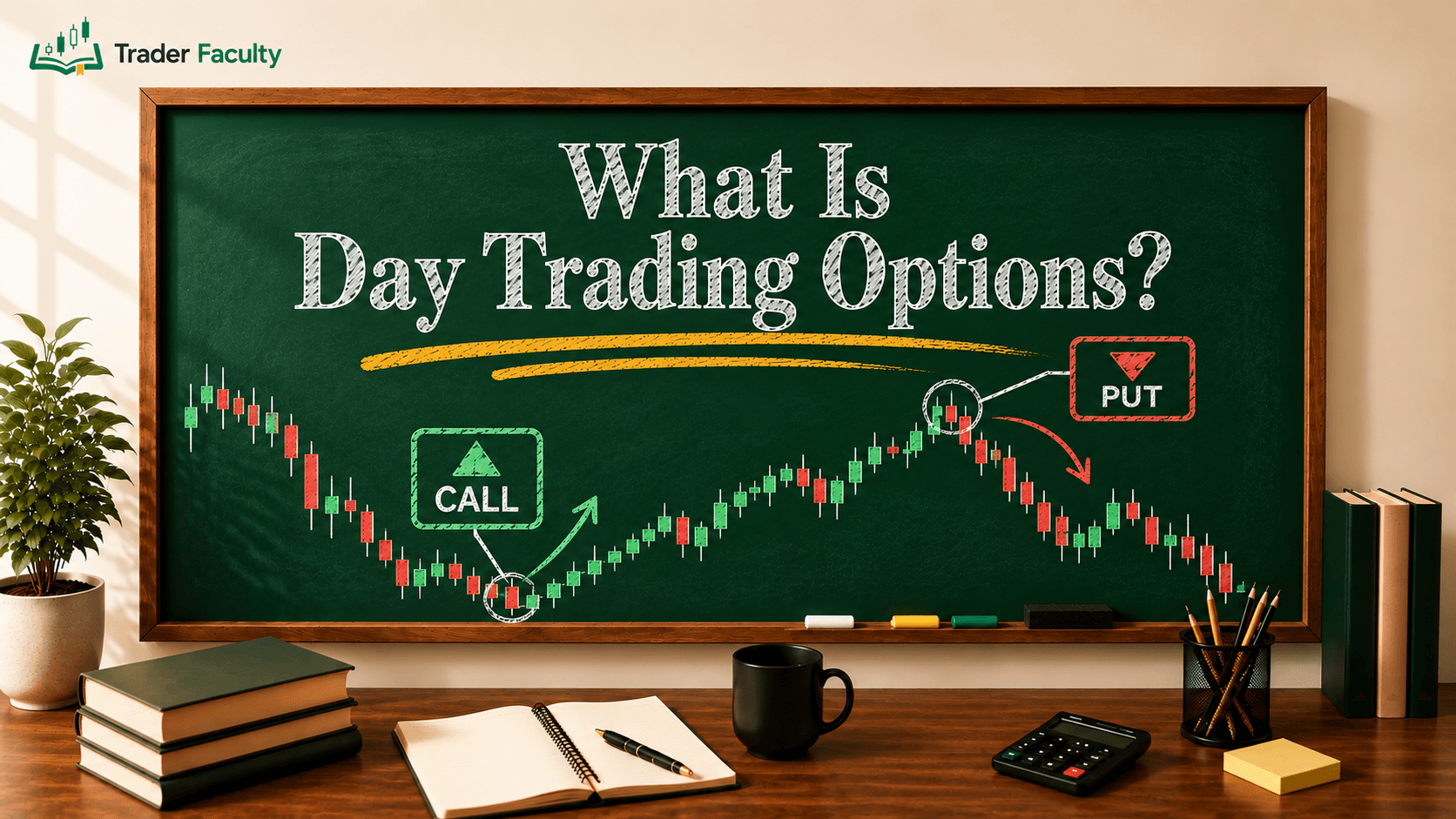
Understanding a call option vs put option comes down to market direction. A call gives the buyer the right to buy an asset, reflecting a bullish market outlook. In contrast, put options give the buyer the right to sell an asset, reflecting a bearish market outlook.
| Feature | Call Option | Put Option |
|---|---|---|
| Market Outlook | Bullish (expects price to rise) | Bearish (expects price to fall) |
| Buyer Right | Right to BUY underlying asset | Right to SELL underlying asset |
| Buyer Maximum Loss | Premium paid upfront | Premium paid upfront |
| Seller Obligation | Obligated to SELL stock if assigned | Obligated to BUY stock if assigned |
| Break-Even Formula | Strike Price + Premium Paid | Strike Price - Premium Paid |
Both contracts use the same 100-share multiplier, expire on set dates, and trade on public derivative exchanges.
Calculating Call Option Payoffs (Call Option Calculator Math)
You don't need specialized software or a call option calculator to figure out your potential profit, loss, and break-even thresholds. You can calculate these values with simple arithmetic.
The Break-Even Formula
To make a profit at expiration, the underlying stock price must rise above the strike price by an amount equal to the per-share premium paid.
Break-Even Price = Strike Price + Premium Paid
Step-by-Step Example
Imagine Company XYZ stock is currently trading at $100 per share. You believe the stock will rise over the next month, so you buy one call contract with the following terms:
- Strike Price: $105
- Premium Paid: $3.00 per share ($300 total cost for 100 shares)
- Expiration: 30 days
Your break-even price is calculated as: $105 (Strike Price) + $3.00 (Premium) = $108.00 Break-Even Price
Let's look at two potential expiration scenarios:
Scenario A: Stock Rises to $115 at Expiration
At $115, the option is in-the-money because the stock price exceeds the $105 strike price.
- Intrinsic Value at Expiration: $115 - $105 = $10.00 per share ($1,000 total contract value).
- Net Profit: $1,000 intrinsic value − $300 premium = $700.
- Return on Investment: A $700 profit on a $300 outlay represents a 233% gain in this hypothetical example (before commissions and fees). The same leverage works in reverse: if the stock finishes at or below the $105 strike, you lose 100% of the premium, as Scenario B shows.
Scenario B: Stock Stays at $100 at Expiration
At $100, the stock price remains below the $105 strike price. The option is out-of-the-money.
- Intrinsic Value at Expiration: $0.00 per share.
- Net Loss: The option expires worthless, so you lose the full $300 premium.
Covered Call Option Strategy Explained
A covered call option strategy involves owning at least 100 shares of underlying stock while simultaneously selling (writing) one call contract against those shares.
Traders use covered calls primarily to generate extra income from an existing stock position during flat or mildly bullish market conditions.
- How Income Is Generated: You collect the call premium upfront when you sell the option. If the stock price stays below the strike price through expiration, the option expires worthless, and you keep both your 100 shares and the cash premium.
- The Trade-Off: In exchange for receiving upfront income, you cap your stock's upside potential at the strike price. If the stock price skyrockets, your shares will be assigned (called away) at the strike price, meaning you miss out on gains above that level.
- The Downside Exposure: A covered call doesn't protect you from a severe stock market drop. You still hold full downside risk on your 100 shares, offset only slightly by the small premium collected.
Common Mistakes When Trading Call Options
- Overlooking Time Decay (Theta): Options lose extrinsic value every day as they approach expiration. Time decay accelerates rapidly in the final 30 to 45 days. Buying short-dated out-of-the-money options requires precise market timing; if the stock stays flat, time decay erodes your capital.
- Forgetting the Contract Multiplier: Beginners sometimes mistake a quoted premium of $2.50 as a $2.50 total investment. Always multiply the quoted price by 100 to find your true capital outlay ($250 per contract).
- Holding Contracts Until Expiration: You don’t have to hold a call until the expiration date. Many traders choose to close profitable long calls early by selling them back to the market, which can lock in gains before time decay erodes the remaining extrinsic value.
Conclusion
Buying calls offers a flexible way to gain leveraged exposure to market price movements, with downside risk limited to the premium paid. By understanding how strike prices, premiums, time decay, and contract multipliers work together, you can better evaluate whether buying calls or writing covered calls fits your trading plan.
As you explore more advanced trading strategies, mastering contract mechanics remains essential for managing capital safely. To deepen your foundation across different financial assets, build your knowledge through structured lessons in options trading and overall market mechanics.
Frequently Asked Questions
What is a call option with an example?
A call option gives you the right to buy 100 shares of a stock at a set strike price. For example, if stock XYZ trades at $100 and you buy a $105 call for a $3 premium ($300 total), you hold the right to buy shares at $105. If XYZ rises to $115, your contract is worth $10 per share, yielding a $700 net profit after subtracting the $300 premium.
What is the difference between a call option and a put option?
A call option gives the buyer the right to buy an underlying asset, reflecting a bullish outlook that price will rise. A put option gives the buyer the right to sell an underlying asset, reflecting a bearish outlook that price will fall. Both contracts use standard 100-share multipliers and carry maximum loss limited to the upfront premium paid for buyers.
What is the maximum loss on a call option?
For the buyer of a call, the maximum possible loss is strictly limited to 100% of the upfront premium paid to open the trade. If the underlying stock price stays below the strike price through the expiration date, the contract expires worthless. However, for a call seller (writer) who doesn't own the stock, the risk is theoretically unlimited if the stock price surges.
What is a covered call option?
A covered call option is an income-generating strategy where you hold 100 shares of the underlying stock while selling one call contract against those shares. You collect the upfront premium as income in flat or modestly rising markets. In exchange, you cap your upside at the strike price while keeping the full downside risk on your shares.
How do you calculate the break-even point for a call option?
You can calculate the break-even point for a call option using a simple formula: Break-Even Price = Strike Price + Premium Paid per share. For example, if you buy a call with a $100 strike price for a $4 per share premium, the underlying stock price must rise above $104 per share at expiration for the position to generate a net profit.
Keep learning
What is Trading?
New to this? Start from the beginning and learn what to trade.
8 lessons quiz
Start with the basicsThe Trader Faculty Team writes and reviews every guide together — pairing hands-on market experience with a curriculum-first approach to trading education. One good syllabus, taught in the order that makes you better.