Call vs Put Option: What Is the Difference?
Learn how call vs put options work, including strike prices, buyer rights, seller obligations, and break-even points.
By Trader Faculty Team
Direct Answer
A call option gives the buyer the right to buy an underlying asset at a specified strike price, while a put option gives the buyer the right to sell it. Option buyers pay an upfront premium for these rights, whereas option sellers collect the premium and assume a binding obligation to fulfill the trade.
A call option gives you the right to buy a stock at a set price, while a put option gives you the right to sell it. Both are financial contracts used to trade price movements or protect existing shares in a market portfolio.
New traders often find options confusing, especially when matching contract types with market directions. Buying the wrong contract or failing to understand seller obligations can lead to unexpected capital loss. This guide breaks down how calls and puts work, their payoff structures, break-even calculations, and practical trade scenarios.
Quick Takeaways
- A call option gives the buyer the right to buy an asset, while a put option gives the buyer the right to sell it at a fixed strike price before expiration.
- Option buyers pay a fee for contract rights, whereas option sellers collect that fee and accept a binding obligation.
- Call options gain value when the underlying asset price rises, while put options gain value when the asset price falls.
- The maximum loss for an option buyer is limited to the initial fee paid, while unhedged option sellers face far larger risk.
What Is a Call Option vs a Put Option?
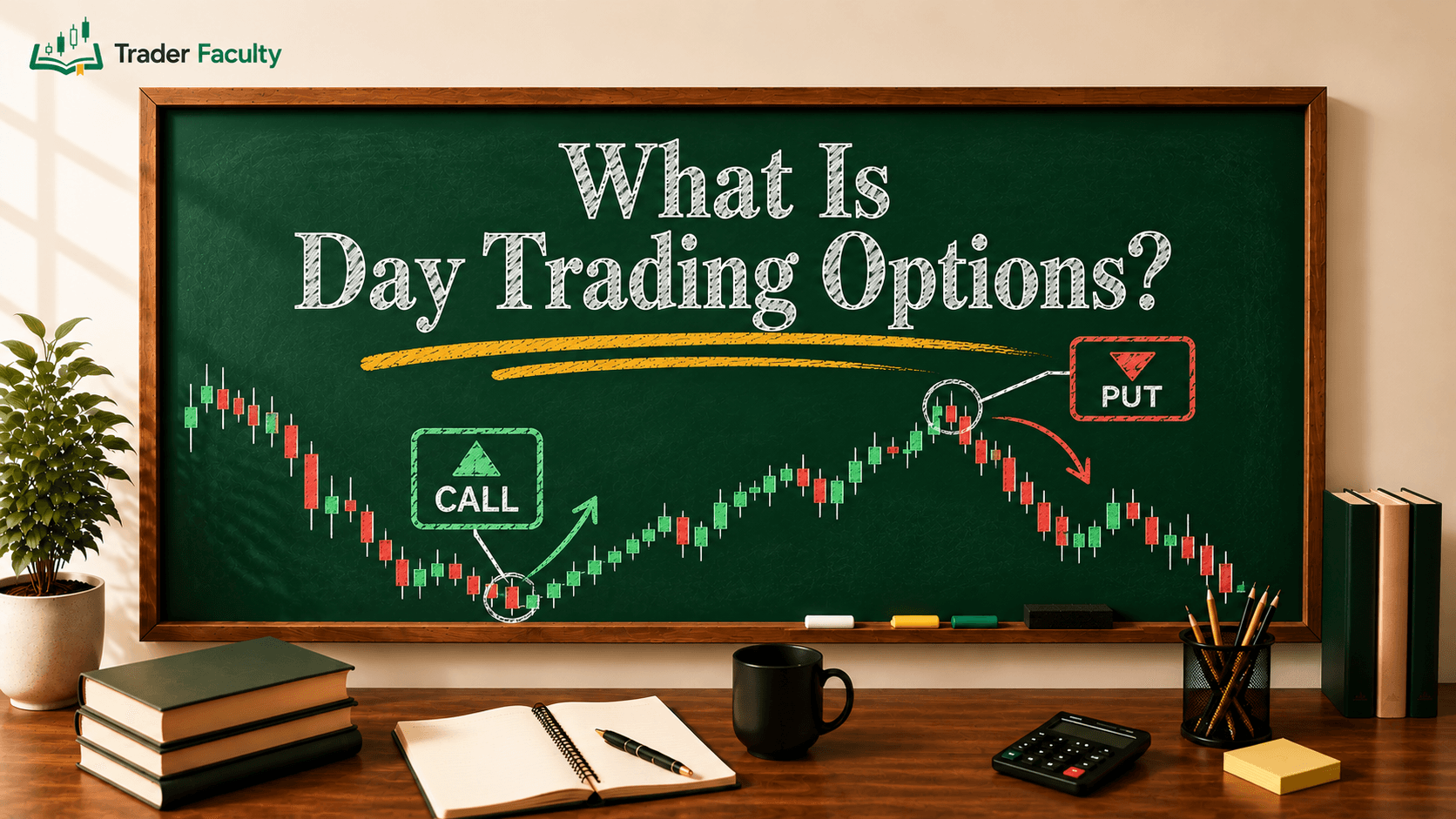
A call option is a financial contract that gives the buyer the right, but not the obligation, to buy shares of an underlying asset at a specified price within a set timeframe. Traders buy call options when they expect the price of the asset to rise.
A put option is a financial contract that gives the buyer the right, but not the obligation, to sell shares of an underlying asset at a specified price within a set timeframe. Traders buy put options when they expect the price of the asset to fall.
To buy either contract, the buyer pays an upfront fee to the option seller. This fee is known as the option premium. In stock markets, one standard option contract controls 100 shares of the underlying stock.
Two key terms define every option contract:
- Strike Price: The set price at which the contract owner can buy or sell the underlying asset.
- Expiration Date: The final date on which the option contract remains valid. After this date, the contract expires and becomes worthless.
Official market guidance from the US SEC outlines how these standardized terms set buyer rights and seller duties across public exchanges.
Rights vs Obligations: The 4-Quadrant Options Matrix
Understanding puts vs calls requires looking at both sides of the trade. Every option trade involves a buyer (long position) and a seller (short position, also called a writer).
- Option Buyers (Long): Pay the fee upfront. They gain the right to exercise the contract if market conditions turn favorable. Their risk is capped at the fee they paid.
- Option Sellers (Short): Collect the fee upfront. They accept the obligation to fulfill the trade if the buyer decides to exercise. Their profit is capped at the fee collected, but their risk can be much larger.
The relationship between positions, rights, obligations, and risk is summarized in the table below:
| Position | Contract Role | Market Outlook | Maximum Profit | Maximum Loss |
|---|---|---|---|---|
| Long Call (Call Buyer) | Right to buy shares | Bullish (Price rises) | Unlimited | Premium paid |
| Short Call (Call Seller) | Obligation to sell shares | Bearish / Neutral | Premium received | Unlimited (if unhedged) |
| Long Put (Put Buyer) | Right to sell shares | Bearish (Price falls) | Strike price minus premium | Premium paid |
| Short Put (Put Seller) | Obligation to buy shares | Bullish / Neutral | Premium received | Strike price minus premium |
How Call vs Put Options Work: Payoffs and Break-Even Points

To evaluate whether an option trade turns a profit, you must calculate its break-even price. The break-even point is the market price the underlying stock must reach at expiration for the trade to cover its initial cost.
The break-even formulas for buying calls and puts are written below:
Call Option Break-Even = Strike Price + Premium Paid
Put Option Break-Even = Strike Price - Premium Paid
Call Option Walkthrough
Imagine Stock ABC is trading at $100 per share. You buy a call option with a $100 strike price for a $3 premium per share ($300 total for 100 shares).
- Break-Even Point: $100 strike price + $3 premium = $103 per share.
- Profit Scenario: If Stock ABC rises to $110 at expiration, your option gives you the right to buy shares at $100. You can sell them immediately at $110, making $10 per share. Subtracting your $3 premium leaves a net profit of $7 per share ($700 total).
- Loss Scenario: If Stock ABC stays at or falls below $100, you do not exercise the contract. The option expires worthless, and your loss is capped at the $3 premium paid ($300 total).
Put Option Walkthrough
Imagine Stock ABC is trading at $100 per share. You buy a put option with a $100 strike price for a $3 premium per share ($300 total for 100 shares).
- Break-Even Point: $100 strike price - $3 premium = $97 per share.
- Profit Scenario: If Stock ABC drops to $90 at expiration, your option gives you the right to sell shares at $100. You make $10 per share on the move. Subtracting your $3 premium leaves a net profit of $7 per share ($700 total).
- Loss Scenario: If Stock ABC stays at or rises above $100, the put option expires worthless. Your loss is capped at the $3 premium paid ($300 total).
An option's total price consists of intrinsic value (the actual profit built into the contract) and extrinsic value (time value). As the expiration date gets closer, extrinsic value drops—a process known as time decay (or theta).
Practical Trading Scenarios: Speculation vs Protective Hedging
Traders use call and put options for two primary purposes: directional speculation and portfolio hedging.
1. Directional Speculation (Long Call)
If you expect a company's share price to jump after a product launch, buying stock outright requires significant capital. Buying 100 shares at $100 requires $10,000. Alternatively, buying a call option for a $3 premium costs $300. If the stock price rises, the option price increases in value, offering upside potential with less total capital placed at risk.
2. Protective Hedging (Long Put)
If you own 100 shares of Stock ABC worth $10,000 and worry about a market pullback before earnings, you can buy a put option with a $100 strike price for $300. If the stock drops sharply to $80, your stock holding loses $2,000. However, your put option gains $1,700 in net value, limiting your overall loss. In this setup, the put option acts as downside insurance for your portfolio.
Common Mistakes in Options Trading
Beginners often make key mistakes when entering option markets:
- Confusing Buyer Rights with Seller Obligations: Assuming that selling a call option is identical to buying a put option. Selling options introduces mandatory trade obligations that require separate risk management.
- Ignoring Time Decay: Holding out-of-the-money options into expiration while time decay steadily erodes contract value day by day.
- Writing Unhedged (Naked) Calls: Selling call options without holding the underlying stock or an offsetting contract. If the stock price skyrockets, losses on an unhedged short call are theoretically unlimited.
Conclusion
Choosing between a call vs put option depends on your market view and trade goal. Buy a call option if you expect prices to rise, or buy a put option if you expect prices to fall or want downside protection for existing stock. Always remember that buyers face capped risk equal to the premium paid, while contract sellers take on obligations that require strict risk controls. Take time to build a strong foundation in options trading before risking real capital in live markets.
Trading options carries a risk of losing capital, as contracts can lose all value by expiration. Use this guide for educational learning and test your understanding on a demo account before placing live trades.
Frequently Asked Questions
What is the main difference between a call option and a put option?
A call option gives the buyer the right to buy an asset at a set strike price, while a put option gives the buyer the right to sell it. Call buyers profit when the asset price rises, whereas put buyers profit when the asset price falls.
Should I buy a call option or a put option when expecting a stock to drop?
You should buy a put option if you expect a stock's price to drop. A put option increases in value as the underlying stock price declines below the strike price.
Can you lose more money than you invest when buying options?
When you buy options (long call or long put), your maximum loss is strictly capped at the initial premium paid plus transaction fees. However, selling (writing) options carries much higher risk, including theoretically unlimited loss when selling unhedged calls.
How do you calculate the break-even point for calls and puts?
For a call option, the break-even point equals the strike price plus the premium paid. For a put option, the break-even point equals the strike price minus the premium paid.
What happens when a call or put option expires in the money?
When an option expires in the money, it holds intrinsic value. Depending on your brokerage settings and account privileges, in-the-money options are usually exercised automatically at expiration or closed out for a cash profit before market close.
Keep learning
What is Trading?
New to this? Start from the beginning and learn what to trade.
8 lessons quiz
Start with the basicsThe Trader Faculty Team writes and reviews every guide together — pairing hands-on market experience with a curriculum-first approach to trading education. One good syllabus, taught in the order that makes you better.