ECN Broker Explained: How Direct Market Execution Works
Discover what an ECN broker is and how direct market order routing works for forex traders. Read the full guide.
By Trader Faculty Team
Direct Answer
An ECN broker (Electronic Communication Network broker) is a financial intermediary that routes order flow directly to institutional liquidity providers without passing trades through a dealing desk. Traders receive raw variable market spreads starting from 0.0 pips and pay a fixed per-lot round-turn commission fee per trade.
An ECN broker—short for Electronic Communication Network broker—is a financial intermediary that connects retail traders directly to liquidity providers like commercial banks and institutional network pools without a dealing desk.
Many traders upgrade to an ECN account expecting zero spreads, only to discover variable spread widening and per-lot round-turn commissions. Knowing how direct market order matching works helps you calculate your real execution expenses and pick the right trading environment for your strategy.
Quick Takeaways
- ECN brokers match buy and sell orders directly within institutional liquidity pools without taking the opposite side of your trade.
- Total trading costs consist of variable raw spreads combined with a fixed commission fee per lot.
- Spreads on ECN accounts can fluctuate or expand during major economic releases and periods of low liquidity.
- Order execution relies on available market depth, meaning market execution fills orders at the best available bid or ask price.
What Is an ECN Broker?
An ECN broker operates as a technology bridge connecting your trading software to a digital hub of banks and institutional buyers.
When exploring what is ecn broker trading, the core concept centers on direct access. The ecn broker meaning rests on the Electronic Communication Network standard, which acts like an automated auction house. Instead of buying from your broker's private inventory, your order enters a central pool where global financial firms post real-time prices.
Because the broker doesn't run a dealing desk—a private trading desk that fills client orders internally—they don't trade against you. They charge a fee for passing your orders straight into the interbank market.
How ECN Broker Execution Works Behind the Scenes
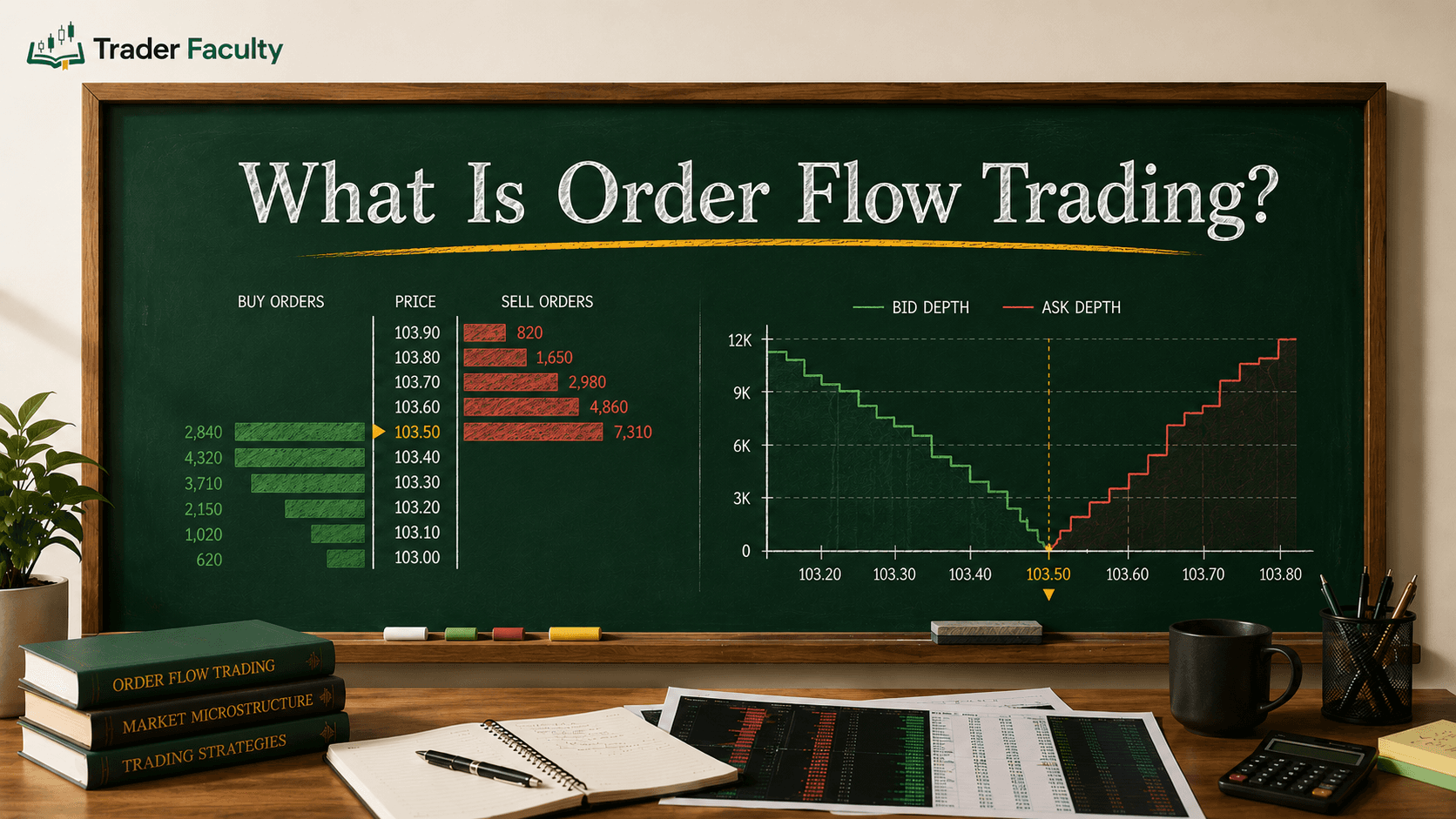
To see ecn broker explained clearly, look at the Depth of Market (DOM)—the electronic list showing available buy and sell orders at different price levels.
Tier-1 banks, hedge funds, and prime brokers feed their bid prices (what they pay to buy) and ask prices (what they charge to sell) into the ECN aggregator. The network ranks these quotes to display the best available prices on your platform screen.
When you click buy, the system matches your request with the lowest available ask price on the network. If liquidity—the volume of orders available at a specific price—is deep, your full trade fills instantly. If market liquidity is low, your trade fills across multiple price steps. This direct matching eliminates re-quotes—unwanted pop-up messages rejecting your trade price—because the price comes directly from live participant quotes.
Total Cost Structure: Raw Spreads vs. Per-Lot Commissions
Trading costs on an ECN account use a simple two-part equation:
Total Trading Cost = Raw Spread Cost + Round-Turn Commission
To compare trading models, look at how pricing works across different account types:
- Standard Account: A standard account charges a marked-up spread of 1.5 pips on EUR/USD. On a standard lot (100,000 currency units), each pip equals $10. Total cost = $15.00 per trade.
- ECN Account: An ECN account offers a raw spread of 0.1 pips ($1.00) plus a fixed round-turn commission of $6.00 per standard lot. Total cost = $7.00 per trade.
Active day traders save money on ECN accounts due to narrower spreads, but micro-lot traders must check minimum commission thresholds so fixed fees don't eat into small balances.
ECN Broker vs. Market Maker: Key Execution Differences

The differences between direct network routing and dealing desk execution shape your trading environment:
| Execution Feature | ECN Broker | Market Maker |
|---|---|---|
| Order Destination | Interbank liquidity network | Internal dealing desk |
| Pricing Structure | Raw variable spread + commission | Marked-up spread with no commission |
| Counterparty | Institutional market participants | Broker's internal trading desk |
| Re-Quotes | None | Possible during volatile conditions |
| Order Execution | Market execution (variable fill) | Instant or market execution |
How to Identify a True ECN Broker
Not all accounts marketed as ECN use true network execution. Some platforms use hybrid systems that route orders through internal dealing desks before reaching liquidity providers.
Look for these markers to verify direct market access:
- Raw Spreads From 0.0 Pips: Spreads on major pairs drop near zero during active market hours.
- Transparent Commission Tables: Commission rates appear clearly per lot rather than inside hidden spread markups.
- Depth of Market Access: The platform lets you view active order depth across different price levels.
- Tier-1 Regulatory Licensing: A genuine broker holds licenses from strict financial regulators like the US Securities and Exchange Commission (SEC) or UK regulators.
Many modern traders look for a reliable forex trading app that provides live Depth of Market access and direct liquidity routing on mobile devices.
Common ECN Trading Pitfalls to Avoid
Direct market execution brings advantages, but traders must prepare for operational risks:
- Spread Widening During News: During major economic releases, liquidity providers temporarily pull their orders. Raw spreads can expand from 0.1 pips to several pips in milliseconds.
- Market Slippage: Slippage—the difference between the price you clicked and the price where your trade fills—can occur on market execution when prices move fast.
- Micro-Lot Commission Impact: Minimum commission limits can increase transaction costs when trading very small lot sizes.
Conclusion
Selecting an ecn broker comes down to matching your strategy with the right execution model. Active day traders and scalpers benefit from lower raw transaction costs, while beginners trading tiny volumes may prefer fixed-spread simplicity.
Evaluating your broker's order execution model is just one part of selecting the right trading tools for your workstation.
Trading spot forex and leveraged instruments through an ECN account involves real market risk, spread expansion, and slippage, so test execution strategies on a demo account before risking live capital.
Frequently Asked Questions
What does ECN stand for in forex trading?
ECN stands for Electronic Communication Network. It refers to an automated digital system that connects individual traders directly with liquidity providers, such as tier-1 banks and hedge funds, allowing buy and sell orders to match without dealing desk intervention.
What is the difference between an ECN broker and an STP broker?
An ECN broker matches orders automatically inside a central digital network pool, displaying the Depth of Market (DOM). An STP (Straight-Through Processing) broker routes orders directly to liquidity providers, but might not offer a centralized order book or DOM ladder.
Do ECN brokers charge commissions on trades?
Yes. Because true ECN brokers pass raw market spreads directly from liquidity providers without adding spread markups, they earn money by charging a transparent, fixed commission fee per round-turn lot traded.
Can spreads expand on an ECN account?
Yes. ECN accounts feature variable spreads determined by live market supply and demand. Spreads often widen during low-liquidity market hours or right before major economic news announcements when liquidity providers briefly withdraw orders.
Is slippage possible with an ECN broker?
Yes. ECN execution uses market execution, which fills your trade at the next available price in the liquidity pool. During high market volatility, price gaps can cause positive or negative slippage from your requested order price.
Keep learning
Setting Up Your Trading Setup
Set up your broker, platform, and demo the right way.
8 lessons quiz
Set up your toolsThe Trader Faculty Team writes and reviews every guide together — pairing hands-on market experience with a curriculum-first approach to trading education. One good syllabus, taught in the order that makes you better.