Fill or Kill Order Guide 2026: Fast Execution Rules
Learn how a fill or kill order works in trading to enforce 100% immediate execution or cancellation. Read the full guide.
By Trader Faculty Team
Direct Answer
A fill or kill (FOK) order is a time-in-force instruction requiring a broker to execute a trade immediately in full at a specified limit price or cancel it entirely. It rules out partial fills on that order, so you never end up holding only part of the size you wanted.
You can use time-in-force settings to control how and when your order executes. A fill or kill (FOK) order is designed for situations where partial execution renders a strategy ineffective—such as multi-asset arbitrage or quantitative block trading.
This guide explains how FOK orders function, how they compare to alternative execution parameters, and the operational risks involved in high-speed markets.
Quick Takeaways
- A fill or kill (FOK) order mandates 100% execution of the requested order volume immediately or the exchange cancels the entire order.
- FOK orders eliminate partial fills on the order they're attached to, so a single order is never left half-filled.
- This order type acts as a time-in-force modifier attached to a base limit order price rather than functioning as an independent order type.
- Institutional traders routinely use FOK instructions on large orders to limit market impact (how much their own order moves the price) and slippage (the gap between the price they expect and the price they get).
- FOK orders get canceled more often in low-liquidity or fast-moving markets.
What Is a Fill or Kill (FOK) Order?
A fill or kill order (FOK) is an execution instruction that combines full-size execution with immediate timing. When you place an FOK order, your broker sends it to the order book with two firm conditions: every share or contract must fill instantly at your limit price or better, or the whole order is canceled.
In retail trading platforms, FOK is not a standalone order type like a limit order (buy or sell at your chosen price or better) or a market order (buy or sell right away at the best available price). Instead, it is a time-in-force (TIF) qualifier attached to a standard limit order. The primary defining characteristic of an FOK order is its zero-tolerance policy toward partial fills. If an investor submits an FOK order to purchase 1,000 shares of a stock at $50 per share, but only 999 shares are available at that price, the trading venue rejects the entire order and fills zero shares.
How Does a Fill or Kill Order Work in the Order Book?

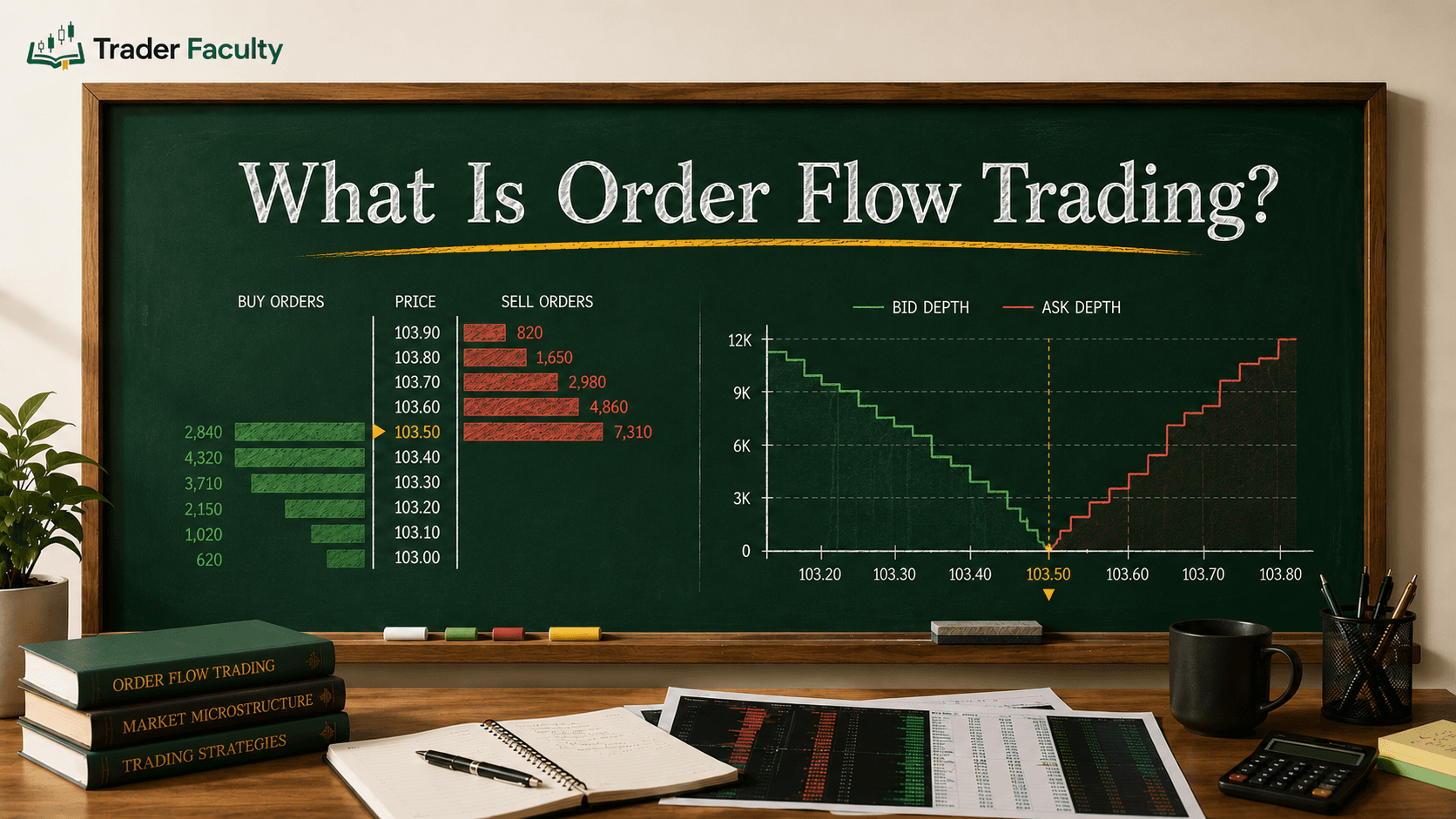
The mechanics of an FOK order rely on real-time matching engine protocols. When an exchange receives an FOK limit order, the engine checks the active order book (the live list of buy and sell orders waiting at each price) for immediate matching liquidity at or better than the target price.
To process an FOK order successfully, the venue matching system runs a two-part verification sequence:
- Quantity Validation: The system verifies whether the total depth at the limit price (or better) equals or exceeds the total order volume requested.
- Timestamp Execution: The system checks whether that volume is accessible in the immediate matching tick.
If both conditions pass, the trade executes in full across available price levels within the limit threshold. If either condition fails, the order book matching engine instantly drops the order. The canceled order never sits on the order book depth table, ensuring zero post-order footprint.
Worked Scenario: FOK Limit vs. Order Book Depth
Consider a trader submitting an FOK buy order for 500 contracts of Asset X at a limit price of $100.00.
| Ask Price | Available Quantity | Cumulative Volume at/below $100.00 |
|---|---|---|
| $99.95 | 200 contracts | 200 contracts |
| $100.00 | 250 contracts | 450 contracts |
| $100.05 | 400 contracts | Out of limit range |
In this order book scenario, liquidity matches as follows:
- 200 contracts are available at $99.95 (better than limit).
- 250 contracts are available at $100.00 (at limit).
- Total available volume at or below limit price ($100.00): 450 contracts.
Because the total required volume is 500 contracts and available liquidity at or below $100.00 is only 450 contracts, the matching engine instantly kills the entire order. No partial fill of 450 contracts takes place.
Can a Fill or Kill Order Be Placed as a Market Order?
While FOK qualifiers are most commonly attached to limit orders to control pricing, some institutional execution algorithms permit FOK instructions on aggressive market orders. When applied to a market order, the matching engine fills the entire order immediately against current bid or ask depth regardless of slippage, provided sufficient total volume exists across all active price levels.
However, standard retail platforms rarely support FOK market orders because of the price impact risk. If you attach an FOK parameter to a market order in a thin book, the venue matches your order down through multiple price tiers until 100% of the volume is met, which can push your average price well away from the best quote.
Because of that price risk, most retail platforms offer FOK only with a limit price, which caps the worst price you can get. Individual exchanges file their FOK order-handling rules with the US Securities and Exchange Commission (SEC) for review and approval, which is why specific execution mechanics can vary slightly between venues.
FOK vs. IOC vs. AON: Key Differences
Traders frequently confuse Fill or Kill (FOK) orders with other time-in-force qualifiers such as Immediate-or-Cancel (IOC) and All-or-None (AON). FOK essentially functions as a hybrid mechanism combining the immediate timing of an IOC order with the volume restriction of an AON order.
| Order Qualifier | Immediate Execution Required? | Partial Fills Permitted? | Order Rests on Book if Unfilled? |
|---|---|---|---|
| Fill or Kill (FOK) | Yes | No | No |
| Immediate or Cancel (IOC) | Yes | Yes | No |
| All or None (AON) | No | No | Yes |
| Standard Limit (Day / GTC) | No | Yes | Yes |
FOK vs. Immediate-or-Cancel (IOC)
An Immediate-or-Cancel order requires that any portion of the order that can be filled immediately at the limit price be executed right away. However, unlike FOK orders, an IOC order permits partial fills. If you place an IOC order for 1,000 shares and only 400 shares are available, the venue fills 400 shares and kills the remaining 600-share balance.
FOK vs. All-or-None (AON)
An All-or-None order shares the zero-partial-fill restriction of an FOK order. The primary distinction lies in timing: an AON order does not require immediate execution. If full volume is unavailable when an AON order reaches the market, the order stays open on the order book until sufficient volume becomes available at the limit price or the trading session closes.
Why Do Institutional Traders Use Fill or Kill Orders?
FOK execution instructions serve specific structural needs in modern electronic markets. While standard market and limit orders handle the vast majority of directional retail trades, FOK orders excel in specialized execution environments:
1. Preventing Legging Risk in Arbitrage Strategies
Statistical arbitrage and cross-market spread strategies rely on precise pricing correlations between related financial instruments. If an automated strategy buys Asset A and simultaneously sells Asset B, receiving a partial fill on Asset A leaves you exposed on one side of the trade with no matching hedge. Traders call this unhedged directional market risk.
An FOK order stops a partial fill on each leg, but it doesn't link the legs together. If Leg A fills in full and Leg B is canceled, you can still end up with a one-sided position. Where a venue offers it, a single multi-leg (combo or spread) order is the way to make every leg execute together or not at all.
2. Executing Institutional Block Trades
Large institutional orders can easily move asset prices if exposed to the public order book over time. By routing large block sizes as FOK limit orders via an Electronic Communication Network (ECN broker), institutions test whether immediate volume exists to absorb the trade without broadcasting their intentions or leaving residual fragments on the order book depth table.
3. Avoiding Unwanted Commission Overhead
In markets where trading venues or brokers charge fixed ticket fees per executed transaction fragment, receiving multiple small partial fills over an extended session increases transaction costs. FOK constraints ensure that position entry occurs as a single consolidated trade fill.
What Are the Execution Risks of Using FOK Orders?
While fill or kill instructions eliminate partial fill risk, they introduce distinct execution trade-offs that active traders must monitor carefully:
- High Order Rejection Rates: In low-volume assets or volatile market conditions, FOK orders display high cancellation frequencies. Expecting instant 100% fulfillment in thin liquidity often leads to missed entry points.
- Slippage on Wide Limits: If you set a very wide limit price so the full volume fills across several price levels, your average price can end up well away from the best quote.
- Order Routing Delays: In fast-moving markets, the short time your order takes to reach the venue can be enough for the available depth to change, so the order is canceled instead of filled.
How Do You Set Up a Fill or Kill Order on Your Platform?
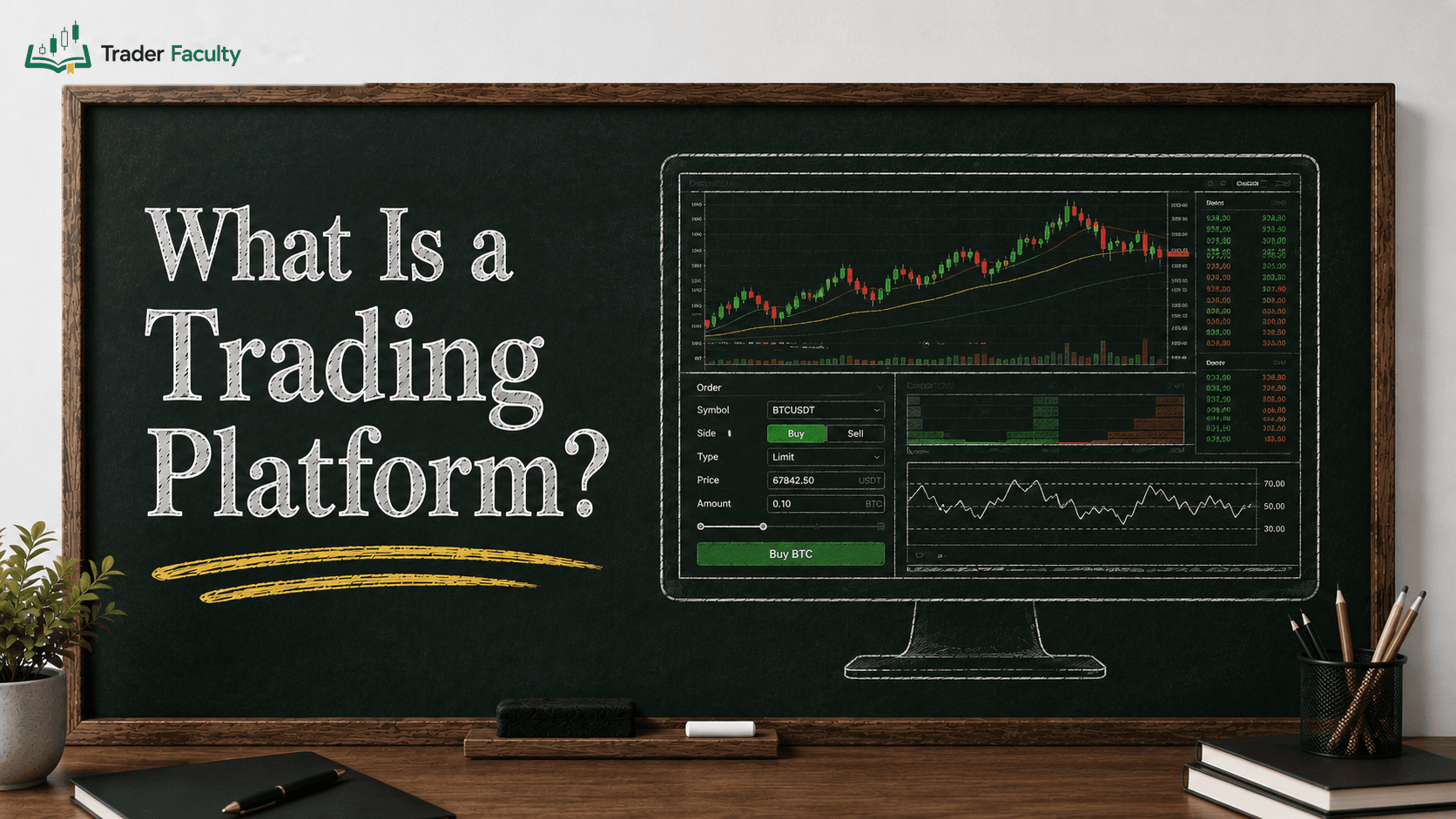
Most modern trading interfaces allow you to attach FOK qualifiers during the standard order entry workflow. Before submitting large block orders, you can review visual market tools like a stock heat map to assess broader sector liquidity and volatility. If you want to learn how to use TradingView to configure custom execution parameters, the setup process generally follows these steps:
- Select the Asset: Enter the ticker symbol or market pair you intend to trade on your platform interface.
- Choose Order Type: Select a standard Limit Order (or Market Order, if supported by the platform's execution engine).
- Specify Quantity and Price: Input your desired total trade quantity and maximum allowable limit price.
- Set Time-in-Force Parameter: Locate the Time-in-Force (TIF) dropdown menu—often defaulted to DAY or GTC (Good-Til-Canceled)—and switch the setting to FOK (Fill or Kill).
- Review and Submit: Confirm that your total position size matches your strategy requirements, as partial execution will not occur, then transmit the order to the exchange.
What Are the Common Beginner Mistakes with FOK Orders?
Entering conditional orders without understanding market mechanics often leads to costly execution failures. Here are key mistakes to avoid:
- Using FOK Orders in Low-Liquidity Markets: Placing an FOK instruction on small-cap equities or illiquid currency pairs almost guarantees instant cancellation, as available volume rarely supports full execution in a single tick.
- Confusing FOK with OCO Orders: Beginners sometimes confuse single order qualifiers with multi-order structures. An FOK order manages the timing and volume of a single position entry, whereas an OCO order governs linked profit-target and stop-loss conditional pairs.
- Overusing FOK for General Trades: Applying FOK modifiers to routine directional day trades often results in missed entry opportunities when minor partial fills would have fulfilled strategic objectives smoothly.
Conclusion
A fill or kill order gives you tight control over execution volume and timing by demanding immediate 100% fulfillment or instant order cancellation. By preventing partial fills on each order, FOK instructions help institutional block trades and arbitrage setups avoid incomplete fills, though multi-leg strategies still need a combined order to keep every leg linked. However, because FOK execution requires substantial immediate market depth, traders must weigh its strict protections against the higher risk of order cancellation in fast or thin markets.
Understanding specialized execution parameters is a core part of building professional trading skills. To continue building a structured, execution-ready trading setup, explore our comprehensive guide on trading tools to refine your platform mechanics and overall risk management framework. Trading financial instruments carries market risk, so treat these execution concepts as educational groundwork for developing your overall risk management framework.
Frequently Asked Questions
What is the main difference between a Fill or Kill (FOK) and an Immediate or Cancel (IOC) order?
An FOK order requires complete execution of the entire order volume immediately; if total volume is unavailable, the whole order is canceled. An IOC order also demands immediate execution, but it permits partial fills, executing available volume and canceling only the remaining balance.
Can a Fill or Kill order receive a partial fill?
No, FOK orders strictly prohibit partial fills. If the market cannot fulfill 100% of the requested shares or contracts in the immediate matching tick, the matching engine drops the entire order instantly.
Is a Fill or Kill order a market order or a limit order?
FOK is not an independent pricing order type. It is a time-in-force (TIF) qualifier attached to a base limit order price (or market order parameter where permitted) to dictate volume and timing constraints.
What happens if an FOK order cannot be executed immediately?
If full order volume is not available at or better than the limit price in the immediate matching sequence, the exchange cancels the order entirely. Canceled FOK orders do not rest on the active order book depth ladder.
Why do institutional traders use Fill or Kill orders?
Institutional traders use FOK orders when executing large block trades or multi-leg arbitrage strategies. FOK prevents "legging risk" (getting partially filled on one side of a spread) and avoids broadcasting unfilled order fragments to the public order book.
Keep learning
Setting Up Your Trading Setup
Set up your broker, platform, and demo the right way.
8 lessons quiz
Set up your toolsThe Trader Faculty Team writes and reviews every guide together — pairing hands-on market experience with a curriculum-first approach to trading education. One good syllabus, taught in the order that makes you better.