What Is Herd Behavior? How Crowds Move Markets
Learn how herd behavior drives market crowds and how to protect your capital from emotional moves. Read the full guide.
By Trader Faculty Team
Direct Answer
Herd behavior in financial markets occurs when traders mimic the crowd's buying and selling actions rather than making independent decisions based on objective analysis. This tendency is typically fueled by fear of missing out during market rallies and widespread panic during sharp downturns. Following the group often leads traders to buy near market peaks and sell near market bottoms.
Herd behavior in trading happens when investors buy or sell assets simply because others are doing it. Instead of relying on their own analysis, traders follow the crowd, often driven by fear or excitement.
You might see a stock surge on social media and feel an urge to buy before you miss out. Later, as prices reverse, that initial excitement turns into panic as everyone rushes for the exit at once. This guide explains how crowd pressure shapes market moves, why blind following harms your account, and how to build habits that keep you grounded.
Quick Takeaways
- Crowd buying often peaks right before a trend runs out of steam, leaving late buyers with heavy losses.
- Following the crowd feels safe emotionally, but profitable trading requires following a clear, tested system instead.
- Fading a strong move without confirmation is just as risky as chasing it, because irrational trends can last longer than expected.
- Setting stop-loss orders before entering any trade protects your capital from sudden crowd panics.
What Is Herd Behavior in Trading?
Herd behavior is the tendency of individuals to mimic the financial actions of a larger group, regardless of their own analysis or market data. When herd behavior takes over, asset prices move because of social momentum rather than changes in company earnings, economic data, or technical support levels.
This reaction is rooted in herd mentality, a psychological state where an individual suspends personal judgment to fit in with group actions. In British English, this concept is commonly spelled as herd behaviour, but both terms describe the exact same market phenomenon. In daily trading, it shows up when thousands of retail traders rush to buy the same stock, currency, or commodity after seeing it trend on news sites or chat channels.
The human brain evolved to view group consensus as safety. For early humans, running in the same direction as the tribe protected the individual from predators. In modern financial markets, however, that same survival instinct backfires.
When everyone buys at the same time, prices become stretched far beyond realistic valuations. When the buying stops, late buyers are left holding assets that drop sharply in value.
How Herd Behavior Works: The Psychology of Crowds
Crowd behavior in financial markets is driven by deep social instincts that prioritize group safety over independent thinking. Market crowds form through three main psychological drivers:
- Social Proof: When people feel uncertain about where a market is heading, they look at what others are doing. If thousands of traders are buying a specific tech stock, a beginner assumes those buyers must know something valuable. The sheer volume of participants creates a false sense of certainty.
- Fear of Missing Out (FOMO): Seeing other people share stories of rapid profits triggers fear of missing out (FOMO) — the anxious feeling that others are making money while you sit on the sidelines. FOMO pushes traders to abandon their trading rules and buy after a large rally has already happened.
- Informational Cascades: An informational cascade occurs when individuals abandon their private research because public actions seem overwhelming. A trader might notice that a chart is overbought (bought so fast that a pullback becomes likely), yet they buy anyway because popular market sentiment insists the rally will continue.
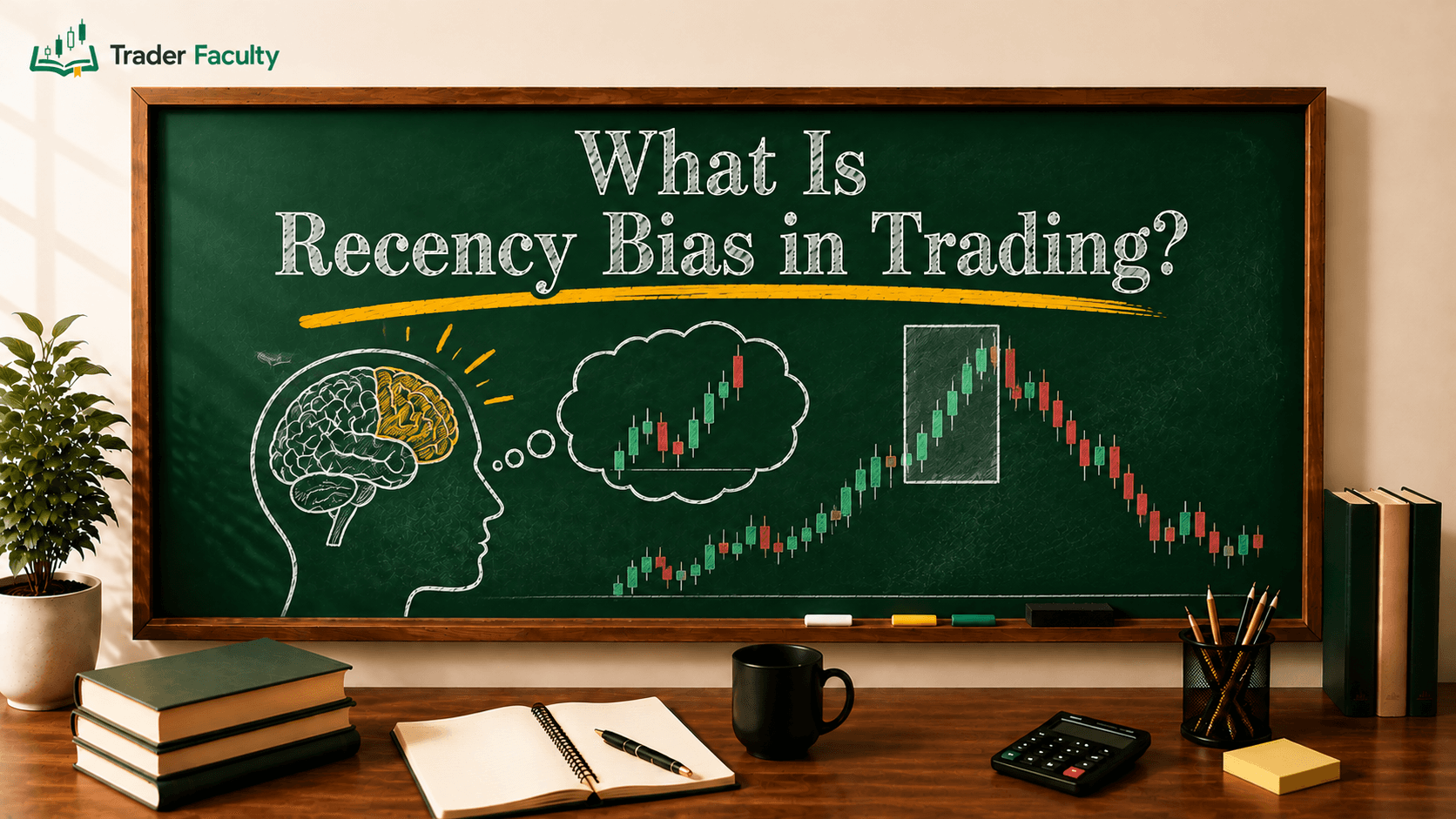
This herd dynamic often feeds on recency bias, where traders assume that because an asset gained value over the past few days, it will keep climbing at that same speed forever. Recent green candles make the trade look safe, tricking market participants into ignoring the real risk of a sharp correction.
Why Herd Behavior Matters for Financial Traders
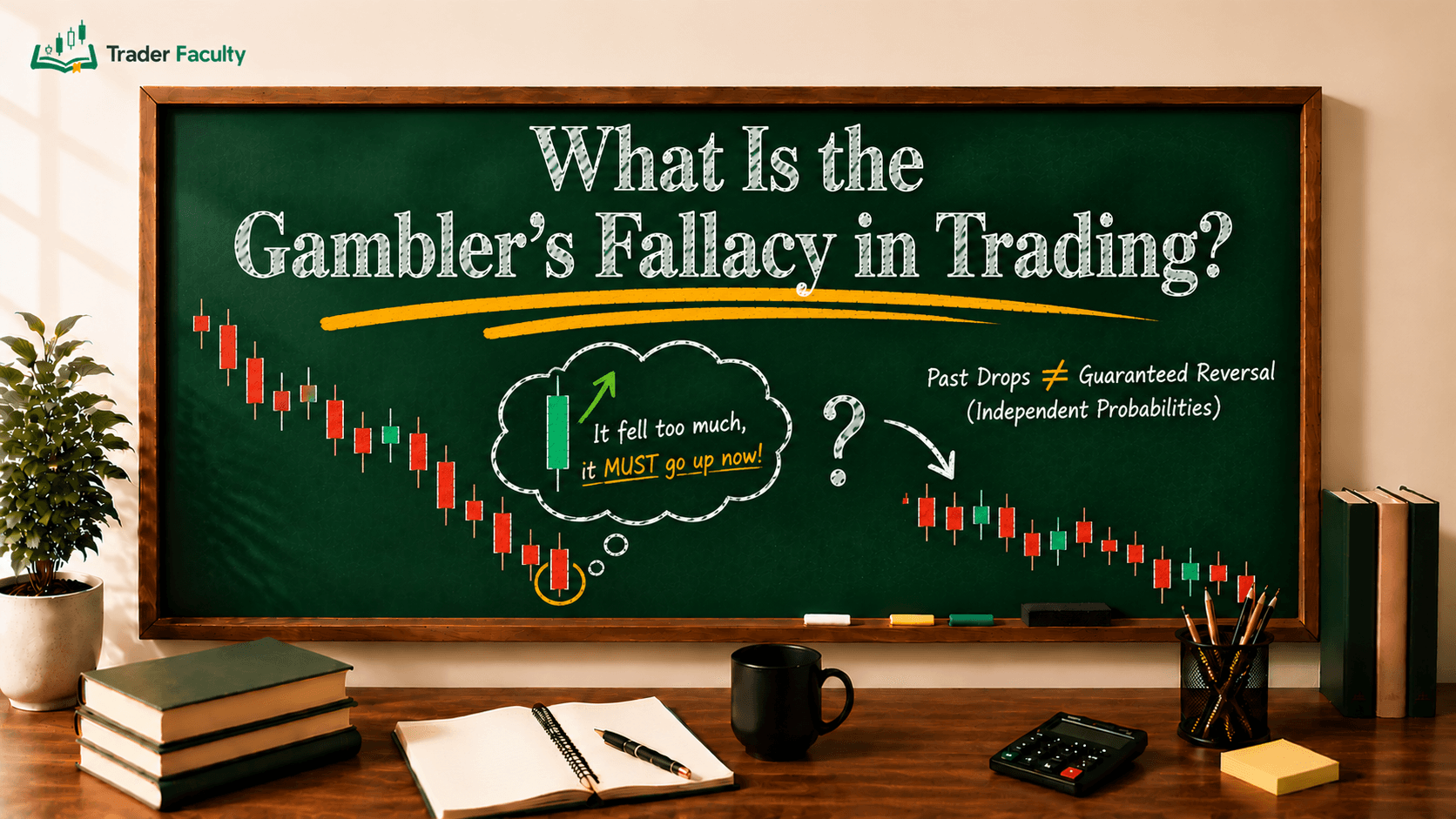
For example, during the late-1990s dot-com bubble, many investors piled into internet stocks simply because prices kept climbing, only to see sharp losses once the buying stopped — a classic illustration of herd behavior at work.
Herd behavior matters because crowd momentum distorts market pricing, creating extreme price swings that trap unprepared traders. When emotional crowds flood an asset, prices can climb far past reasonable technical targets, forming speculative bubbles. Once the last group of buyers enters the market, buying volume dries up, leaving the price vulnerable to a rapid crash.
Traders caught in herd movements usually suffer from poor timing. They enter during the euphoria phase near market tops, right when institutional participants are selling to take profits. When prices start to fall, panic sets in. The same crowd that bought together now rushes to sell together, dumping positions at market bottoms out of pure fear.
Regulators like the U.S. Securities and Exchange Commission warn that chasing social media hype without independent research often leads to steep financial losses. Relying on online chatter removes your personal responsibility and leaves your capital exposed to sudden market reversals.
At the same time, traders must avoid blind contrarianism. Trying to short a powerful market rally simply because "the crowd is buying" is just as dangerous as following the crowd. Strong trends can continue far longer than expected. Fading a crowd requires clear technical confirmation and strict risk management, not just a guess that the market has gone too high.
Herd Behavior vs. Systematic Trend Following

While herd behavior and trend following both involve trading in the direction of market movement, their execution and mindset are completely opposite. Beginners often confuse following a trend with following a herd, but the two approaches could not be more different.
A herd trader acts on emotion, rumors, and social approval without defined risk. A systematic trend follower, on the other hand, relies on objective chart rules, entry signals, position sizing, and predetermined exit points.
| Factor | Herd Behavior | Systematic Trend Following |
|---|---|---|
| Entry Trigger | Social buzz, FOMO, and emotional impulse | Objective chart rules and technical confirmation |
| Risk Management | No plan; stop-losses are rarely used | Predefined stop-loss and calculated position size |
| Emotional State | Excitement, greed, and fear | Calm, neutral, and rule-focused |
| Exit Strategy | Panic selling during a sharp reversal | Planned profit target or trailing stop hit |
Trend followers recognize that crowds create trends, but they never trade based on the crowd's feelings. They wait for technical confirmation on their charts, define their maximum dollar risk before clicking buy, and protect their capital with a stop-loss order — an instruction to close a trade if price drops to a set level. If the market turns, the trend follower exits calmly according to plan, while the herd trader freezes in hope.
Common Mistakes When Facing Market Crowds
Traders run into trouble when they let collective market emotions dictate their trading decisions instead of their rules. Here are the three most common pitfalls:
- Chasing Overextended Moves: Entering a trade after price has already moved up for several consecutive days without a pullback. By the time an asset becomes a mainstream headline, the low-risk entry point is long gone.
- Panic Selling at Support: Dumping positions during market sell-offs when fear is at its peak. This often happens right at support — a price level where buying interest has historically stopped prices from falling further — causing traders to sell at the absolute bottom.
- Fighting Strong Momentum Without a Setup: Trying to pick tops or bottoms simply because you believe the crowd must be wrong. Fighting momentum without an objective technical setup can lead to heavy losses as strong trends sweep away premature contrarian trades.
How to Protect Your Trades from Herd Mentality
Protecting your trading account from crowd influence requires practical rules that separate your execution from social noise. Here are four steps to keep your trading disciplined:
- Trade with a Written Trading Plan: Define exact entry criteria, position sizing, and stop-loss placement before opening any position. If a setup does not meet your written rules, do not take it, no matter how many people are talking about it online.
- Limit Social Media During Market Hours: Turn off chat room notifications, forums, and speculative feeds while actively managing trades. Clean price charts provide clearer information than noisy opinions.
- Keep a Detailed Trading Journal: Record the exact reason for every trade you make. Reviewing your journal weekly helps you spot whether you entered based on your system or because of crowd pressure.
- Set Stop-Loss Orders Immediately: Enter your stop-loss directly with your broker at the moment of trade execution. A mechanical stop takes emotion out of emergency exits and protects your account if a crowd suddenly panics. You can also use a trailing stop — an order that moves with price to lock in profits while protecting against sudden reversals — to secure gains systematically.
Conclusion
Handling herd behavior comes down to recognizing emotional impulses, sticking to tested trading rules, and protecting your capital above all else. When you feel a sudden urge to buy an asset simply because everyone else is cheering for it, pause and check your chart rules. Remember that the crowd is most enthusiastic right before a trend exhausts itself.
Understanding crowd dynamics is only one part of developing a complete approach to trading psychology, which helps you build emotional control across every market condition. Focus on executing your personal strategy, calculate your position size carefully, and let other traders chase the noise.
Trading financial markets carries the risk of losing money, so treat this guide as educational material to build your skills rather than personal financial advice.
Frequently Asked Questions
What triggers herd behavior during sudden market sell-offs?
Sudden market sell-offs trigger herd behavior primarily through collective fear and loss aversion, because when prices drop rapidly, seeing others exit creates panic and a rush toward liquidity. Traders abandon their planned stops and sell indiscriminately to stop further losses, which accelerates the downward price momentum and often causes prices to bottom out at extreme, oversold levels.
Is herd behavior illegal in financial markets?
Herd behavior itself is not illegal because it represents natural collective investor sentiment and independent market choices. However, coordinated efforts to deliberately manipulate crowd behavior, such as organized pump-and-dump schemes or spreading false rumors to trigger panic, are strictly prohibited by market regulators worldwide, while unconscious crowd following remains a common psychological bias rather than a regulatory violation.
How does social media amplify herd behavior among retail traders?
Social media amplifies herd behavior by speeding up informational cascades and intensifying social proof, because when thousands of users post screenshots of rapid profits on trading forums, beginner traders feel intense pressure not to miss out. This instant social validation encourages traders to ignore personal risk rules and pile into trending assets simultaneously, creating sharp, volatile price spikes.
Why does fading herd behavior often fail without technical confirmation?
Fading a crowd—taking the opposite side of a strong group trend—often fails because irrational market momentum can persist longer than a trader can remain solvent. Entering a counter-trend position without technical confirmation of exhaustion or structural reversal is simply guessing tops or bottoms, so successful contrarian trades require patience, clear chart signals, and strictly defined stop-losses.
Which financial markets experience the most herd behavior?
Herd behavior occurs across all financial markets, but it is most pronounced in highly speculative, retail-heavy assets such as meme stocks, speculative growth equities, and cryptocurrency markets. These assets often lack traditional valuation anchors, allowing hype, social sentiment, and viral news to dominate price discovery far more easily than in mature, institutionally dominated markets.
Keep learning
Trader Mindset
Strategy is the easy part. Sticking to it is the hard part.
6 lessons quiz
Start Trader MindsetThe Trader Faculty Team writes and reviews every guide together — pairing hands-on market experience with a curriculum-first approach to trading education. One good syllabus, taught in the order that makes you better.