Is Forex Trading Gambling? The Truth for Beginners
Learn whether forex trading is gambling, how market odds differ from casino games, and how to protect capital. Read the full guide.
By Trader Faculty Team
Direct Answer
Forex trading is not legally or economically gambling because currency prices reflect macroeconomic supply and demand rather than fixed casino odds. However, trading without a proven statistical edge, predefined stop-loss orders, and emotional discipline causes market participation to behave exactly like gambling. The market provides the probabilistic environment, but personal risk management determines whether you operate a trading business or take blind gambles.
Forex trading is not gambling by legal or economic definition. However, trading currency markets without a tested edge, strict risk limits, and emotional discipline makes it behave exactly like gambling.
Many beginners open an account hoping for fast returns, only to watch their balance shrink after a few erratic sessions. When you enter trades on gut feeling rather than a structured plan, you treat the market like a casino floor. This guide explains how market probabilities differ from casino games, why so many retail traders gamble without knowing it, and how to build habits that protect your capital.
Quick Takeaways
- Currency speculation is an auction-driven market based on macroeconomic data, not a game of pure chance with fixed house odds.
- Trading without a proven statistical edge, stop-loss orders, and position sizing turns financial markets into negative-sum gambles.
- Leverage multiplies both gains and losses, meaning small price swings can wipe out unmanaged accounts in minutes.
- Emotional habits like revenge trading and anchoring to losing positions mimic compulsive betting behaviors.
- You control the trade size, risk limit, and exit point in forex, whereas casino games never allow you to alter your downside once a bet is placed.
What Makes an Activity Gambling?
Gambling is the act of staking money on an uncertain event with fixed odds and a built-in mathematical advantage for the house. When you place a bet at a roulette table or buy a lottery ticket, the rules of the game are set in advance. The payout odds never fully match the true probability of winning, creating a mathematical edge for the casino. Over a large sample size of bets, the house always wins because the math ensures that players lose money over time.
Casino games also rely on independent events. If a roulette wheel lands on black ten times in a row, the odds of it landing on black on the next spin remain exactly the same. The wheel has no memory, and external events cannot change the probabilities. In pure games of chance, no amount of study, research, or personal discipline can change the mathematical disadvantage built into the game.
Is Forex Trading Gambling Explained: The Core Differences

Forex trading differs from gambling because currency prices reflect macroeconomic supply and demand rather than fixed mathematical odds designed to make you lose.
To understand this split, look at how forex trading works in the real world. It is the exchange of national currencies based on macroeconomic factors like interest rates, inflation data, and economic growth. Central banks, multinational corporations, and institutional banks trade trillions of dollars every day to support global business, hedge risk, and manage currency reserves.
Unlike a casino game, trading gives you direct control over your risk and reward on every position:
- Asymmetric Risk-to-Reward: In roulette, you risk one dollar to win one dollar or 35 dollars based on fixed payout tables. In currency trading, you can design setups where you risk 50 dollars to pursue a potential gain of 150 dollars.
- Dynamic Probabilities: Currency markets are not random number generators. While future prices remain uncertain, economic releases, central bank policy shifts, and institutional order flows create measurable trends and repeating price patterns.
- Active Trade Management: Once you place a bet on a roulette spin or a roll of dice, you cannot exit early or change your bet size. In currency trading, you can exit a position at any moment, take partial profits, or move your stop to break-even.
| Feature | Casino Gambling | Disciplined Forex Trading |
|---|---|---|
| Odds Structure | Fixed negative house edge | Variable risk-to-reward ratio |
| Risk Control | Total bet lost once placed | Losses limited with stop-loss orders |
| Exit Flexibility | Fixed rules until round ends | Position closed at any time |
| Price Driver | Random number generator | Global macroeconomic data |
| Long-Term Edge | Mathematically negative | Positive with a tested system |
When Trading Forex Becomes Gambling
Forex trading becomes gambling the moment you risk capital without a tested strategy, defined stop-loss limits, or disciplined position sizing. The market provides an arena of probability; your personal behavior decides whether you treat it as a business or a game of chance.
Three main factors turn retail currency trading into a gamble:
1. High Leverage
Leverage allows you to control large market positions with a small initial deposit. While leverage gives retail traders access to currency markets, it cuts both ways. If you're trading with 1:100 leverage, a market move of just 1% against your position wipes out your entire margin balance. Undisciplined traders use high leverage to take oversized bets, turning standard market noise into account-clearing events.
2. Transaction Friction as the House Edge
In a casino, the house edge is built into the rules of the game. In currency trading, transaction costs act as your friction. Every time you buy or sell, you pay the spread — the difference between the buy price and sell price.
You also pay potential commissions and overnight swap fees (interest charges applied for holding positions open into the next trading day). If you trade dozens of times a day on gut feeling, these small costs steadily eat away your capital, creating a negative mathematical drag similar to a casino edge.
3. Retail Loss Rates
When traders ignore risk management and trade on emotion, the results match casino outcomes. Research from the Financial Conduct Authority (2022) shows that approximately 80% of retail customers lose money when investing in Contracts for Difference (CFDs). This is largely due to high leverage and lack of risk controls. These losses do not happen because the currency market is rigged; they happen because untrained participants enter trades without an edge.
Mental Traps That Turn Trading into Gambling
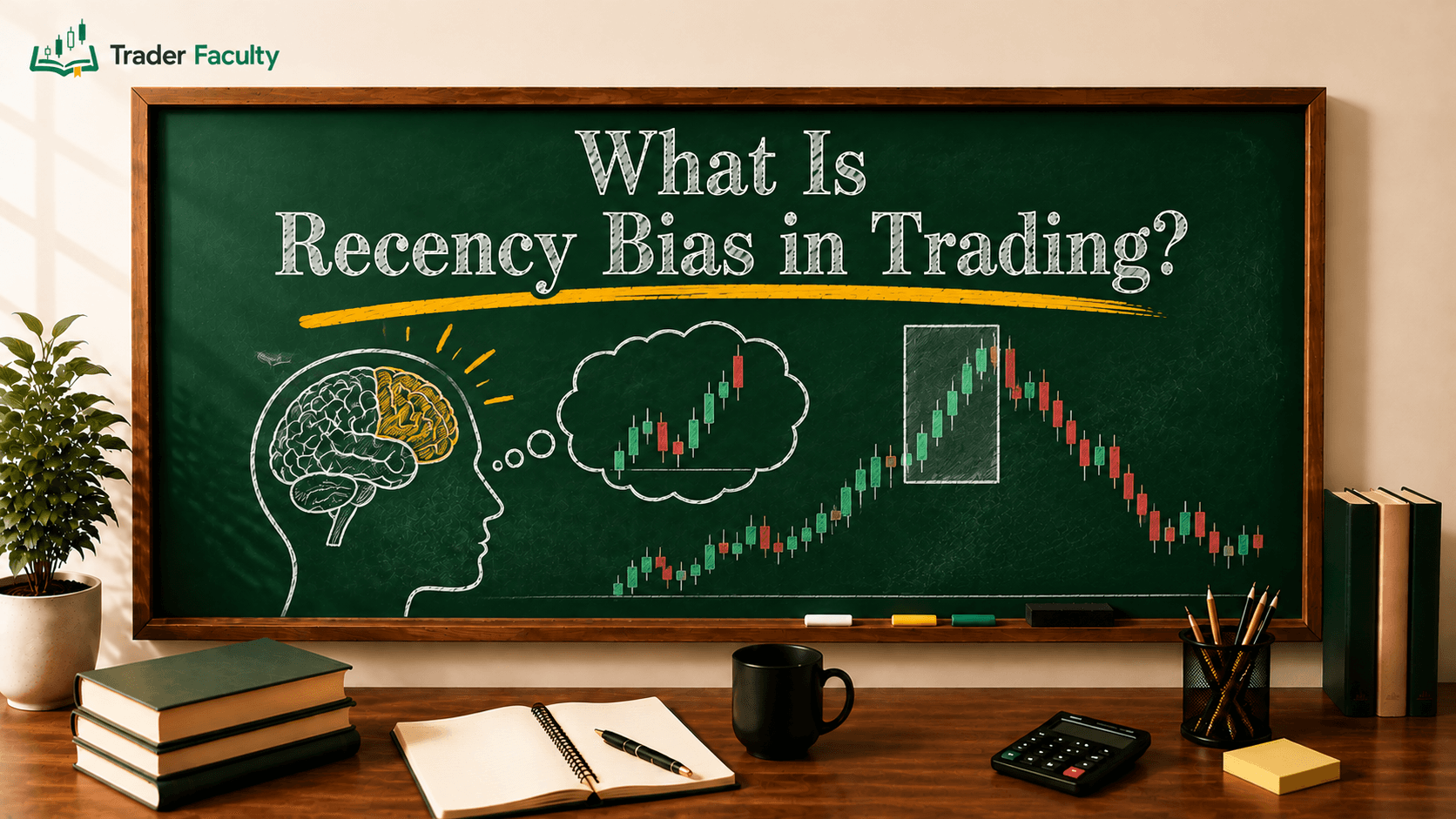
Mental biases cause traders to abandon logic and treat price charts like games of chance. When stress rises, the brain seeks patterns and dopamine hits rather than following structured rules.
The Gambler's Fallacy on Charts
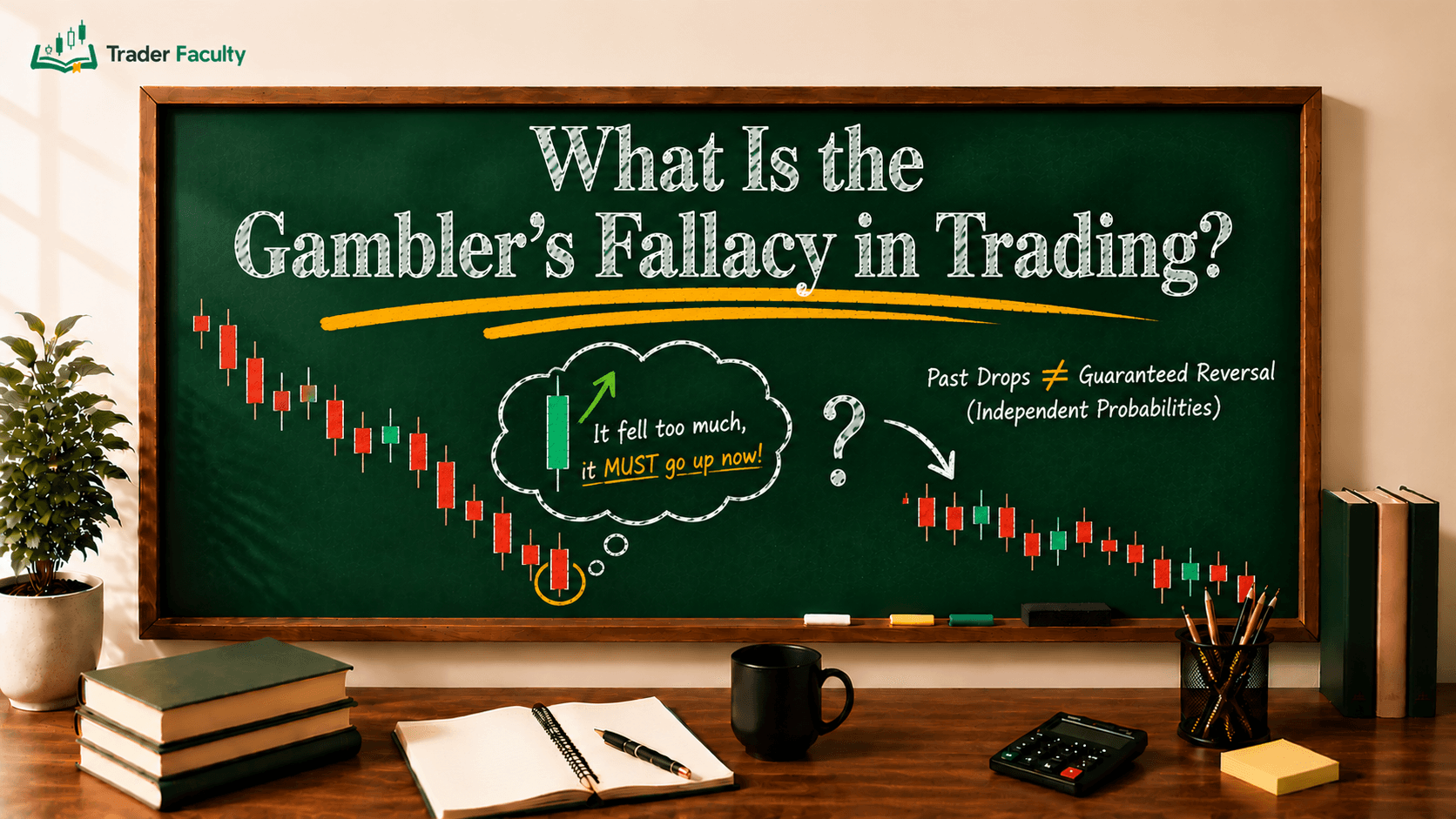
The Gambler's Fallacy is the belief that past random events alter the odds of future independent events. In trading, this trap appears when a beginner sees a currency pair drop for six days in a row and assumes it "must go up" today. Prices can trend far longer than your account can stay solvent. Entering a buy trade simply because the market has fallen is the exact same mental error as betting on red because black appeared five times.
Clinging to Losing Trades
Traders also fall prey to anchoring bias, where they fixate on their initial entry price and refuse to exit when market conditions turn against them. Instead of taking a small planned loss, an undisciplined trader holds on, hoping the market returns to their entry level so they can break even. This turns a controlled trade into a high-stakes gamble where a single trade can destroy weeks of progress.
Revenge Trading and Chasing Losses
When a gambler loses money at a blackjack table, the urge to place a double bet to win it back immediately is powerful. Retail traders experience this exact same urge, known as revenge trading. After suffering a loss, emotional traders skip their rules, increase their trade sizes, and jump back into the market to recover lost capital. This behavior replaces methodical planning with impulsive risk-taking.
Diagnostic Checklist: Are You Trading or Gambling?
You can determine whether you are trading or gambling by evaluating how you plan entries, control losses, and manage emotions. Review these everyday behaviors to see where your habits sit:
You Are Gambling If You:
- Enter positions based on gut feelings, excitement, or tips from social media groups.
- Trade without a stop-loss order (an instruction to exit a trade automatically at a chosen price to limit losses).
- Risk random amounts of money on each trade depending on how confident you feel.
- Feel a rush of excitement when winning and deep anger or anxiety when losing.
- Double your position size immediately after a loss to make your money back quickly.
You Are Trading If You:
- Enter positions only when price meets the clear rules of a tested trading plan.
- Predefine your exact dollar risk before clicking buy or sell.
- Use consistent position sizing, risking a small percentage of your account (such as 1% or 2%) per trade.
- Accept losses calmly as a normal cost of doing business in a probabilistic market.
- Keep a detailed trade log to review your execution and track your statistical edge over time.
Common Mistakes That Turn Traders into Gamblers
Beginners turn into gamblers when they trade on emotion, ignore risk rules, and try to win back losses quickly. Avoiding these three common mistakes will keep you on the path of structured speculation:
- Moving Your Stop-Loss Mid-Trade: Setting a stop-loss is meaningless if you drag it further away when price approaches your level. Moving your stop to avoid taking a loss is one of the clearest signs of gambling behavior; it replaces a defined risk limit with blind hope.
- Trading Out of Boredom: Professional trading involves long periods of waiting for high-probability setups to form. Gamblers trade because they crave the dopamine rush of being in the market. Entering positions when no setup exists leads to unnecessary losses.
- Overtrading During Drawdowns: Every trader faces a drawdown (the total decline from your account's highest balance to its lowest point). Trying to trade your way out of a drawdown by taking dozens of low-quality setups compounds emotional fatigue and drains account capital.
Conclusion
Forex trading is an open financial market, but whether it acts as a business or a gamble depends entirely on how you operate. The currency market provides the liquidity, price data, and volatility; you supply the risk management, strategy, and emotional discipline. If you trade without a defined system, chase fast profits, and risk capital blindly, forex behaves like a casino with terrible odds. To remain on the professional side of this line, you must treat your execution like a business and commit to building disciplined trading psychology.
Trading currencies always carries the risk of losing money, so treat your capital with respect and approach every session as a structured discipline rather than a game.
Frequently Asked Questions
Is forex trading considered gambling by definition?
Structurally and legally, forex trading is not gambling, because it is an open financial market driven by global economic fundamentals, interest rates, and institutional liquidity flows. In a casino, the house edge ensures a negative mathematical return over time, while in forex, disciplined participants can establish a positive mathematical expectancy by controlling trade size, managing downside risk, and targeting asymmetric risk-to-reward ratios.
Why do most retail traders lose money in forex?
Regulatory data from the UK Financial Conduct Authority indicates that approximately 80% of retail CFD customers lose money, and the primary driver is not that markets are rigged, but that untrained traders use excessive leverage, trade without stop-loss orders, and incur high transaction friction from overtrading. These reckless operational habits quickly transform dynamic market probability into an account-clearing gamble.
Can trading forex become an addiction like gambling?
Yes, currency trading can trigger compulsive behaviors similar to gambling addiction, because fast price fluctuations, high financial stakes, and the immediate feedback of wins or losses stimulate dopamine release in the brain. When individuals chase losses, experience emotional highs during wins, or trade out of boredom, they can display patterns often associated with behavioral addiction, which may call for psychological support.
Is currency trading based on luck or skill?
Single-trade outcomes always contain an element of short-term randomness, but long-term performance is governed by operational skill, and successful speculation relies on systematic edge, risk calculation, position sizing, and emotional neutrality. Relying on luck or intuition eventually results in complete capital depletion due to leverage and spread friction, whereas disciplined skill creates statistical longevity.
How do you know if you are gambling in forex?
You are gambling if you enter trades without clear criteria, omit stop-loss orders, risk arbitrary amounts per trade, or increase trade sizes immediately following a loss. In contrast, you are trading as a professional if every entry follows a verified framework, dollar risk is capped at a fixed percentage, and losses are accepted calmly as business expenses.
Keep learning
Trader Mindset
Strategy is the easy part. Sticking to it is the hard part.
6 lessons quiz
Start Trader MindsetThe Trader Faculty Team writes and reviews every guide together — pairing hands-on market experience with a curriculum-first approach to trading education. One good syllabus, taught in the order that makes you better.