Is Forex Trading Profitable? The Reality for Retail Traders
Is forex trading profitable? Learn why many retail traders lose money and what costs, leverage, and discipline mean for results. Read the full guide.
By Trader Faculty Team
Direct Answer
Is forex trading profitable? It can be, but regulators report that most retail accounts lose money. ESMA (the EU's securities regulator) reported in 2018 that 74-89% of retail CFD accounts typically lose money. Long-term results depend on managing spreads and overnight fees while keeping strict risk management, sensible position sizing, and emotional discipline.
Forex trading can be profitable, but regulator data shows that most retail CFD accounts lose money over time, often because of high leverage, transaction costs, and emotional decision-making.
Many beginners enter the foreign exchange market attracted by 24-hour trading and high leverage, expecting fast returns. Surviving long enough to build a consistent edge means treating currency trading as a probability business rather than a shortcut.
This guide breaks down retail failure rates, hidden structural friction, and the psychological traps that shape long-term performance. Searchers often type "is forex trading profitable explained" when they want a plain-language answer, and that's what you'll find here.
Quick Takeaways
- Liquidity and 24/5 market access (24 hours a day, five days a week) create high volume, but retail traders face meaningful friction from spreads, slippage, and swap fees.
- ESMA reported in 2018 that 74-89% of retail CFD accounts typically lose money.
- Profitability depends on risk management, position sizing, and managing cognitive errors rather than chasing high win rates.
- Cognitive biases like the sunk cost fallacy lead traders to hold losing trades too long, eroding capital faster than market volatility itself.
What Is Forex Trading Profitability and How Is It Measured?
Forex trading profitability is the net return a trader generates after subtracting all transaction costs—including spreads, commissions, and overnight swap rates—from their gross trading gains. True profitability is measured over long time horizons (such as months or years) rather than short-term winning streaks, which helps show whether performance reflects a repeatable strategy rather than temporary market luck.
To judge whether forex trading is sustainable, traders look at mathematical expectancy (EV), which is the average amount you expect to win or lose per trade over a large sample of trades:
Expected Value = (Win Rate × Average Win Size) - (Loss Rate × Average Loss Size)
A strategy with a 40% win rate can remain highly profitable if the average winning trade is three times larger than the average loss (a 1:3 risk-to-reward ratio). Conversely, a trader with an 80% win rate can lose their entire account if their rare losing trades are very large.
Here's a quick example using the 40% win rate and 1:3 ratio. If you risk $100 per trade, a win earns $300 and a loss costs $100. Over 10 trades you'd expect 4 wins and 6 losses, so (4 × $300) − (6 × $100) = $600, or $60 per trade on average. Real results will vary, and this ignores spreads and commissions.
Account capitalization also dictates survival. Beginners who start with small balances often feel pressured to use excessive leverage to generate meaningful cash returns, which distorts their risk perception and can speed up account losses.
Why Most Retail Traders Lose Money in Forex
Many retail traders lose money in foreign exchange partly because structural market friction erodes their equity and unmanaged leverage magnifies analytical errors. For context, ESMA (the EU's securities regulator) reported in 2018 that analyses by national regulators found 74-89% of retail CFD accounts typically lose money (CFDs are leveraged contracts that many brokers use for forex).
The three primary structural drivers of retail loss include:
- Structural Market Friction: Every trade starts slightly behind because of the bid-ask spread (the gap between the buy and sell price). Execution slippage (getting filled at a worse price than expected) during news events and overnight swap fees (interest charges for holding positions past the market close) can also act as a drag on capital.
- Leverage Misunderstanding: Financial leverage allows a trader to control a large position with a small amount of margin. However, excessive leverage multiplies losses just as quickly as gains, which can turn normal market volatility into margin calls (demands to add funds).
- Lack of Systematic Risk Rules: Without a rule that limits risk to a small fraction of capital per trade (such as 1% or 2%), a string of consecutive losses can shrink your account fast. Recovery then gets much harder, since a 50% loss needs a 100% gain just to break even.
The Psychological Barriers to Forex Profitability

Beyond technical execution and market friction, cognitive biases can be one of the biggest obstacles to consistent performance.
The Sunk Cost Fallacy in Action
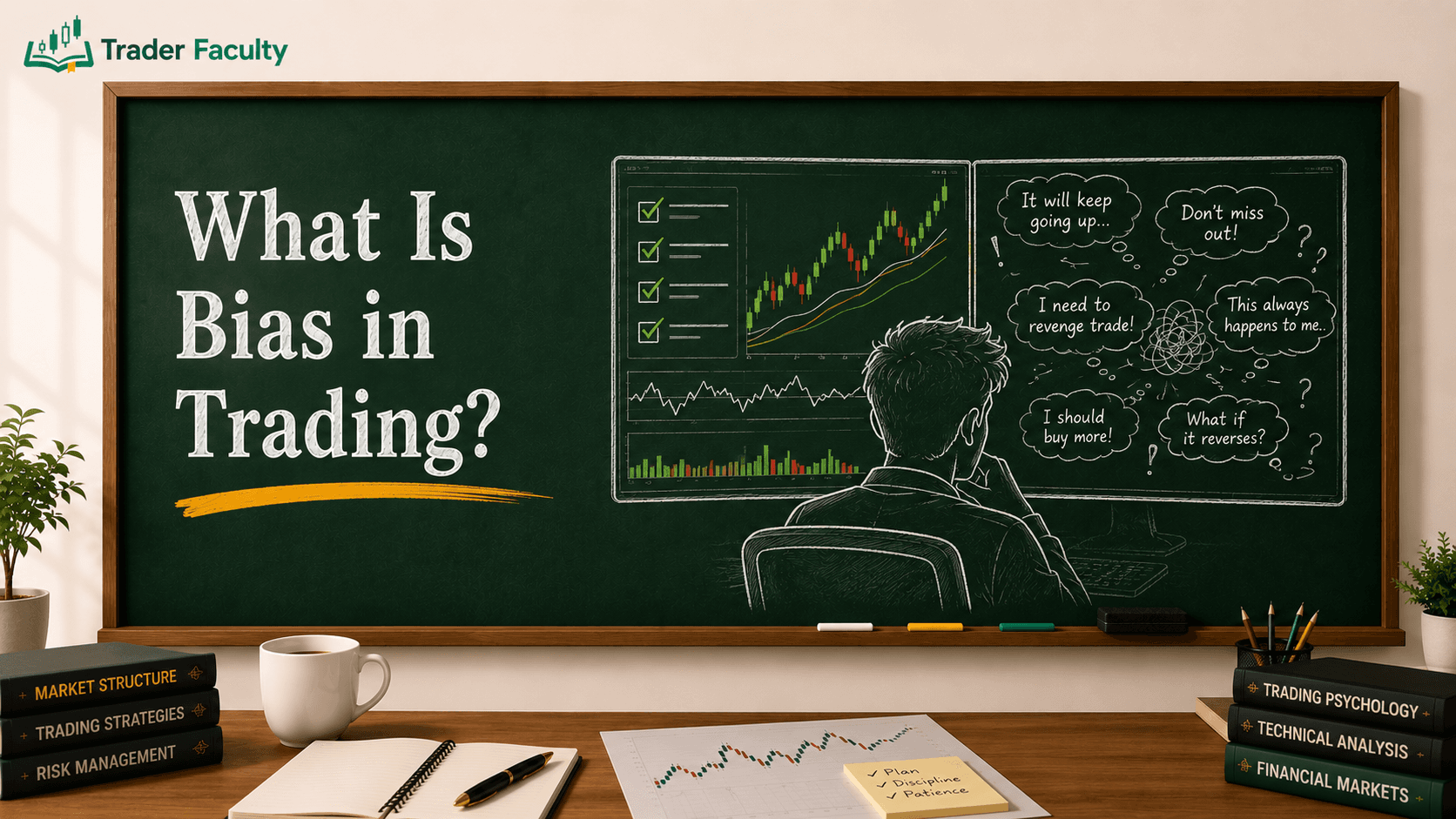
The sunk cost fallacy occurs when a trader continues committing capital, time, and emotional energy to a failing position simply because they have already invested heavily in it. Instead of accepting a small, planned loss by hitting a stop-loss (a preset exit price), the trader holds or adds to the losing position, hoping the market will turn around. This behavioral trap turns small manageable losses into large account losses.
Revenge Trading and Loss Aversion
Behavioral finance research suggests people feel the pain of a loss more strongly than the pleasure of an equal gain, a phenomenon known as loss aversion. After a loss, loss aversion can trigger revenge trading: the impulse to immediately open oversized, impulsive trades to win back the lost money. That reaction bypasses pre-planned trading rules and can drain remaining equity.
Overconfidence and Expectation Bias
A brief winning streak can lead beginners to mistake short-term market randomness for analytical skill. This overconfidence leads to over-leveraging and over-trading, leaving the account vulnerable when market conditions change.
How Successful Traders Maintain Long-Term Expectancy
Traders who stay profitable tend to act more like risk managers than speculators. Their goal isn't to win every trade but to run a system with positive long-term expectancy (an average result above zero per trade).
- Capital Preservation First: Long-term traders focus on defending their capital during unavoidable drawdowns (declines from an account's peak), accepting that losing trades are a normal cost of doing business.
- Standardized Position Sizing: Position size is calculated using fixed risk parameters based on the distance to the stop-loss order rather than arbitrary lot sizes (fixed trade units).
- Psychological Auditing: Maintaining a detailed journal that logs emotional triggers alongside technical setups helps identify recurring behavioral mistakes.
Developing this mental discipline is the core focus of trading psychology, which separates sustainable consistency from short-term luck.
Common Mistakes That Destroy Retail Accounts
Even with a working understanding of market mechanics, beginners often fall into predictable operational traps:
- Moving Stop-Losses Mid-Trade: Widening or removing a stop-loss as price approaches it is a classic sign of loss aversion. It undermines the original risk-to-reward ratio and can expose the account to much larger losses.
- Chasing High Leverage: Using very high leverage (such as 1:100 or higher) leaves little room for error and can force a position to be closed (liquidated) during routine pullbacks.
- Trading in Low-Liquidity Windows: Opening orders during market session transitions or major holiday periods exposes trades to wider spreads and irregular execution slippage.
Conclusion
So, is forex trading profitable? It can be for disciplined traders who approach the market with realistic expectations, firm risk rules, and emotional self-control. However, regulator data shows that most retail CFD accounts lose money, often because of unmanaged leverage, transaction fees, and cognitive biases like the sunk cost fallacy. Consistent results usually depend on risk management and behavioral discipline long before returns.
Trading foreign exchange and leveraged financial instruments carries a substantial risk of loss and isn't suitable for every investor. Past performance doesn't guarantee future results, so make sure you understand the mechanics of forex trading and trade only with capital you can afford to lose.
Frequently Asked Questions
Is forex trading profitable for beginners?
Many beginners lose money in their first months because they lack risk management systems and market experience. They're still learning how to manage leverage, transaction costs, and emotional biases. Consistency takes time and is better treated as a long-term discipline than as a source of quick income.
What percentage of retail forex traders lose money?
ESMA reported in 2018 that analyses by national regulators found 74-89% of retail CFD accounts typically lose money. Losses are often linked to excessive leverage, improper position sizing, unexpected volatility, and costs like spreads and overnight swap rates. Results vary by broker, period, and product.
How much money do successful forex traders make?
Returns for successful forex traders vary widely based on account size, risk tolerance, and market conditions. Rather than chasing big monthly gains, many professional traders aim for steady, realistic returns while keeping drawdowns tightly controlled. No return level is guaranteed.
Can you make a living off forex trading?
Making a full-time living from forex trading is possible but requires substantial capital, proven trading strategies, and strict psychological discipline. Traders who attempt to live off small accounts often take excessive risk through high leverage, which significantly increases the likelihood of losing their capital.
Why do most forex traders fail?
Most forex traders fail due to a combination of poor risk management, misuse of leverage, and psychological errors like revenge trading and the sunk cost fallacy. Additionally, many traders underestimate the ongoing drag of structural market costs like bid-ask spreads and overnight financing fees.
Keep learning
Trader Mindset
Strategy is the easy part. Sticking to it is the hard part.
6 lessons quiz
Start Trader MindsetThe Trader Faculty Team writes and reviews every guide together — pairing hands-on market experience with a curriculum-first approach to trading education. One good syllabus, taught in the order that makes you better.