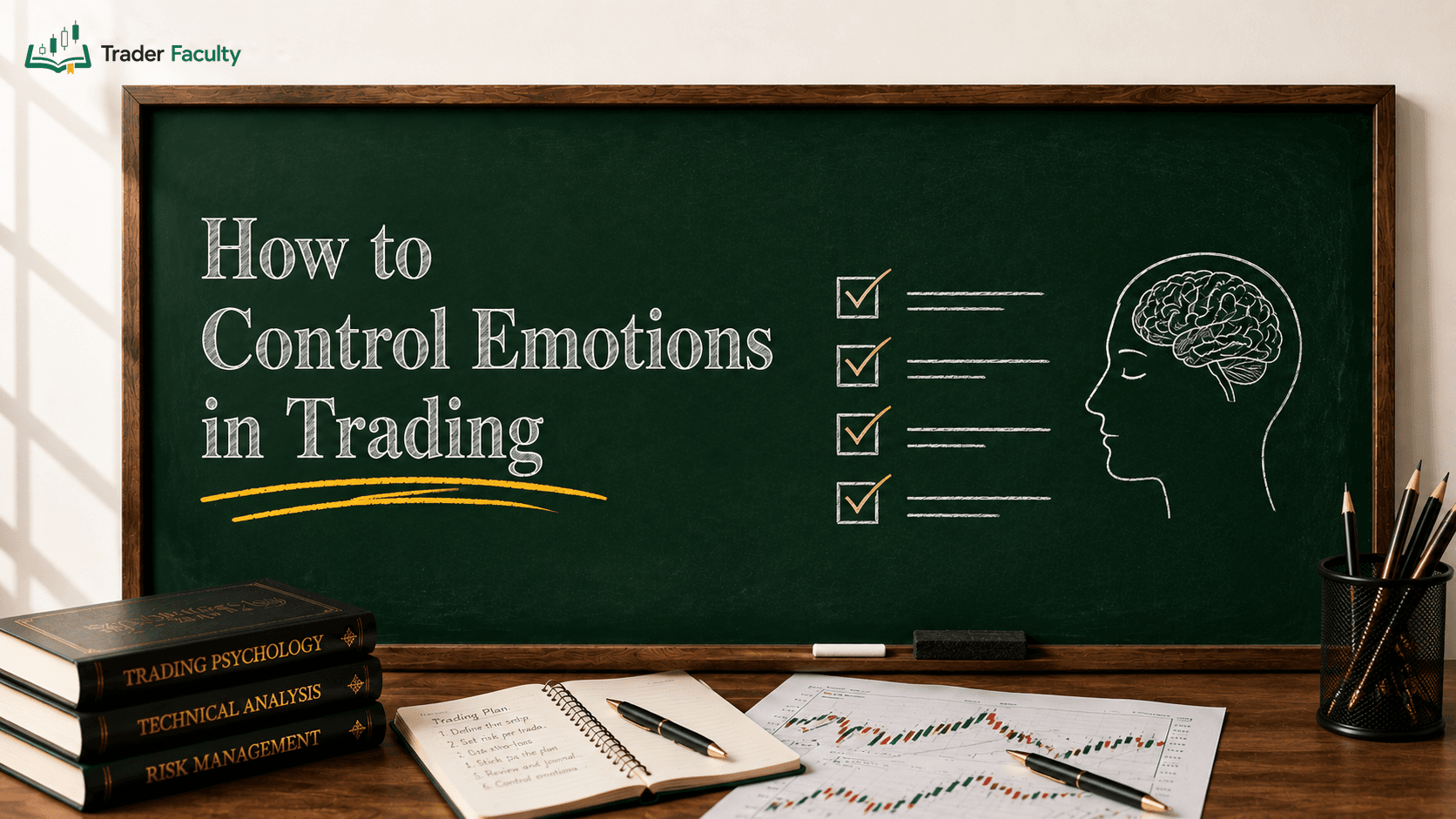
10 Trading Psychology Tips for Better Execution
Learn practical trading psychology tips to control emotional risk, stop revenge trading, and build discipline. Read the full guide.
By Trader Faculty Team
Direct Answer
Trading psychology tips are structured behavioral rules that help traders control cognitive biases, manage emotional impulses, and maintain execution discipline. By establishing clear risk parameters and tracking emotional triggers in a journal, traders can minimize execution errors and protect capital over long trade samples.
Trading psychology tips are structured behavioral guidelines designed to help traders manage cognitive biases, control emotional impulses, and execute trades strictly according to a predefined plan.
Many traders spend years perfecting technical analysis, only to watch emotional impulses destroy their account balance in minutes. Taking a trade out of fear, moving a stop-loss, or doubling down after a loss are execution failures driven by emotion rather than market analysis. This guide covers the practical meaning of trading psychology tips and gives you actionable rules to build discipline on live charts.
Quick Takeaways
- Trading psychology tips focus on controlling human execution rather than trying to control market movement.
- Emotional surges like fear and greed stem from unclear risk boundaries and oversized positions.
- A trade journal tracks your mental triggers, turning emotional habits into measurable data you can fix.
- Judging execution quality by strict rule adherence—not short-term profit—protects capital over long trade samples.
What Are Trading Psychology Tips?
When beginners ask what is trading psychology tips, they often expect motivational advice or positive thinking routines. In professional trading, the true trading psychology tips meaning centers on behavioral risk management. Trading psychology tips explained simply are mechanical rules that limit human error during live market conditions.
Every trade involves risk, and human brains are naturally wired to avoid pain and seek instant rewards. In financial markets, these natural instincts lead to costly mistakes. For example, loss aversion makes traders hold losing positions too long, hoping price turns back, while taking quick profits on winning trades out of fear of losing small gains. Understanding these mental patterns helps you design trading systems that reduce emotional decision-making.
Cognitive Biases vs. Emotional Surges
To manage your mindset on live charts, you need to separate cognitive biases from emotional surges.
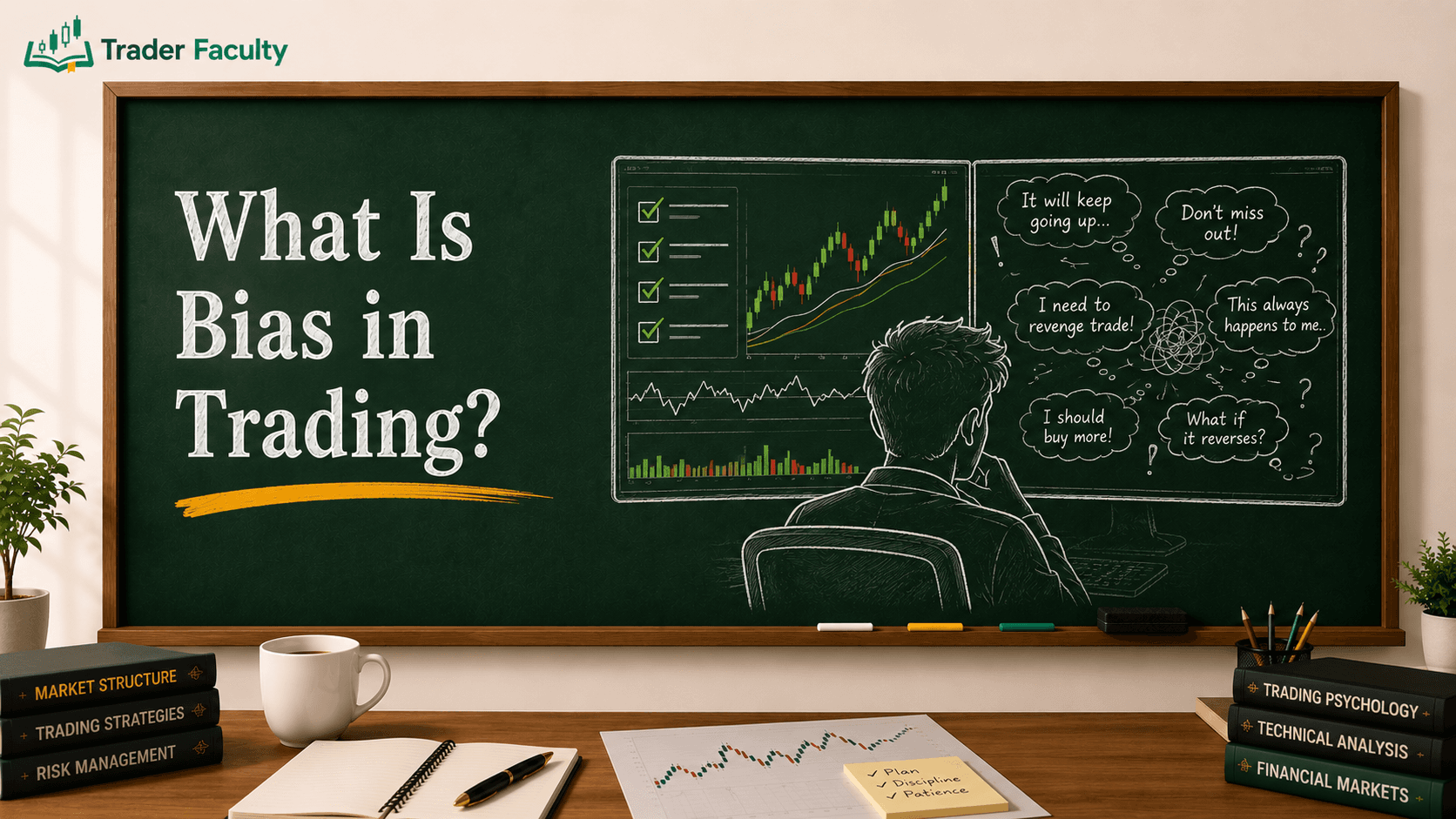
Cognitive biases are processing shortcuts your brain uses to evaluate information. Confirmation bias causes you to seek out chart patterns that support your existing bias while ignoring warning signs. Overconfidence bias leads traders to increase position sizes after a winning streak, assuming recent success comes from superior skill rather than market alignment.
Emotional surges are immediate physical and mental reactions triggered by price movements. Fear spikes when price approaches your stop-loss, driving you to close trades prematurely. Greed and FOMO (fear of missing out) cause you to chase extended moves long after a safe entry point has passed. Anger after a loss often leads to revenge trading, where you re-enter the market immediately to win back lost capital.
Fixing cognitive errors requires pre-market checklists and structured trade preparation. Managing emotional surges requires hard operational limits, such as fixed position sizing and mandatory cooling-off periods.
5 Actionable Trading Psychology Tips for Daily Execution

1. Define Fixed Risk Parameters Before Opening a Position
Emotional distress on a live position almost always stems from sizing a trade too large. When too much capital is on the line, every small tick against your entry creates severe stress.
Calculate your position size based on a fixed percentage of your account equity—typically 1% to 2% per trade—rather than an arbitrary lot size. Define your entry, stop-loss, and profit target before clicking the order button. Once your trade is live, your stop-loss must remain fixed. Moving a stop-loss wider to avoid taking a loss is the single fastest way to blow up an account.
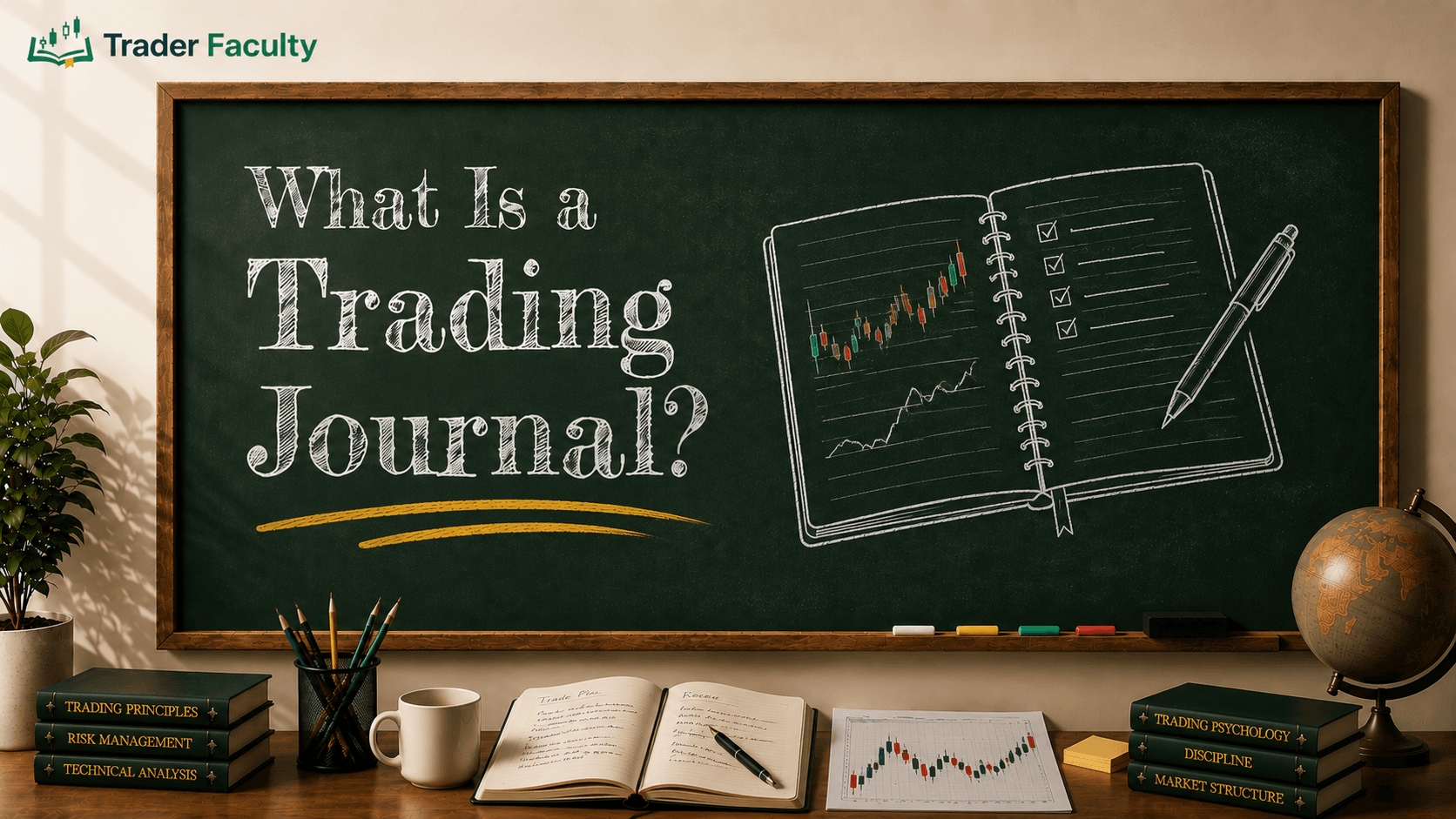
2. Maintain a Structured Trade Journal
You cannot fix behavioral patterns if you do not track them. A trade journal should log more than just entry prices, exit prices, and profit numbers.
For every trade, record your emotional state before entry, during the trade, and after exit. Note whether you felt rushed, anxious, or overly confident. Over time, your journal will reveal specific triggers—such as trading during specific market hours or taking trades after a loss—that lead to execution errors. Many classic trading psychology books highlight journaling as the primary tool for turning emotional habits into clear, measurable data.
3. Establish Daily Max-Loss Limits
Revenge trading happens when a trader refuses to accept a loss and attempts to force profits out of the market. This emotional state leads to oversized trades, skipped analysis, and rapid capital loss.
Set a strict daily max-loss limit, such as 3% of your total account or three consecutive losing trades. Once you hit this limit, your trading day is over. Turn off your trading platform and walk away from your screens. This mechanical circuit breaker prevents a standard bad day from turning into a severe drawdown.
4. Reframe Losses as an Operational Cost
Beginner traders view a loss as a personal failure or an indicator that their technical strategy is broken. Professional traders view losses as the standard operational cost of doing business, similar to rent for a store owner.
Research published by the CFA Institute demonstrates how cognitive shortcuts lead active traders into systematic execution errors.
5. Separate Execution Quality from Outcome
A good trade is not defined by whether it made money; it is defined by whether you followed your plan. Conversely, a bad trade that makes money due to market luck is still a bad trade because it reinforces poor habits.
Evaluate your trading performance at the end of each week based on an execution score:
Execution Score = (Trades Following All Rules / Total Trades Executed) x 100
Focusing on execution quality removes outcome bias. If you follow your risk rules and strategy guidelines perfectly, you executed well—even if the market hit your stop-loss.
Common Psychological Traps and How to Overcome Them
Recognizing common mental traps allows you to prepare structural defenses before they affect your account:
- Moving Stop-Losses Mid-Trade: Driven by loss aversion. Defense: Use automated hard stop-losses placed on the broker server at order entry.
- Hesitating on Valid Setups: Driven by fear after a losing streak. Defense: Reduce position size by half until confidence returns, ensuring your risk per trade stays small.
- Over-Trading After Big Wins: Driven by overconfidence bias. Defense: Enforce a mandatory 15-minute break after any major winning trade before looking for new setups.
Practical Exercises to Train Trading Discipline
Building emotional discipline is a skill trained through deliberate practice. Try these two practical exercises:
The 20-Trade Execution Challenge
Commit to executing 20 consecutive trades using exact position sizing, fixed stop-losses, and pre-defined entry criteria. Do not change your rules mid-challenge regardless of winning or losing streaks. Track your adherence to rules after all 20 trades are complete.
The 2-Minute Pre-Order Buffer
Before placing any market order, set a timer for two minutes. Use this time to review your pre-trade checklist: Is risk within limits? Is entry based on strategy or impulse? Is the risk-to-reward ratio valid? If any answer is no, cancel the order.
Conclusion
Developing emotional control in live markets is an ongoing process that requires structure rather than willpower. By combining fixed risk parameters, strict journaling, and mechanical max-loss rules, you build an environment where emotional surges cannot destroy your trading account. Consistent execution comes from systematic habits that protect capital while your trading edge plays out over time.
To deepen your understanding of behavioral frameworks and risk discipline, explore our foundational guides on trading psychology to build a resilient mindset for any market condition. Trading always carries the risk of losing capital, so treat these strategies as educational tools for execution rather than financial advice.
Frequently Asked Questions
What is trading psychology tips meaning in financial markets?
The true meaning of trading psychology tips centers on behavioral risk management. Rather than offering generic motivational advice, these tips provide mechanical rules to minimize human execution errors—such as fear, greed, and revenge trading—during live market conditions.
What are the primary emotions affecting trading execution?
The four primary trading emotions are fear, greed, hope, and regret. Fear causes traders to exit winning positions too early or hesitate on valid entries, while greed and FOMO lead to chasing overextended price moves. Hope and regret often lead to moving stop-losses or holding losing trades too long.
How do you prevent revenge trading after a loss?
To prevent revenge trading, implement a strict daily max-loss limit, such as three consecutive losing trades or a 3% account drawdown. Once this threshold is reached, turn off your trading screens and walk away for the rest of the day to let emotional triggers cool down.
Why is position sizing crucial for trading psychology?
Oversized positions trigger severe emotional stress because too much capital is exposed to market volatility. Keeping position risk fixed at 1% to 2% per trade ensures that individual losing trades remain manageable, allowing you to maintain emotional detachment during price swings.
Can good trading psychology replace risk management?
No. Psychological discipline and risk management must work together. Emotional control ensures you execute your trading system faithfully, but it cannot compensate for a strategy that lacks a positive statistical expectancy or proper position sizing parameters.
The Trader Faculty Team writes and reviews every guide together — pairing hands-on market experience with a curriculum-first approach to trading education. One good syllabus, taught in the order that makes you better.