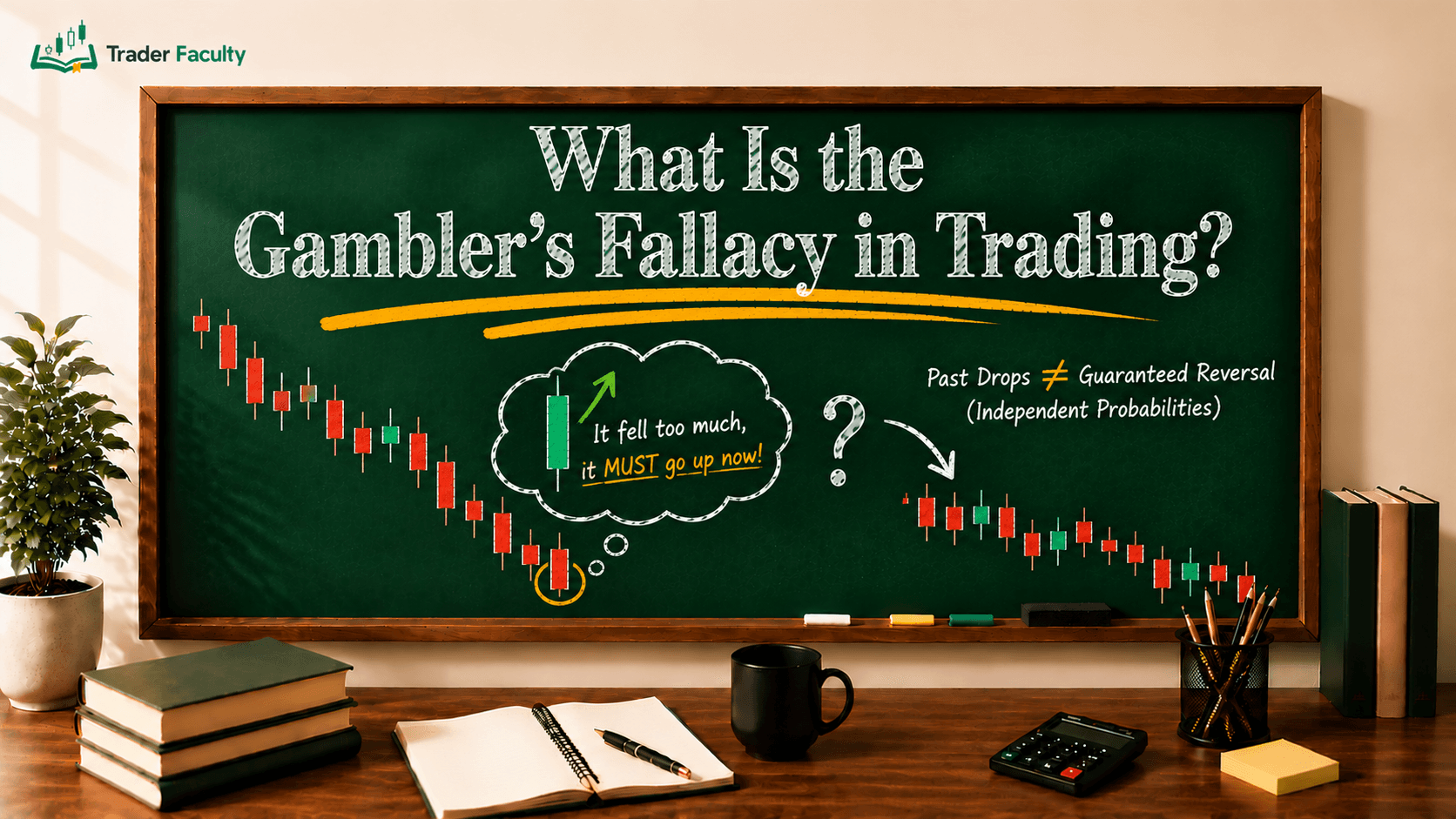
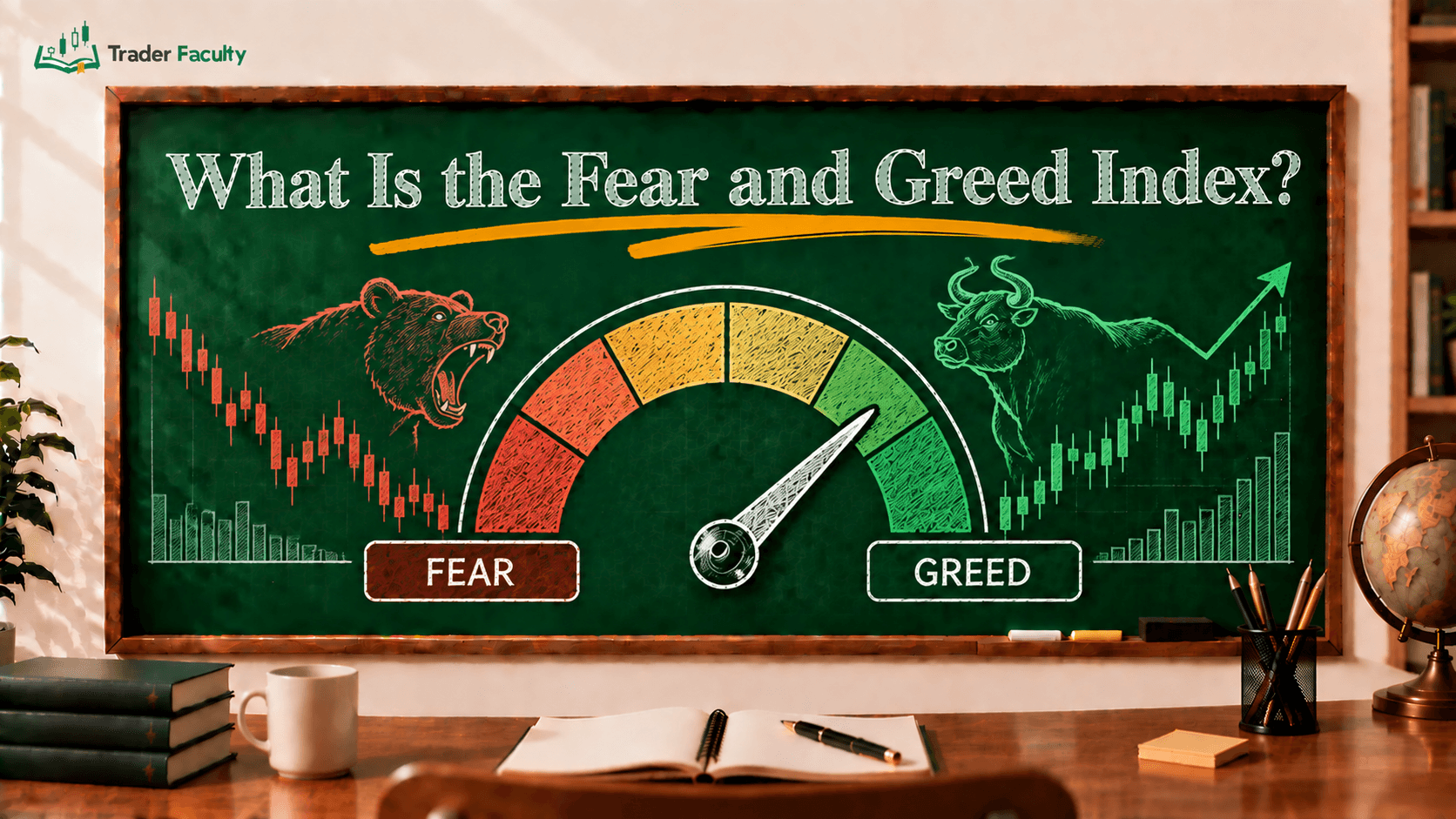
What Is Bias in Trading? How Cognitive Traps Hijack Your Decisions
Discover what is bias in trading and how cognitive traps hijack your decisions. Read the full guide.
By Trader Faculty Team
Direct Answer
A trading bias is a systematic mental processing error that occurs when a trader misinterprets chart patterns or market data due to subconscious shortcuts. These hardwired cognitive patterns distort objective analysis and cause traders to break their own execution rules.
A psychological bias in trading is a systematic error in thinking that occurs when the human brain misinterprets market data, leading to flawed decisions and broken execution rules.
You have likely spent hours planning a perfect trade, only to completely abandon your rules the moment the charts start moving. This self-sabotaging behavior happens because the unyielding environment of financial markets triggers hardwired mental shortcuts. Understanding this psychological trap is key to mastering trading psychology and learning how to control emotions in trading effectively. This guide breaks down the core cognitive biases that bleed capital and how to build a mechanical defense system against them.
Quick Takeaways
- Trading bias is an involuntary mental shortcut, completely distinct from an analytical market thesis.
- The human brain naturally prioritizes survival speed over mathematical logic when facing market volatility.
- Cognitive biases cannot be fully eliminated, but they can be systematically managed through strict rules and journaling.
Directional Bias vs. Cognitive Bias: Clearing the Confusion
Directional bias is an analytical market thesis, whereas cognitive bias is an involuntary psychological error in judgment.
Beginner traders often confuse these two terms because they share the word "bias." Having a directional bias simply means you have analyzed technical or fundamental data and concluded that an asset is likely to head up or down. For instance, identifying a structural uptrend gives you a bullish directional bias.
Cognitive bias, however, is a subconscious processing glitch that warps your perception of reality. It forces you to execute trades based on emotion, comfort, or defense mechanisms rather than objective market data.
How Cognitive Bias Operates on the Charts
Cognitive bias operates by tricking your brain into treating financial market charts like primitive survival environments.
Financial markets are chaotic, highly uncertain, and entirely unyielding. The human brain did not evolve to calculate statistical probabilities under financial pressure; it evolved to make split-second choices to protect you from physical danger. When you face the volatility of live markets, your brain naturally seeks cognitive shortcuts to reduce stress and process information rapidly. Unfortunately, these shortcuts prioritize short-term emotional comfort over long-term mathematical logic, leading to structural execution errors.
The 4 Psychological Biases Sabotaging Your Performance
The four primary psychological biases that actively destroy a trader's performance are confirmation bias, anchoring, recency bias, and loss aversion.
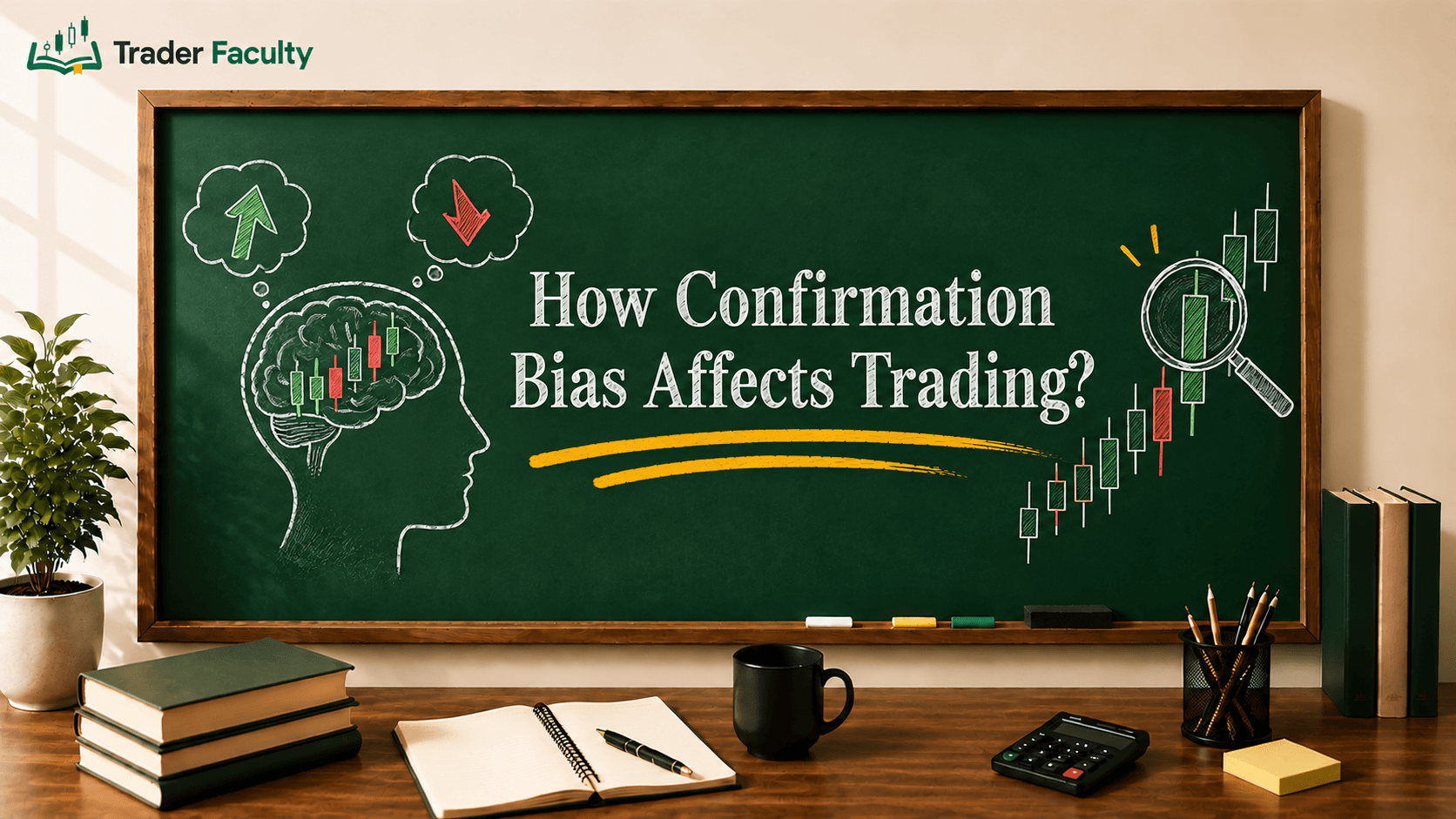
- Confirmation Bias: You actively hunt for indicators, news, or social media commentary that support an open trade while completely ignoring clear warning signs that prove you are wrong. For example, you might zoom in to an obscure five-minute chart to find a single bullish candle while completely ignoring a major daily trend break to the downside.
- Anchoring: This occurs when you fixate your execution decisions onto an arbitrary number, typically your initial trade entry price or a previous peak account balance. Traders hit by this will stubbornly refuse to cut a failing position because they are waiting for the price to return exactly to their entry point to "break even."
- Recency Bias: You overweight the importance of your most recent trading outcomes instead of focusing on your long-term statistical edge. This bias frequently causes traders to size up unsustainably after a three-trade winning streak, or abandon a mathematically proven strategy entirely after two normal, consecutive stop-outs.
- Loss Aversion: The psychological reality, first documented by Kahneman and Tversky's prospect theory research, where the pain of losing capital feels roughly twice as intense as the joy of making an equal financial gain. This imbalance drives traders to move their stop-loss orders further away from a falling price just to avoid booking a realized loss, resulting in catastrophic account drawdowns.
Building a Mechanical Defense System Against Bias
Building a mechanical defense system requires shifting your execution away from discretionary gut choices and toward rigid, rule-based frameworks.
Because cognitive shortcuts are hardwired human traits, you cannot simply wish them away with willpower. Instead, protect your capital by using systematic checklists before entering any trade. Every single setup must have a pre-defined exit point and a strict position-sizing rule that cannot be altered once the trade is live. Additionally, tracking your operational performance through an objective trading journal helps you analyze errors outside of market hours, taking the emotional weight off your day-to-day decisions.
Placing an OCO order at trade entry also helps remove this temptation, since the take-profit and stop-loss levels execute automatically without requiring any in-the-moment decision.
Conclusion
Managing mental biases is a continuous process that forms the foundation of sustainable trading performance. While you can never completely erase cognitive shortcuts from your psychology, you can strip away their power by building mechanical execution routines and solid risk management frameworks. Treat every bias as a known market risk, and use your rules to protect your account from your own impulses.
Confirmation bias often pushes traders to see only the signals they want, so a rule-based OBV trading strategy that checks volume against price can serve as an objective cross-check.
Bias also shows up around economic data releases, where traders anchor on a single headline number. Learning what is PPI in economics and how a release compares with consensus forecasts helps you react to the data rather than to the headline.
Frequently Asked Questions
What are the most common psychological biases in trading?
The most frequent psychological traps include confirmation bias, anchoring, recency bias, and loss aversion. These biases trick the human brain into prioritizing short-term emotional comfort or rapid survival decisions over long-term mathematical probability and structured risk management rules.
How do you overcome cognitive bias when trading?
You can mitigate cognitive errors by shifting from discretionary gut choices to rigid, rule-based execution frameworks. Utilizing a systematic pre-trade checklist, hiding your live profit-and-loss display, and maintaining an objective trading journal helps remove emotional distortion from active market hours.
Why do traders experience severe loss aversion?
Loss aversion is a hardwired evolutionary trait where the psychological pain of realizing a financial loss feels twice as intense as the joy of securing an equal gain. This imbalance forces traders to emotionally defend losing positions instead of cutting them cleanly.
What is confirmation bias in technical analysis?
Confirmation bias occurs when a trader actively hunts for specific technical indicators, chart patterns, or lower-timeframe signals that support their open position. Concurrently, the trader completely ignores conflicting, higher-timeframe data or major trend breaks that prove their thesis wrong.
Can a trader completely eliminate psychological bias?
No, a trader cannot completely erase cognitive biases because they are hardwired into human survival biology. However, successful traders minimize their impact by building mechanical trading routines, enforcing hard risk parameters, and analyzing historical performance metrics away from live charts.
Keep learning
Trader Mindset
Strategy is the easy part. Sticking to it is the hard part.
6 lessons quiz
Start Trader MindsetThe Trader Faculty Team writes and reviews every guide together — pairing hands-on market experience with a curriculum-first approach to trading education. One good syllabus, taught in the order that makes you better.