Market Order vs Limit Order: Key Differences
Learn the difference between market and limit orders, including execution speed and price boundaries. Read the full guide.
By Trader Faculty Team
Direct Answer
A market order executes a buy or sell trade immediately at the best available current market price, prioritizing speed over price boundaries. In contrast, a limit order executes only at a specified price or better, offering price protection at the risk of non-execution. Selecting between them depends on whether a trader needs immediate execution certainty or strict entry and exit price boundaries.
A market order buys or sells an asset immediately at the best current available price, while a limit order buys or sells only at a specific target price or better.
Every trader faces a choice when opening or closing a position: do you need to enter right away, or do you need to control the exact price you pay? Selecting the wrong order type can cause unexpected losses through execution delays or poor fill prices. This guide explains how market orders and limit orders work inside the exchange order book so you can execute every trade with clarity.
Quick Takeaways
- Market orders prioritize immediate execution speed, making them ideal when entering or exiting a position quickly is your top priority.
- Limit orders prioritize exact price control, protecting you from paying more than your planned price boundary.
- Market orders act as liquidity takers by consuming available quotes, whereas limit orders act as liquidity makers by adding new quotes.
- Limit orders carry non-execution risk, meaning your order remains unfilled if market prices never reach your designated level.
What Is a Market Order?
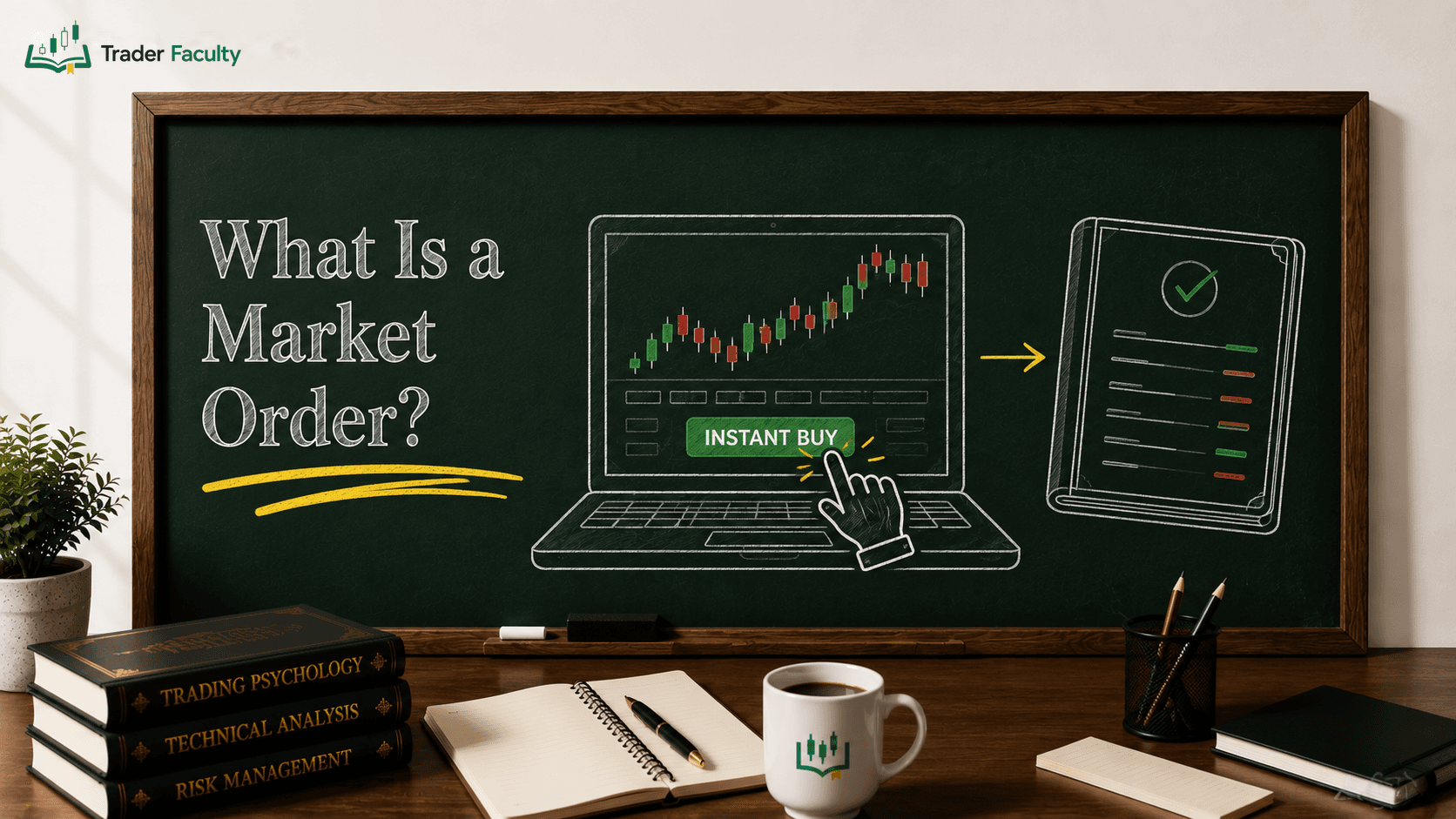
A market order is an instruction sent to your broker to execute a buy or sell trade immediately at the best price currently available.
When you submit a market order, you act as a liquidity taker. Your trade instantly matches against existing sell offers (if buying) or buy bids (if selling) resting inside the order book. Because the primary goal of a market order is fast execution, the trade fills almost instantly during normal market hours.
However, a market order does not offer price protection. In fast-moving markets or illiquid assets, the final price you pay may differ from the quote you saw on your screen when clicking the button. This gap between your expected price and the actual execution price is called slippage — that is, the price difference that occurs when available quotes move before your order completes.
What Is a Limit Order?
A limit order is an instruction to buy or sell an asset only at a specified price or a better one.
Limit orders establish firm price boundaries for your trades:
- Buy Limit Order: Can only execute at your specified limit price or a lower price.
- Sell Limit Order: Can only execute at your specified limit price or a higher price.
When you place a limit order, you act as a liquidity maker. If your target price is not immediately matchable with existing market quotes, your order rests inside the exchange order book until another trader accepts your price.
The major drawback of a limit order is non-execution risk. If market prices move away from your set level without reaching it, your order will sit unfilled, leaving you without a position.
Key Differences: Market Order vs Limit Order Execution

The main difference between market orders and limit orders comes down to execution certainty versus price certainty.
Exchange matching engines process transactions based on price-time priority. Orders with the best price get matched first. When multiple limit orders share the same target price, the order placed earliest in time takes priority in the queue.
Official guidance from the US Securities and Exchange Commission emphasizes that market orders guarantee execution speed but do not protect an investor from fast price shifts, whereas limit orders guard entry prices at the expense of fill speed.
| Feature | Market Order | Limit Order |
|---|---|---|
| Primary Objective | Immediate execution speed | Exact price boundary control |
| Price Certainty | Low (exposed to market slippage) | High (fills at specified price or better) |
| Execution Certainty | High (as long as liquidity exists) | Low (order may remain unfilled) |
| Order Book Role | Liquidity Taker (removes quotes) | Liquidity Maker (adds quotes) |
| Execution Risk | Price slippage and market gaps | Non-execution or partial fills |
| Typical Duration | Immediate | Day Order or Good-Till-Canceled |
In thin or illiquid markets, limit orders can also experience a partial fill — that is, a situation where only a fraction of your requested share or contract volume fills at your target price while the rest remains waiting in the order book. Traders who cannot tolerate any partial fill can instead use a fill or kill order, which cancels the entire order if it cannot execute in full immediately.
When to Use Each Order Type
Deciding whether to use a market order or a limit order depends on market volatility, asset liquidity, and how quickly you need your position filled.
When to Use Market Orders
- Highly Liquid Assets: Major stock index funds or heavily traded currency pairs where bid-ask spreads are extremely tight.
- Fast Breakout Strategies: Scenarios where missing the start of a sudden trend costs far more than a minor price difference.
- Emergency Risk Exits: Situations where you must close a losing position immediately to protect account equity regardless of minor price movements.
When to Use Limit Orders
- Key Technical Boundaries: Buying near key support levels or selling near known resistance levels where entry precision matters.
- Volatile Trading Periods: Trading during shifting economic updates or active forex trading sessions where market spreads expand rapidly.
- Wide Spread Assets: Trading low-volume stocks or options where crossing a wide bid-ask spread with a market order incurs steep hidden costs.
If you want the benefits of both order types in one setup, an OCO order links a limit order and a stop order together so that execution of one automatically cancels the other, giving you a defined profit target and a protective stop active at the same time.
Common Order Execution Mistakes Beginners Make
Many execution errors stem from confusing trade speed with risk management.
- Market Orders During High-Impact Events: Placing market orders right as major economic reports release often results in extreme slippage because liquidity providers briefly pull their quotes from the order book.
- Expecting Instant Fills on Touch: Assuming a limit order fills the exact second market price touches your level. If other traders placed limit orders at that exact price before you, price-time queue priority dictates their orders must fill first.
- Forgetting Active GTC Orders: Leaving Good-Till-Canceled (GTC) limit orders sitting in your account without supervision. An old buy limit order set weeks ago can trigger during a sudden market dip, opening an unwanted position.
Conclusion
Understanding market order vs limit order mechanics is the first step toward controlling exactly how and when your trades execute. Choosing between a market order and a limit order comes down to balancing execution speed against price control. Market orders deliver fast execution when timing is critical, while limit orders protect your account entries and exits behind firm price boundaries. Use market orders when certainty of getting into or out of a trade outweighs small price differences, and use limit orders when preserving your exact risk-to-reward ratio is required.
If you are currently building your trading approach, understanding order execution rules is a foundational step when you start trading with consistent risk control. Trading always carries the risk of losing money, so treat every order type as an execution tool rather than a way to avoid market movements.
Frequently Asked Questions
Is a market order better than a limit order?
Neither order type is inherently better; the choice depends on your trading objective. Use a market order when immediate execution speed is crucial, such as during fast breakouts or emergency exits. Choose a limit order when exact entry or exit price precision is required to protect your risk-reward ratio.
Why did my market order fill at a different price than the quote on my screen?
Market orders guarantee execution speed but do not guarantee a fixed price. In fast-moving or low-liquidity markets, available quotes can shift between the moment you submit the order and when it reaches the matching engine, resulting in price slippage.
What happens if a limit order is never filled?
If market prices move away without reaching your designated limit price, your order remains active in the exchange order book until it expires or you cancel it manually. No trade occurs, and no execution fees are charged for unfilled orders.
Can a limit order experience partial fills?
Yes. A partial fill occurs when there is not enough trading volume at your target limit price to execute your full order size. The matching engine fills whatever volume is available at your price while leaving the remaining portion resting in the order book.
Does placing a limit order eliminate trading risk?
No order type eliminates market risk. While a limit order protects you against price slippage on entry, it exposes you to non-execution risk if the market moves away, and once filled, the position remains fully exposed to market price fluctuations.
Keep learning
Trading 101
Know the mechanics cold before you risk a single cent.
8 lessons quiz
Start Trading 101The Trader Faculty Team writes and reviews every guide together — pairing hands-on market experience with a curriculum-first approach to trading education. One good syllabus, taught in the order that makes you better.