Trading Terminology: The Essential Vocabulary for Beginners
Learn essential trading terminology. Master bid-ask spreads, order execution, leverage, and risk mechanics. Read the full guide.
By Trader Faculty Team
Direct Answer
Trading terminology refers to the specialized vocabulary, order types, and market mechanics used by financial market participants to read quotes and execute trades. Understanding core concepts like the bid-ask spread, limit orders, and account leverage allows traders to navigate platforms accurately and minimize execution errors.
Trading terminology refers to the specialized vocabulary, order types, and execution mechanics used by market participants to read quotes and execute trades across financial markets.
Entering active markets without knowing the core jargon can lead to misexecuted orders, unexpected transaction costs, and position sizing mistakes. Learning market language helps you navigate trading platforms with confidence and place orders the way you intended.
This guide breaks down essential trading terms into functional categories—covering market direction, price quotes, order execution, and account leverage.
Quick Takeaways
- Trading terminology forms the structural baseline required to interpret market screens and enter order instructions correctly.
- Directional terms like long and short define whether a trade profits from rising asset prices or falling prices.
- Understanding execution mechanics like the bid-ask spread and slippage helps traders control hidden transaction costs.
- Account mechanics like leverage and margin expand market exposure but increase downside risk proportionally.
1. Market Direction and Directional Jargon
Market participants use directional terms to describe price expectations and active position holdings. Whether you trade stocks, forex, or futures, communicating market stance requires clear directional terminology.
Bullish vs. Bearish: A bullish outlook means you expect prices to rise, a name often explained by a bull thrusting its horns upward. A bearish stance means you expect prices to decline, a name often explained by a bear swiping its paws downward. These terms describe overall market sentiment or individual asset expectations.
Long vs. Short: Taking a long position means buying an asset with the intention of selling it later at a higher price. Taking a short position involves selling a borrowed asset or derivative contract to profit from a price drop, buying it back later at a lower price.
When applying day trading terminology, position duration matters. Day traders open and close long or short positions within a single trading day, avoiding overnight holding risk.
2. Reading the Screen: Pricing and Liquidity Terms
Trading software displays real-time pricing data through specific financial mechanics. Learning how to read these figures prevents execution errors.

For plain-language explanations of order types, see the U.S. Securities and Exchange Commission (SEC) investor education page on types of orders.
Bid and Ask: The bid price represents the highest price a buyer is willing to pay for an asset at a given moment. The ask price (or offer) is the lowest price a seller is willing to accept.
Spread: The spread is the difference between the bid price and the ask price. It represents a direct transaction cost for traders. Tight spreads indicate high liquidity, while wide spreads increase entry and exit friction.
Example: If a stock shows a bid of $50.00 and an ask of $50.04, the spread is $0.04, or about 0.08% of the price. Buying at the ask and selling right away at the bid would cost you $0.04 per share before any commissions.
Liquidity and Volatility: Liquidity describes how easily an asset can be bought or sold without causing a big price move. Volatility measures the rate and magnitude of price changes over a specific period. Standard stock trading terminology classifies blue-chip equities (large, well-established companies) as high-liquidity assets, while micro-cap stocks (very small companies) often exhibit lower liquidity and higher volatility.
Slippage: Slippage occurs when an order fills at a price different from the expected price. This typically happens during high volatility or fast-moving market gaps (sudden jumps in price).
3. Order Execution Vocabulary
Order types are instructions sent to financial exchanges detailing how and when your broker should execute a trade. Choosing the right order type balances execution speed against price control.
| Order Type | Execution Speed | Price Control | Primary Use Case |
|---|---|---|---|
| Market Order | Immediate | Unguaranteed | Fast entry in highly liquid markets |
| Limit Order | Conditional | Guaranteed (or better) | Precise price entry at defined levels |
| Stop Loss | Automated trigger | Unguaranteed fill | Risk control and capital protection |
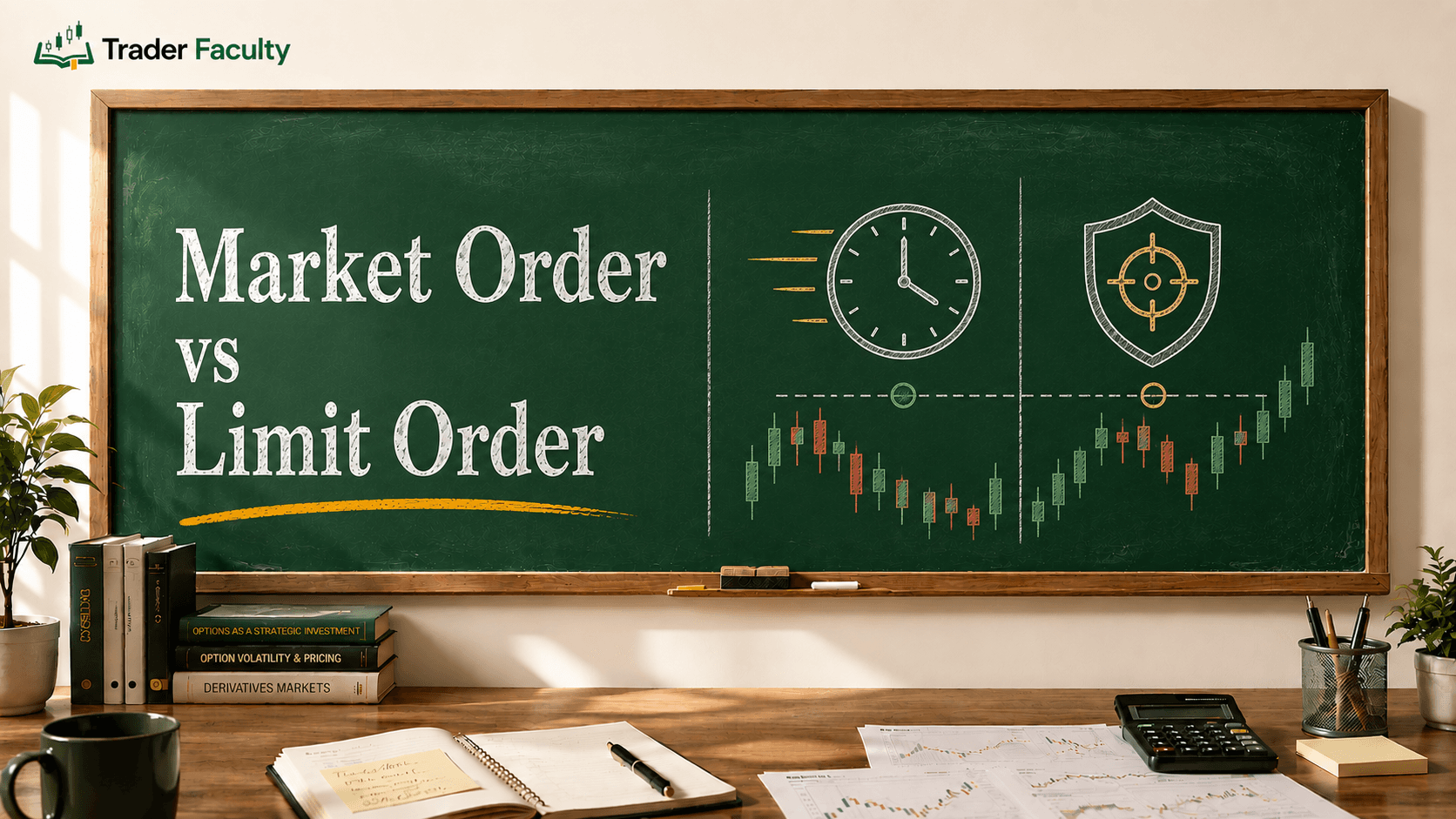
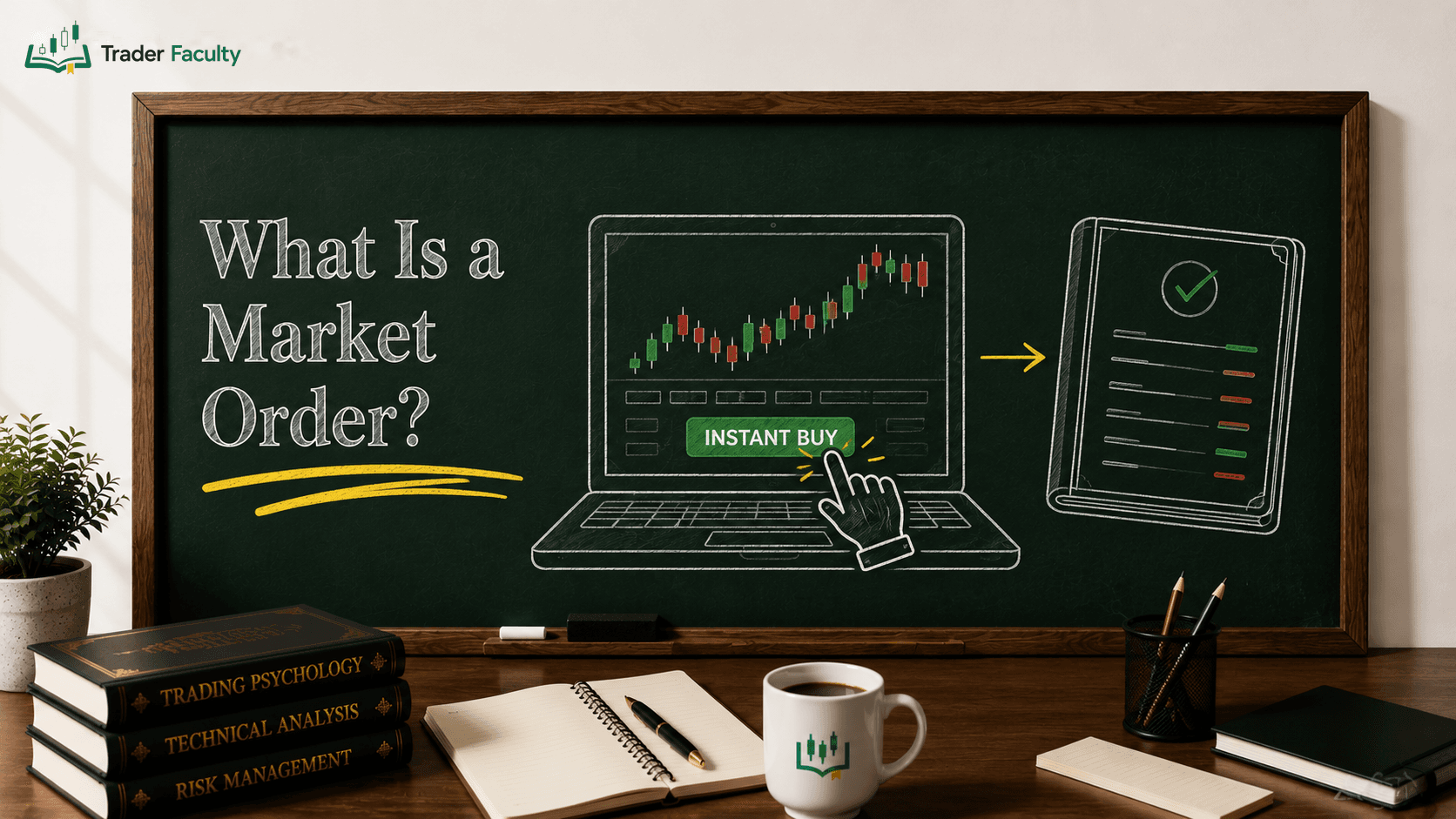
Market Order: A market order instructs the broker to buy or sell immediately at the best available current price. It guarantees execution speed but does not guarantee the exact price.
Limit Order: A limit order sets a specific maximum purchase price or minimum sell price. It guarantees price control but will not execute if the market fails to reach your specified price.
Stop Loss and Take Profit: A stop loss is an automated exit instruction designed to close a losing trade once price reaches a predefined threshold. A take profit order automatically closes a winning trade once price reaches a specified profit target.
4. Capital, Margin, and Exposure Mechanics
Managing a trading account means you'll need to follow capital allocation terms and collateral mechanics closely.

Trading Capital: Your trading capital refers strictly to money set aside for active market engagement—funds you can afford to risk without impacting daily living expenses. Learning how to start trading begins with separating risk capital from operational savings.
Leverage and Margin: Leverage allows traders to control larger market positions using a smaller amount of actual account capital. Margin is the collateral required by the broker to open and maintain a leveraged position.
Risk Warning on Leverage: Leverage amplifies both winning trades and losing trades. Using excessive leverage increases the likelihood of a margin call (a broker demand for more funds) or forced position liquidation (the broker closing your trade) during market drawdowns.
Example: With 10:1 leverage, $1,000 of margin controls a $10,000 position. A 5% move against you equals a $500 loss, which is half of your margin.
Position Sizing and Drawdown: Position sizing is the calculation of how many units or shares to trade based on risk tolerance. Drawdown measures the peak-to-trough decline (the drop from the highest point to the lowest point) in an account balance during a losing streak, expressed as a percentage.
5. Three Common Vocabulary Misconceptions Among Beginners
Understanding definitions is step one; avoiding practical confusion on live screens is step two.
- Confusing Market Orders with Limit Orders: Beginners often assume a market order guarantees the price seen on screen. In fast markets, market orders fill at the next available bid or ask, which may cause slippage.
- Treating Leverage as Free Capital: Leverage is borrowed market exposure, not extra account funds. High leverage leaves you much less room for error on adverse price moves.
- Ignoring the Bid-Ask Spread Cost: A tight bid-ask spread appears minor, but frequent day trading can turn small spread costs into a real drag on total profitability over time.
Conclusion
Building fluency in trading terminology is a practical requirement for reading quotes, configuring order tickets, and executing risk management rules. From understanding directional stances like long and short to mastering order execution through limit orders and stop losses, a clear vocabulary helps you stay in control of your account. Treat terms as functional tools rather than academic concepts. Continue your educational journey by exploring our foundational guides on how to start trading to apply these vocabulary concepts inside a structured trading plan.
Frequently Asked Questions
What is the difference between bid price and ask price?
The bid price is the highest price a buyer is willing to pay for an asset, while the ask price is the lowest price a seller is willing to accept. The difference between these two prices is known as the bid-ask spread, which represents a core cost of executing a trade.
What is the difference between a market order and a limit order?
A market order executes immediately at the best available current market price, prioritizing speed over price control. A limit order sets a specific maximum buy price or minimum sell price, guaranteeing price control but only executing if the market reaches your specified level.
What does going long vs. going short mean?
Going long means buying an asset with the expectation that its price will rise, allowing you to sell it later at a profit. Going short involves selling a borrowed asset or derivative contract expecting the price to fall, allowing you to buy it back later at a lower price.
What is slippage in stock trading terminology?
Slippage occurs when an order is filled at a price different from the price requested when the order was placed. Slippage is common during fast-moving markets, major economic news releases, or periods of low liquidity.
How does leverage affect market risk?
Leverage allows you to control a larger trade position using a smaller amount of account capital called margin. While leverage amplifies prospective gains on winning trades, it expands downside losses proportionally during adverse market moves.
Keep learning
Trading 101
Know the mechanics cold before you risk a single cent.
8 lessons quiz
Start Trading 101The Trader Faculty Team writes and reviews every guide together — pairing hands-on market experience with a curriculum-first approach to trading education. One good syllabus, taught in the order that makes you better.