What Are Option Spreads? A Guide for Beginners
Learn how option spreads combine long and short positions to limit risk and define profit targets. Read the full guide.
By Trader Faculty Team
Direct Answer
An option spread is a multi-leg trading strategy created by simultaneously buying and selling option contracts of the same class on the same underlying security. Spreads combine long and short positions to cap both maximum profit and maximum loss, offering defined-risk entry setups and mitigating time decay.
An option spread is a strategy where you buy and sell multiple option contracts on the same stock at the same time. This technique lets you set exact boundaries on your potential profit and your potential loss before you open a trade.
Many new traders start by buying single calls or puts, only to watch time decay erode their account value when the market moves sideways. Other traders find that shorting single options requires far too much margin capital. Option spreads solve both issues by combining long and short options into a single, risk-defined position. This guide covers how option spreads work, the main types of vertical spreads, and the key risks every trader must manage.
Quick Takeaways
- Option spreads combine long and short option legs to cap both your maximum gain and maximum risk upfront.
- Debit spreads require an upfront cash payment and benefit from strong price movement in your chosen direction.
- Credit spreads deposit upfront cash into your account and profit when price stays within an expected range.
- Vertical spreads use identical expiration dates but different strike prices, making them the most common starting setup.
- Risks like early assignment on short legs and wide bid-ask pricing drag require careful management near expiration.
What Is an Option Spread?
An option spread is a multi-leg trading position created by buying one option contract while simultaneously selling another option contract on the same underlying asset. Learning what is option spreads begins with understanding why traders combine these contracts instead of buying single options.
When you buy a single call or put option, your upside potential may be high, but you pay a full premium price and fight against constant time decay. When you sell a single option, you collect cash upfront, but you accept large or uncapped downside risk if the market moves against you.
The core option spread meaning is risk control. By pairing a long contract (buying) with a short contract (selling), the two options offset each other's weaknesses. The short contract helps fund the cost of the long contract or reduces time decay. In return, the long contract caps the downside risk of the short contract.
Spreads turn dynamic options pricing into fixed parameters where your maximum profit, maximum loss, and breakeven point are known before you place the order. Whether you focus on swing setups or day trading for beginners, spreads offer a structured framework for managing risk.
How Option Spreads Work: Legs, Strikes, and Premiums

To understand option spreads explained, you need to break the trade down into its core components: individual legs, strike selection, and net premium flow.
Each individual option contract within a spread is called a leg. A two-leg spread consists of one long leg (an option you purchase) and one short leg (an option you sell to someone else).
The relationship between the strike price — that is, the set price where an option contract can be exercised — of your short leg and long leg dictates how the trade behaves:
- Net Debit: When the option you buy costs more than the option you sell, you pay money out of your account to open the position. This is called a debit spread.
- Net Credit: When the option you sell collects more money than the option you buy, cash is deposited into your account upon entry. This is called a credit spread.
Combining legs alters how time decay (the loss of option value as expiration nears) and volatility impact your account balance. In a single long option, time decay hurts your position every day. In a spread trade, the short leg benefits from time decay at the same time the long leg loses value, shielding your balance from time erosion.
Net Premium Paid = Long Option Cost - Short Option Collected
Net Premium Collected = Short Option Collected - Long Option Cost
Four Core Types of Vertical Spreads
Vertical spreads are the most popular spread structures. In a vertical spread, both options share the exact same expiration date, but use two different strike prices. They fall into four primary categories based on market direction and cash flow:
- Bull Call Spread (Debit): You buy a lower strike call and sell a higher strike call. You use this when you expect a stock price to rise moderately. You pay a net debit upfront. Maximum risk is limited to the debit paid, and maximum profit is capped at the distance between strikes minus the debit.
- Bear Put Spread (Debit): You buy a higher strike put and sell a lower strike put. You use this when you expect a stock price to drop. You pay a net debit upfront. Maximum risk is limited to the debit paid, while maximum profit is capped at the strike distance minus the debit.
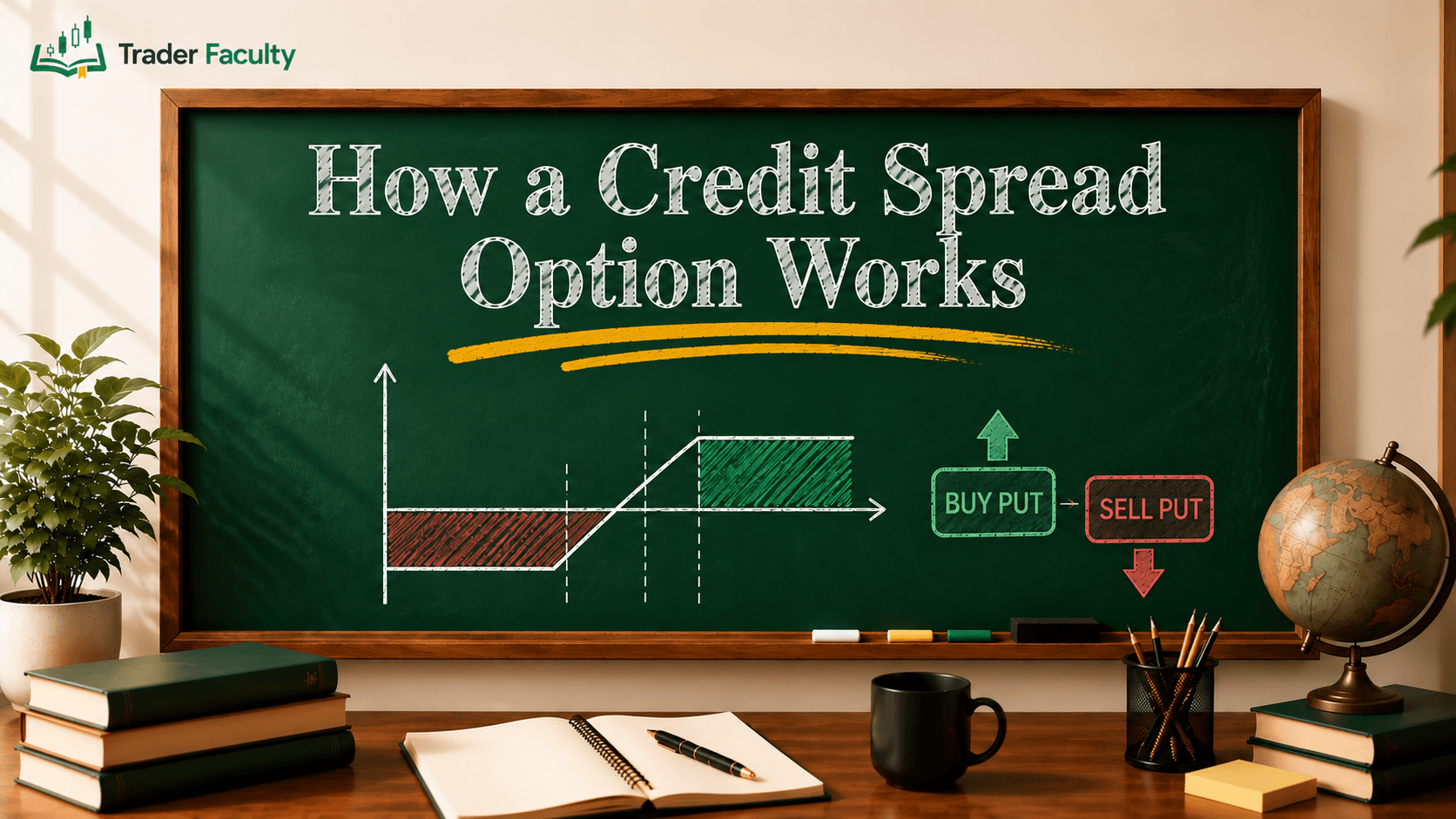
- Bull Put Spread (Credit): You sell a higher strike put and buy a lower strike put. You use this when you expect price to stay above a specific support level. You receive a net credit upfront. Maximum profit equals the credit collected, and maximum loss equals the strike distance minus the credit.
- Bear Call Spread (Credit): You sell a lower strike call and buy a higher strike call. You use this when you expect price to stay below a resistance level. You receive a net credit upfront. Maximum profit equals the credit collected, while maximum loss is the strike distance minus the credit.
Debit Spreads vs. Credit Spreads: A Side-by-Side Comparison
The regulatory framework set by organizations like the U.S. Securities and Exchange Commission requires option exchanges to enforce strict margin limits based on these exact risk definitions.
| Trade Parameter | Debit Spreads (Bull Call / Bear Put) | Credit Spreads (Bull Put / Bear Call) |
|---|---|---|
| Upfront Cashflow | Net cash paid out of account | Net cash deposited into account |
| Max Loss Formula | Max Loss = Net Debit Paid | Max Loss = Strike Distance - Net Credit Collected |
| Max Profit Formula | Max Profit = Strike Distance - Net Debit Paid | Max Profit = Net Credit Collected |
| Primary Driver | Directional price movement | Passing time decay and falling volatility |
| Breakeven Point | Long Strike + Debit (Calls) or Long Strike - Debit (Puts) | Short Strike - Credit (Puts) or Short Strike + Credit (Calls) |
Advanced Risks: Early Assignment, Pin Risk, and Slippage
While option spreads cap your maximum financial risk, they introduce mechanical risks that single options or spot equity holdings do not have:
- Early Assignment Risk: When you hold a short option leg, the contract buyer has the right to exercise it at any time. If your short call leg goes deep into the money — or if it sits slightly in the money right before an ex-dividend date — the buyer may exercise early. This forces you to take a short stock position overnight, which can create unexpected margin calls if you do not have the capital to hold the shares.
- Expiration Pin Risk: If the stock price closes directly on your short strike price on expiration Friday, you face pin risk. You may not know whether your short leg will be assigned until the next morning. If the short leg gets assigned after the market closes, you could end up holding shares over the weekend exposed to gap risk.
- Multi-Leg Order Slippage: Closing or opening a multi-leg spread requires executing two contracts at once. In options markets with wide bid-ask spreads, fill prices can suffer from execution drag. Always use limit orders for multi-leg entries to control your fill price.
Common Mistakes Beginners Make When Trading Option Spreads
Many new traders adopt spreads to reduce risk, but fall into avoidable traps due to misinterpreting probabilities or order mechanics.
- Chasing High Win-Rate Credit Spreads: A credit spread far out of the money might show an 85% probability of profit. However, collecting $0.15 on a $5.00 wide spread means risking $4.85 to make $0.15. A single losing trade can wipe out dozens of small wins if you do not manage risk aggressively.
- Using Market Orders on Multi-Leg Trades: Placing market orders on vertical spreads allows market makers to fill your trade at the worst possible prices on both legs. Always use net debit or net credit limit orders.
- Over-Leveraging Defined Risk: Because broker margin rules only lock up the maximum loss rather than the full stock value, beginners often open far too many contracts. Defined risk is not zero risk. Keep position sizing small relative to your total account balance.
Conclusion
Option spreads give you a structured way to participate in options markets without exposing your account to catastrophic single-leg losses. By combining long and short contracts into debit or credit setups, you retain total control over your risk parameters, breakeven thresholds, and capital requirements.
Before trading spreads with real capital, practice constructing multi-leg orders in a paper trading account. Track how changes in stock price, time decay, and implied volatility alter the market value of your spread before expiration.
To see how risk-defined multi-leg trades fit into a complete market framework, explore our complete guide on trading strategies.
Trading derivatives involves significant financial risk and is not suitable for every investor. Past market performance does not guarantee future results, so use this guide as an educational foundation for building your own research and risk management process.
Frequently Asked Questions
What is an option spread in simple terms?
An option spread is a strategy where you buy and sell two or more option contracts on the same asset at the same time. By combining these positions, you cap your potential risk and profit levels upfront, making your trading outcomes more predictable than buying or selling individual options alone.
What is the difference between a debit spread and a credit spread?
A debit spread costs cash upfront because the option you purchase is more expensive than the one you sell, benefiting primarily from sharp directional price moves. A credit spread deposits cash into your account upfront because the option you sell collects more premium than the option you buy, benefiting from passing time decay or range-bound markets.
Are option spreads safer than single options?
Option spreads define your maximum risk upfront, preventing unlimited loss scenarios associated with naked options and reducing capital outlay compared to single long options. However, they carry unique mechanical risks, including early assignment on short contracts, expiration pin risk, and execution slippage on multi-leg orders.
What happens if an option spread expires in the money?
If both legs of a vertical spread expire in the money, the exercise of your long leg automatically offsets the assignment obligation of your short leg, netting you the maximum profit. If only the short leg expires in the money, you risk unexpected assignment and position changes over the weekend.
How do you calculate the breakeven point on a vertical spread?
For a bull call debit spread, the breakeven point equals the lower strike price plus the net debit paid. For a bull put credit spread, the breakeven point equals the upper short strike price minus the net credit collected upon opening the trade.
The Trader Faculty Team writes and reviews every guide together — pairing hands-on market experience with a curriculum-first approach to trading education. One good syllabus, taught in the order that makes you better.