Price Improvement Explained: How Better Fills Work
Learn how price improvement works inside the bid-ask spread, when it happens, and how order types affect fills. Read the full guide.
By Trader Faculty Team
Direct Answer
Price improvement occurs when your order fills at a better price than the National Best Bid and Offer (NBBO), the best public quote, at the moment your order reaches the market. For a buyer, that means paying less than the displayed ask; for a seller, it means receiving more than the displayed bid.
A broker delivers price improvement when it fills your buy order below the best displayed ask, or your sell order above the best displayed bid, as your order reaches the market.
You've probably clicked "buy" expecting to pay the quoted price, then noticed on your trade confirmation that you paid a little less. That break is usually a fraction of a cent per share, yet misunderstanding it pushes some new traders toward risky order types. This guide explains how better fills happen, who produces them, and when you shouldn't count on them.
Quick Takeaways
- Price improvement means a fill better than the live quote, though the savings are usually fractions of a cent per share.
- Market orders and marketable limit orders get better fills far more often than resting limit orders, because they execute right away.
- A better fill won't protect you from fast market swings, wide spreads, or overall trading losses.
- Liquidity decides whether better fills are possible: thinly traded stocks and fast-moving sessions rarely offer them.
What Is Price Improvement?
Price improvement is a fill at a better price than the National Best Bid and Offer (NBBO) at the time your order reaches the market. The NBBO is the highest displayed buy price and the lowest displayed sell price across all public exchanges.
To see how this works, start with the bid-ask spread, which is the gap between the highest price a buyer will pay (the bid) and the lowest price a seller will accept (the ask). Suppose a stock shows an NBBO of $50.00 bid and $50.04 ask. If you place a standard buy order, you'd expect to pay $50.04 per share.
If your broker fills that buy order at $50.02 or even at a sub-penny price (an increment smaller than one cent, such as $50.025), you got a better fill. On a 100-share hypothetical order, paying $50.02 instead of $50.04 saves $0.02 per share, or $2.00 total. The same idea works in reverse when you sell: if the best bid is $50.00 and your sell order fills at $50.015, you picked up $0.015 per share.
Keep in mind that these cent-level savings aren't guaranteed on any trade. They depend on how your order is routed and what liquidity sits behind the scenes when it arrives.
How Do Better Fills Happen Behind the Scenes?
Your order gets a better fill when your broker routes it to a venue or market maker (a firm that continuously quotes buy and sell prices) willing to fill inside the public spread.
When you submit an order through a retail broker, it rarely goes directly to a single exchange floor. Instead, brokers use smart routing systems to check multiple destinations:
- Wholesale market makers (internalization): Large market-making firms buy and sell shares directly against retail order flow—a practice called internalization. Because retail orders are small and rarely move the market, wholesalers often step inside the NBBO by a fraction of a cent to win the trade.
- Dark pools: These are private trading venues where institutional and retail orders match away from public order books, often near the midpoint (the exact halfway mark between the bid and ask prices).
- Exchange Retail Liquidity Programs: Some exchanges run retail liquidity programs that let participants post hidden, sub-penny-priced liquidity meant for incoming retail orders.
In many cases, this routing model ties to payment for order flow (PFOF), a practice where wholesale market makers pay brokers to direct retail orders to them. Brokers still owe you best execution, and FINRA's best execution guidance says payment for order flow can't get in the way of that duty. SEC rules also require public monthly reports on how often, and by how much, orders get fills better than the NBBO.
Price Improvement vs. Positive Slippage: What Is the Difference?
Price improvement comes from a venue filling you inside the NBBO when your order arrives, whereas positive slippage happens when the market price moves in your favor while your order is in transit.
Beginners often mix these terms up because both show up on a trade confirmation as a better price than expected. But they come from different market mechanics and behave differently across sessions.
| Feature | Price Improvement | Positive Slippage |
|---|---|---|
| Benchmark | Measured against the live NBBO at the exact instant your order arrives | Measured against the price displayed on your screen when you clicked submit |
| Main Cause | Market makers, dark pools, or exchange programs stepping inside the spread | Fast market movement shifting the entire bid-ask quote in your favor during transit |
| Predictability | Common in high-volume stocks with tight spreads, though never guaranteed | Random market luck—just as likely to become negative slippage against you |
This distinction explains an important trap. In a hypothetical example, a stock shows a $20.00 ask when you click buy on a market order, then jumps to a $20.10 ask before your order reaches the market maker. If you're filled at $20.08, your trade report shows $0.02 of improvement against the new $20.10 NBBO, even though you paid $0.08 more than the price you saw when you clicked.
How Order Types and Market Conditions Affect Fills
Your order type and the stock's liquidity decide whether a better fill can happen at all.
Different instructions give your broker very different room to work:
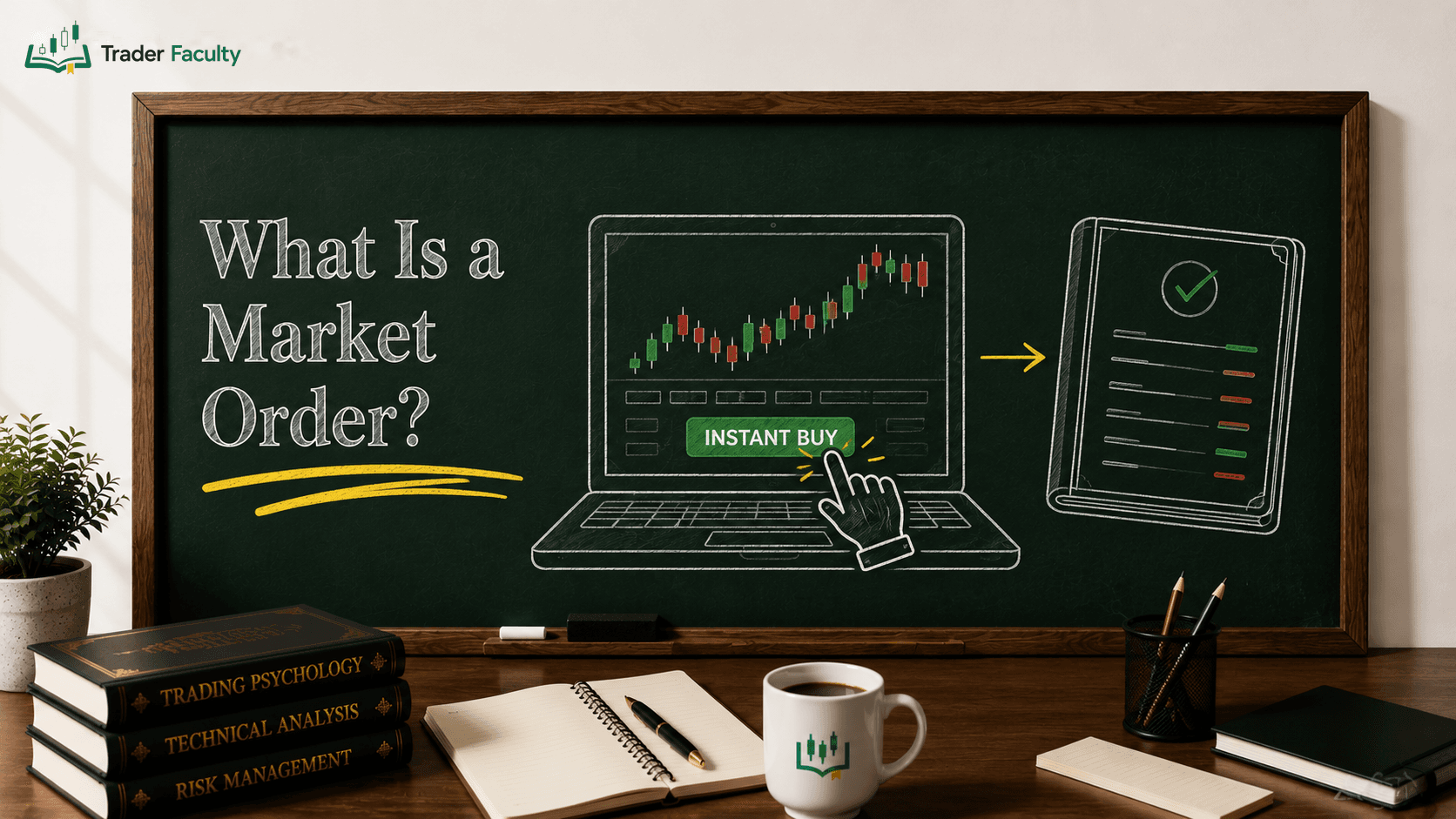
- Market orders: Because a market order asks for immediate execution, wholesalers can easily fill it inside the NBBO. However, you give up price protection: if the spread widens suddenly, you accept whatever price the market offers.
- Marketable limit orders: A limit order priced at or through the current ask (buy) or bid (sell) can execute immediately like a market order. It caps your worst-case price, and it often gets a better fill while protecting you from sudden spikes.
- Resting limit orders: If you place a buy limit order below the current ask (say, $50.00 when the ask is $50.04), your order waits on the public book for the price to drop. Resting limit orders add liquidity rather than taking it, so they fill at your limit price or not at all.
Market conditions matter just as much as order type. Heavily traded large-cap stocks with tight spreads can see sub-penny fills during regular market hours. Better fills shrink or disappear in thinly traded stocks with wide spreads, in pre-market and after-hours sessions, and during major news releases. Short sellers can face extra friction too: with hard-to-borrow stocks, limited share availability can make it harder to get filled inside the quote.
Common Mistakes Beginners Make With Better Fills
The biggest mistakes happen when traders treat tiny execution perks as a substitute for solid order management.
Watch out for these three common habits:
- Using market orders blindly to chase better fills: Some new traders avoid limit orders because they hear market orders get better fills. Giving up price control to save a fraction of a cent can backfire if a stock gaps or spikes while your order is in transit.
- Assuming zero commissions mean zero trading costs: Even when a broker charges $0 commission and delivers occasional price improvement, you still cross part of the bid-ask spread on every immediate fill. Over dozens of short-term trades, those spread costs add up.
- Expecting identical execution across every stock and session: A routing setup that gives steady sub-penny fills on a high-volume index fund at midday won't act the same on a small-cap stock at the market open.
Conclusion
A better fill is a helpful execution feature that lets your orders fill inside the public bid-ask spread, trimming small fractions off your trading costs over time. Understanding how it interacts with the NBBO, market makers, and limit orders helps you avoid confusing tiny cent-level savings with true price protection. As you build your foundation and start trading, focus first on choosing the right order type and managing position size rather than relying on broker routing perks. Trading always carries the risk of losing money, so treat this guide as educational background for your own research rather than financial advice.
Frequently Asked Questions
Is price improvement guaranteed on every trade?
No. It's never guaranteed and depends on stock liquidity, market conditions, and how your broker routes the order. High-volume stocks with tight spreads during regular trading hours get better fills far more often than thinly traded stocks or orders placed during volatile news events.
How much can better fills usually save you?
On typical retail stock orders, the savings are usually small, often fractions of a cent per share. Those differences can lower trading costs over many trades, but they won't offset a poor entry price or protect you if the stock moves against your position.
Does payment for order flow affect your fills?
The two are closely connected. Wholesale market makers pay brokers for retail order flow and often compete for those orders by offering small fills inside the public spread. Brokers must still seek best execution, so it's worth judging overall fill quality instead of focusing only on zero commissions.
Can you get better fills during pre-market or after-hours trading?
Better fills are much less common during extended-hours sessions. Fewer market makers are active outside regular hours, volume is thinner, and spreads are wider, which lowers the odds of filling inside the quote.
Why did my trade report show a better fill even though I paid more than I saw?
The fill is measured against the live NBBO at the moment your order reaches the market, not the quote on your screen when you clicked submit. If the price jumped while your order was in transit, a fill slightly below the new ask still counts.
Keep learning
Trading 101
Know the mechanics cold before you risk a single cent.
8 lessons quiz
Start Trading 101The Trader Faculty Team writes and reviews every guide together — pairing hands-on market experience with a curriculum-first approach to trading education. One good syllabus, taught in the order that makes you better.