How Short Sale Restriction Works in Stock Trading
Learn how short sale restriction triggers after a 10% drop, changes short order execution, and affects trading. Read the full guide.
By Trader Faculty Team
Direct Answer
Short sale restriction (SSR), enforced under SEC Rule 201, is a U.S. stock market rule triggered when a share price drops 10% or more below its prior closing price during regular trading hours. Once active, short sellers cannot sell at or below the current highest bid and must use a passive limit order priced strictly above it through the end of the next trading day.
A short sale restriction (SSR) is a U.S. stock market rule under SEC Rule 201 that limits how traders can sell a stock short after its price drops 10% or more in a single day.
When you see an "SSR" alert pop up on your trading platform during a sharp sell-off, it's easy to assume trading has paused. You might also assume the stock has hit a floor and can't fall any lower. In reality, trading stays open and prices can still move down. This guide covers how SSR is triggered, how it changes order execution, how it differs from the traditional uptick rule, and the common traps beginners run into.
Quick Takeaways
- An SSR trigger does not ban short selling; traders can still short shares using a limit order priced strictly above the current highest bid.
- Once triggered by a 10% intraday drop from the previous close, the restriction stays active for the rest of that session and the entire next trading day.
- Seeing an SSR flag on a falling stock is not a signal that the price will bounce, because long shareholders can still sell at market price and push the stock lower.
What Is Short Sale Restriction (SSR)?

Short sale restriction is a market circuit breaker, officially known as SEC Rule 201 or the "alternative uptick rule", designed to slow down aggressive short-selling cascades when a stock is falling rapidly.
To understand why the rule exists, it helps to look at how short selling works. When you short a stock, you borrow shares from a broker and sell them on the open market, hoping to buy them back later at a lower price and pocket the difference. When you buy a stock, your maximum loss is capped at the money you put in. Short selling doesn’t have that cap, because there’s no ceiling on how high a stock’s price can rise.
During severe market panics, groups of short sellers can pile into a falling stock at the same time, dumping borrowed shares directly into the highest available buy orders. This tactic, often called a "bear raid," can drain buyer liquidity and force prices down faster than normal supply and demand would justify. Under U.S. Securities and Exchange Commission (SEC) Regulation SHO, Rule 201 was adopted in 2010 to prevent short sellers from piling onto an already crashing stock while still keeping normal two-way trading alive.
How SSR Is Triggered and How Long It Lasts
SSR triggers automatically when a stock's price falls 10% or more below its previous day's closing price at any point during regular trading hours.
For example, if Stock XYZ closes at $50.00 on Monday, its 10% trigger threshold for Tuesday is $45.00. If a trade at or below $45.00 is reported during Tuesday's regular session (9:30 AM to 4:00 PM Eastern Time), the listing exchange determines that the 10% drop has occurred. SSR then starts for that stock.
Once triggered, the restriction remains active for:
- The remainder of the current trading day.
- The entire following trading day, including extended-hours trading.
If Stock XYZ triggers SSR at 11:00 AM on Tuesday, the rule stays in effect for the rest of Tuesday and all of Wednesday. If the stock drops another 10% on Wednesday relative to Tuesday's close, SSR is triggered again and extends through Thursday. Pre-market and after-hours price drops don't trigger SSR on their own, because the 10% threshold has to be crossed during regular trading hours, according to the SEC staff FAQ on Rule 201. Once SSR is active, though, it also applies in extended-hours sessions.
How Order Execution Changes Under SSR
Under active SSR, you can't execute a short sale at or below the current National Best Bid, which means you can't use a market order to sell short immediately against waiting buyers. Instead, a short sale order has to be a passive limit order priced strictly above the current highest bid.
Suppose Stock XYZ triggers SSR and the current order book shows:
- National Best Bid (highest buyer): $44.80
- National Best Ask (lowest seller): $44.84
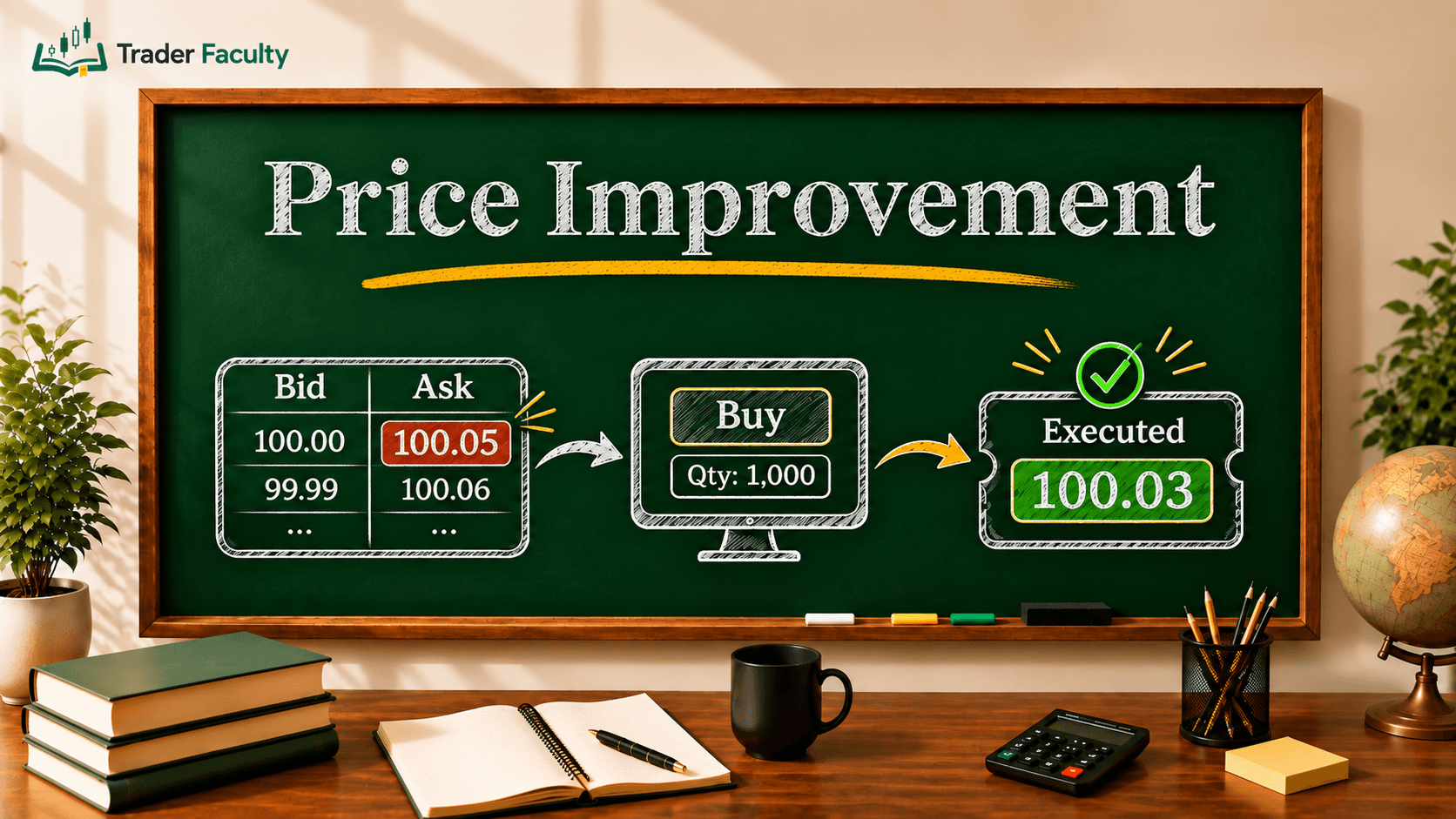
In normal market conditions, a short seller could submit a market order and sell immediately at $44.80, wiping out the buyer at that level. Under SSR, that market short order is blocked. To open a short position, you must submit a limit order at $44.81 or higher. If you place your short limit order at $44.82, your order sits on the book waiting for a buyer to step up and pay $44.82—giving that incoming buyer price improvement compared to the $44.84 ask.
| Feature | Normal Market Conditions | Active Short Sale Restriction (SSR) |
|---|---|---|
| Short market orders | Allowed; can hit the current best bid immediately | Blocked; cannot execute at or below the best bid |
| Short limit orders | Allowed at any price | Allowed only at a price above the current best bid |
| Long sell orders | Allowed at market or limit prices | Unchanged; existing shareholders can sell at any price |
| Duration | Continuous during all market sessions | Rest of trigger day plus the entire next trading day |
Narrow exceptions exist under SEC Rule 201. Brokers mark a short sale order "short exempt" when it is priced above the national best bid or fits one of a few narrow categories, such as certain arbitrage trades or market-maker odd-lot offsets. For everyday traders, the practical rule is still to price a short sale above the best bid.
Short Sale Restriction vs. the Traditional Uptick Rule
The traditional uptick rule limited short sales on most listed stocks at all times. Modern SSR applies only to stocks that have already dropped 10% in a day, and it ties execution to the National Best Bid.
From 1938 until 2007, the SEC's original uptick rule (Rule 10a-1) applied to most exchange-listed stocks at all times. Under that older rule, you could only short a stock on a plus tick or a zero-plus tick. A plus tick is a trade higher than the prior trade, and a zero-plus tick is a trade at the same price as the prior trade, as long as the last price change was upward. The SEC removed the rule in 2007 after running a pilot program that suspended the tick test for some stocks.
Following the 2008 financial crisis, the SEC adopted Rule 201 in 2010 as a targeted middle ground. Rather than slowing down every short sale on stable stocks, the alternative uptick rule stays dormant until a specific stock drops 10%, then steps in as a temporary speed bump.
Why a Stock Can Still Drop Under SSR
A stock under SSR can continue falling sharply because the rule only restricts short sellers. It places no limits on investors who already own the shares and decide to sell.
Many beginners treat an active SSR flag as a protective floor, assuming the stock can't go down anymore once short sellers are restricted. In practice, two everyday market forces can still drive the price lower:
- Long shareholders selling at market: Anyone who bought the stock earlier can hit the bid with a market sell order at any moment, pushing the price straight down.
- Buyers lowering their bids: If bad news hits a company, buyers may cancel their $44.80 bids and place new bids at $43.50. Once the National Best Bid drops to $43.50, short sellers can legally place new short limit orders at $43.51—following the falling market all the way down.
Common Mistakes Traders Make With SSR
The biggest mistake traders make with SSR is treating the restriction as a buy signal or as proof that a short squeeze is coming.
When a stock drops 10% and triggers SSR, social media feeds often fill with claims that short sellers are trapped and the price is about to rocket higher. Buying a falling stock purely because SSR turned on ignores why the stock dropped in the first place. If institutional funds are exiting a company after a weak earnings report, an SSR flag won't stop the downtrend.
Two other common errors catch newer traders off guard:
- Submitting market short orders during SSR: If you try to short a plunging stock with a standard market order, your broker may reject it or reprice it as a passive limit order. That can leave you unfilled as the price moves away.
- Confusing SSR with a trading halt: Unlike a Limit Up-Limit Down (LULD) pause, which freezes all trading for five minutes when price moves too fast, SSR leaves the market completely open.
Conclusion
Short sale restriction is a targeted circuit breaker under SEC Rule 201 that triggers after a 10% intraday drop and stays in place through the end of the next trading day. Rather than banning short sales outright, it requires short sellers to place passive limit orders above the current highest bid, slowing down panic selling while allowing normal supply and demand to continue. Understanding how exchange rules like SSR shape order execution is a core part of learning how to start trading with realistic expectations about market mechanics. Trading always carries the risk of losing money, so treat everything here as a starting point for your own research rather than a recommendation.
Frequently Asked Questions
Can you still short a stock when short sale restriction is active?
Yes. SSR doesn't ban short selling outright. While it's active, you can't submit a market short order to sell immediately into the current highest bid. Instead, you can still open a short position by placing a passive limit order priced strictly above the National Best Bid and waiting for a buyer to step up to your price.
How long does SSR last once triggered?
Once a stock drops 10% or more from its previous closing price during regular market hours, SSR remains active for the rest of that trading day plus the entire following trading day. If the stock drops another 10% on the second day relative to the new close, SSR is triggered again and extends for an additional trading day.
Does SSR make a stock price go up?
No. SSR doesn't force a stock price higher or create a protective price floor. It prevents short sellers from aggressively hitting existing bids, but shareholders who already own the stock can still sell at market price, and buyers can lower their bids. If selling demand stays strong, the stock price can keep falling while SSR is active.
Does pre-market or after-hours trading trigger SSR?
No. Price drops in pre-market or after-hours sessions don't trigger SSR on their own. Under SEC Rule 201, the 10% decline has to occur during regular trading hours, which run from 9:30 AM to 4:00 PM Eastern Time. Once SSR is triggered, though, it also applies in extended-hours sessions.
What is the difference between SSR and a trading halt?
SSR keeps the market completely open for normal buying and selling while limiting short sale orders to prices above the current highest bid. By contrast, a trading halt, such as a Limit Up-Limit Down (LULD) pause, temporarily freezes all order execution in the stock for several minutes when prices move too fast.
Keep learning
Trading 101
Know the mechanics cold before you risk a single cent.
8 lessons quiz
Start Trading 101The Trader Faculty Team writes and reviews every guide together — pairing hands-on market experience with a curriculum-first approach to trading education. One good syllabus, taught in the order that makes you better.