What Is a Stop-Limit Order? A Complete Guide to Precision Trading
Learn what a stop limit order is, how its dual-price mechanics work, and how to protect your trades. Read the full guide.
By Trader Faculty Team
Direct Answer
A stop-limit order is a conditional trade instruction that allows traders to control their execution price precisely by setting two distinct levels. The order remains entirely dormant until the market hits the specified stop price, which instantly triggers it as a strict limit order on the exchange book.
A stop-limit order is a conditional trade instruction that combines the features of a stop trigger with a strict execution price ceiling or floor. It gives you precise control over the exact price at which your trade can execute.
When markets get wild, standard orders can execute far from where you intended, causing frustrating slippage. Controlling your execution price is an essential step when you learn how to start trading effectively. This guide breaks down the two-step mechanics of stop-limit orders, compares directional setups, and highlights the hidden risks of missed executions.
Quick Takeaways
- A stop-limit order requires two separate price inputs: a stop price that activates the order and a limit price that defines the worst acceptable execution boundary.
- It gives you control over your execution price by ensuring you will not buy above or sell below your specified limit price, though the order may go unfilled if the market moves past that level before it can be executed.
- The primary trade-off is execution certainty; if the market gaps past your limit price, the order will remain unfilled and your position will be left exposed.
What Is a Stop-Limit Order?
A stop-limit order is an advanced order type designed to give traders absolute boundary control over execution pricing. Unlike standard market orders that fill immediately at whatever price the market offers, a stop-limit order remains completely dormant until specific price criteria are satisfied.
To understand this tool, you must look at it as a two-step conditional logic engine:
- Step 1: The Trigger (Stop Price): The market moves to or through a price level you specify. This action wakes the order up. It does not execute a trade yet; it simply moves the order from pending to active.
- Step 2: The Execution Boundary (Limit Price): The moment the trigger fires, the instruction instantly converts into a traditional limit order placed directly onto the exchange's order book. The trade will now only fill if the market stays within your specified limit boundary.
Think of it like hiring a personal assistant to buy a rare collector's item. You tell them, "Do not bid unless you see bidding actively open at $100 (the Stop Price). Once it opens, you can buy it for me, but do not spend a single penny over $120 (the Limit Price)." If the bidding instantly jumps from $90 to $150, your assistant walks away, protecting you from overpaying.
How a Stop-Limit Order Works: The Trigger and the Boundary
When you enter a stop-limit order into your trading platform, it does not immediately enter the exchange's public queue. Instead, it lives on your broker's servers as a pending condition.
Once the market trades at your designated stop price, the broker broadcasts the order to the exchange book matching system. The order is then handled based on standard priority rules: it waits in line to be filled, but only at your limit price or better.
The most critical operational decision you will make is determining the spacing between your stop price and your limit price. If you set the stop and limit prices at the exact same value, a fast-moving market can easily blow past your order before the exchange can match it.
For highly liquid assets like major blue-chip equities, a padding of just a few cents may be adequate to secure a fill. However, in highly volatile or thinly traded environments like cryptocurrency markets, you must use wider spacing percentages to ensure the order book has enough liquidity to absorb your transaction.
Buy Stop-Limit vs. Sell Stop-Limit Orders
Stop-limit orders function differently depending on whether you are trying to enter a position as prices rise or protect capital as prices fall.
The Buy Stop-Limit Setup
Breakout traders use this configuration to enter trades when an asset clears heavy overhead resistance. If an asset is trading at $50 and resistance sits at $52, you might place a stop price at $52.50.
Instead of using a standard buy stop order—which converts into a market order and risks buying at an inflated price if the market spikes violently—the stop-limit allows you to place a buy limit boundary at $53.00. This ensures you buy the breakout, but only if the price stays under your $53.00 ceiling.
The Sell Stop-Limit Setup
Traders use this configuration to manage downside risk or initiate short positions when an asset breaks below support. If you hold an asset at $100 and support rests at $90, you can place a stop trigger at $89.50.
Unlike a regular sell limit order that sits above the current price waiting to lock in profits, this order waits below the market. If the asset plunges to $89.50, the order activates as a sell limit with a floor boundary (e.g., $89.00), preventing the broker from selling your shares at a massive discount during a panic.
| Order Action | Condition to Trigger | Order Type Deployed | Primary Risk Factor |
|---|---|---|---|
| Buy Stop-Limit | Market price rises to or above Stop Price | Buy Limit | The market continues gapping upward, leaving the order unfilled. |
| Sell Stop-Limit | Market price falls to or below Stop Price | Sell Limit | Market gaps downward past the limit floor, failing to cut losses. |
Key Tactical Differences: Buy Limit vs. Buy Stop Orders
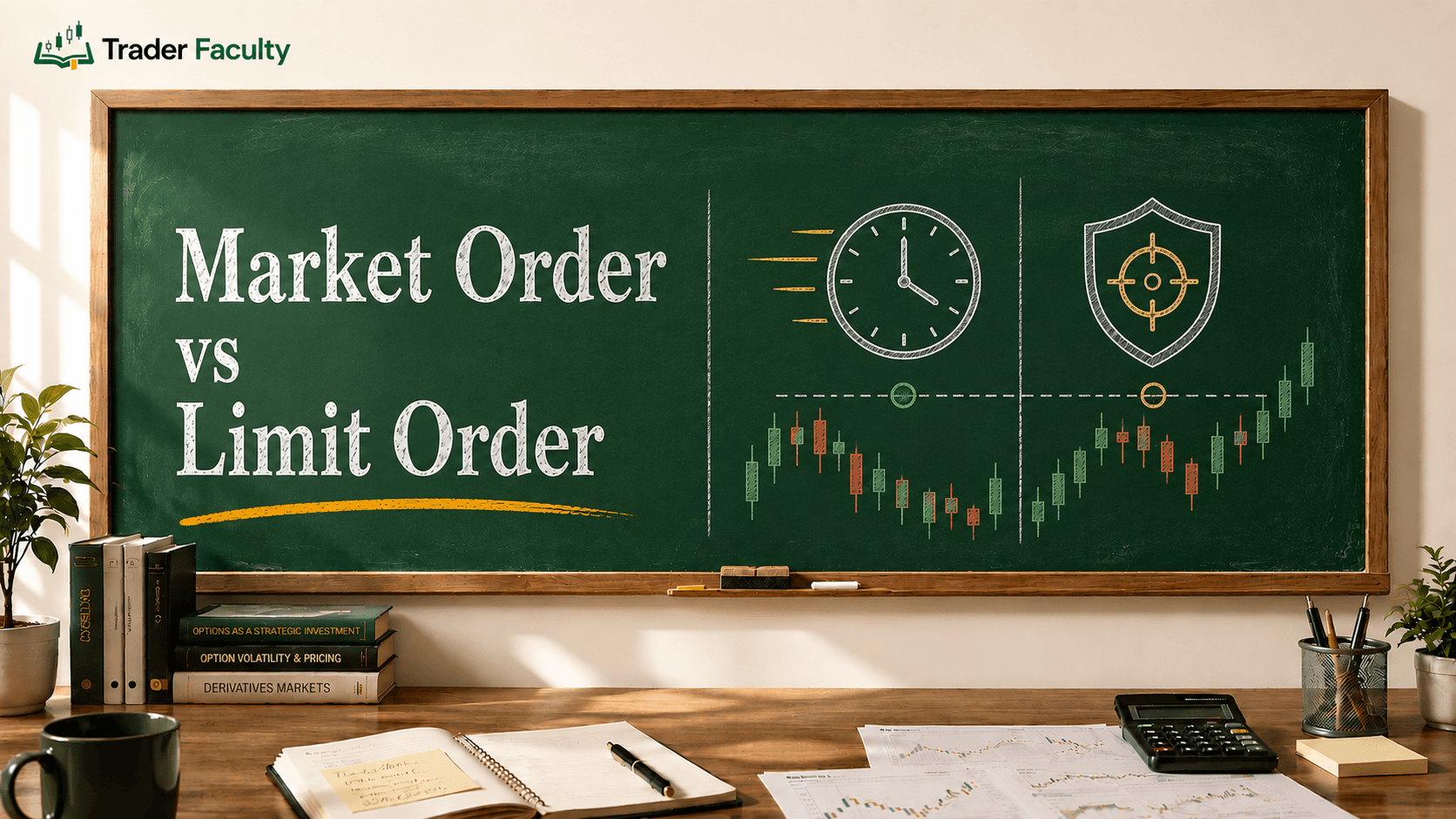
New traders often get confused when choosing between standard buy orders and stop-limit variations. The core confusion usually stems from the underlying mechanics of a buy limit vs buy stop instruction.
- A standard buy limit order is placed below the current market price. It is used when you believe the market is too expensive and want to buy at a discount when price drops.
- A standard buy stop order is placed above the current market price. It is used when you want to buy only after the market proves it has upward momentum by breaking a specific high.
The stop-limit order effectively bridges the gap in the buy limit vs buy stop dilemma. It allows you to target a breakout above the current market price (the function of a buy stop), but strips away the danger of paying too much by instantly binding the activation to a strict maximum price ceiling (the function of a buy limit).
Stop-Loss vs. Stop-Limit Orders: Which Should You Use?
When managing risk as part of your trading plan, you must decide whether to use a traditional market-based stop loss or a stop-limit order. The decision boils down to a fundamental choice between execution speed and price precision.
A traditional market stop-loss is built for speed and survival. The moment your stop price is touched, the order becomes a market order. It guarantees that you will exit the trade immediately, but it provides zero protection against bad pricing. If the market is crashing, you might get filled dollars away from your trigger point.
A stop-limit order prioritizes price protection over mandatory execution. It guarantees that you will never accept a bad fill, but it cannot guarantee you will get out of the position at all.
You should choose a market stop-loss when absolute capital protection is mandatory and you cannot afford to remain trapped in a failing trade. You should reserve stop-limit orders for calmer, highly liquid market conditions, or for precise entries where overpaying completely destroys the structural risk-to-reward ratio of the setup.
Common Pitfalls: Why Your Stop-Limit Didn't Fill
Relying blindly on stop-limit orders without respecting market environment dynamics can lead to severe trading account damage.
Pitfall 1: The "Gapping" Market Catastrophe
Markets do not always move smoothly cent by cent. If a company releases terrible earnings overnight, or if a major geopolitical event occurs over the weekend, the asset price may "gap" down. If a stock closes at $50 and opens the next morning at $40, a sell stop-limit with a stop at $48 and a limit at $47 will trigger, but it will sit on the book completely empty. The market is already at $40, completely bypassing your limit window and leaving your position exposed to further losses.
Pitfall 2: Setting the Limit Too Close to the Stop
If you place your stop trigger at $100.00 and your limit execution wall at $99.99, you are giving the market matching engine a window of exactly one penny to fill your order. During high-volume breakouts or breakdowns, the order book can clear out faster than your order can process, leading to a skipped fill.
Conclusion
Stop-limit orders are highly effective tactical tools that offer unparalleled price control for entering breakouts and exiting liquid positions gracefully. By separating the activation trigger from the execution boundary, they allow you to dictate the exact terms of your market interaction.
However, they are not a magical safety net. You must balance their exact pricing benefits against the real risk of non-execution in fast or gapping markets. To build a robust trading system, integrate these precision mechanics alongside the broader capital management concepts taught throughout our foundational educational resources.
Frequently Asked Questions
What is an example of a buy stop-limit order?
Suppose a stock trades at $50 and resistance is at $52. You can set a buy stop-limit order with a stop price at $52.50 and a limit price at $53.00. If the stock rallies to $52.50, your order triggers as a limit order, filling only if shares can be bought for $53.00 or less.
Is a stop-limit order safer than a market order?
It depends on your primary goal. A stop-limit order is safer for protecting against slippage because it guarantees your execution price. However, it is riskier if your goal is absolute capital preservation, as the order will not execute at all if the market gaps past your limit price.
Why did my stop-limit order trigger but not execute?
This occurs because the market price moved past your limit boundary too quickly before the exchange matching engine could fill your order. This is common during sudden overnight price gaps, low market liquidity, or high-volatility news events that bypass your specified execution window completely.
Can a stop-limit order be partially filled?
Yes, a stop-limit order can result in a partial fill. If the market triggers your stop price and hits your limit price, but only a fraction of the required shares are available at that price before the market moves away, the remaining portion stays unfilled on the order book.
When should you use a stop limit vs buy stop order?
You should use a buy stop order when you want to capture a fast breakout and guarantee entry, regardless of price. Choose a buy stop-limit order when you want to buy a breakout but require a strict maximum price ceiling to protect against overpaying due to sudden slippage.
Keep learning
Trading 101
Know the mechanics cold before you risk a single cent.
8 lessons quiz
Start Trading 101The Trader Faculty Team writes and reviews every guide together — pairing hands-on market experience with a curriculum-first approach to trading education. One good syllabus, taught in the order that makes you better.