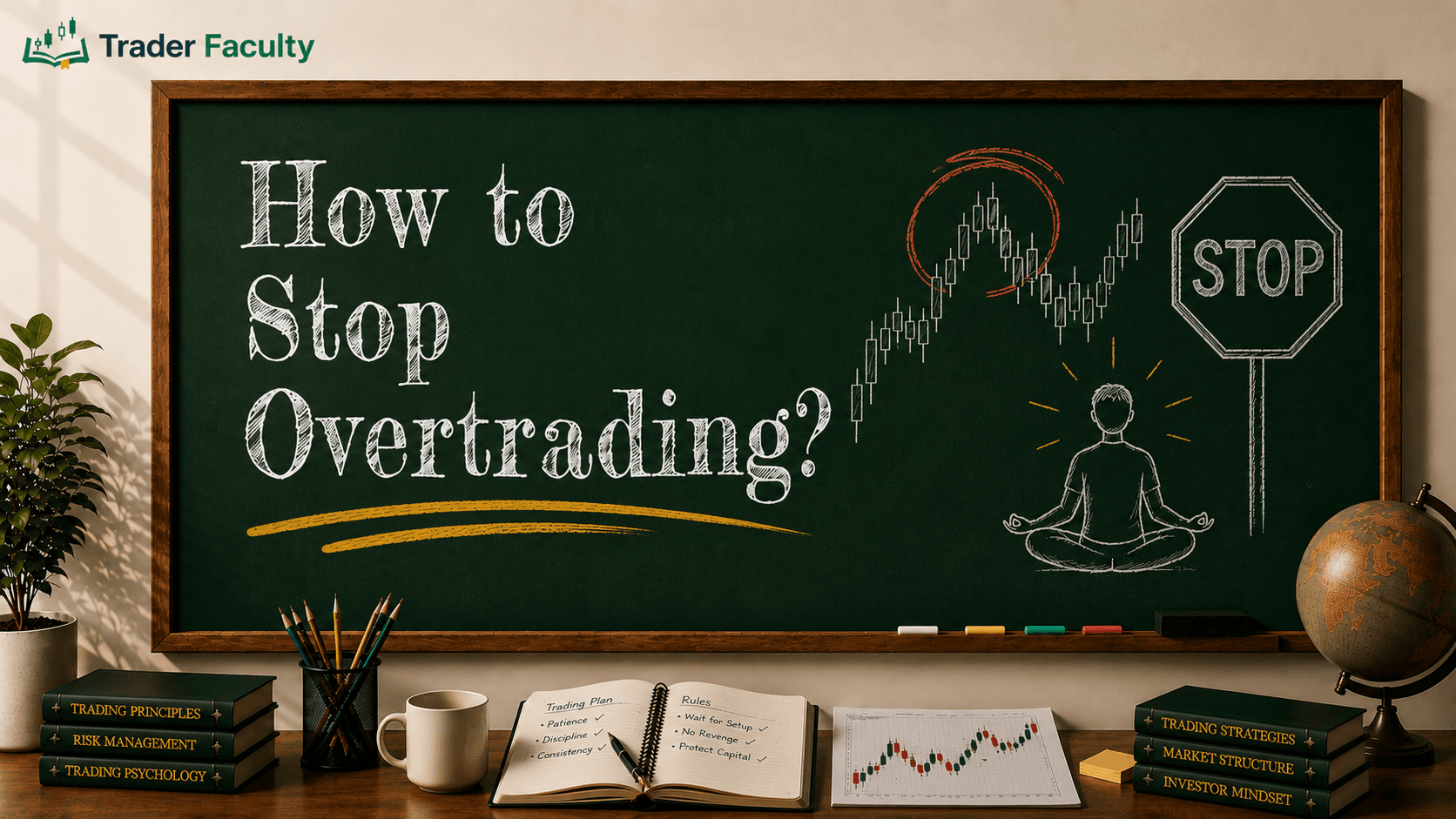
What Is Overtrading? Specific Payoff for New Traders
Learn how to spot overtrading, understand the emotional triggers like FOMO, and protect your capital. Read the full guide.
By Trader Faculty Team
Direct Answer
Overtrading is the excessive buying and selling of financial assets beyond the rules of an established strategy or capital limits. It typically manifests as emotional execution—such as revenge trading or forcing setups out of boredom—and results in rapid account depletion due to heightened transaction fees and uncalculated market risk.
Overtrading is the act of buying and selling financial assets excessively, crossing the boundaries of your established risk parameters or strategic rules. This behavior typically results in a rapid inflation of transaction fees and unnecessary account exposure.
Many market participants know the frustration of opening a laptop, seeing zero viable setups, and forcing a position anyway out of pure boredom or irritation. When emotions override a mechanical plan, a disciplined strategy quickly degrades into impulsive market behavior. This guide breaks down how overtrading occurs across different market environments, the psychological mechanisms that drive it, and how to spot the early warning signs before your capital suffers.
Quick Takeaways
- Overtrading is defined by a systemic breach of your trading plan rules, not by the specific number of executions you make.
- Emotional drivers like revenge trading, market boredom, and overconfidence are the primary causes of retail account depletion.
- The hidden danger of excessive execution lies in fee and spread drag, which quietly drains equity even during break-even streaks.
- High-frequency strategies are distinct from overtrading if every execution strictly satisfies a pre-tested, positive-expectancy rule.
What Is Overtrading in Financial Markets?
Overtrading occurs when market activity exceeds the structural limits of an investment strategy or available risk capital. In the broader financial ecosystem, this issue manifests through two entirely distinct operational channels.
The first and most prevalent channel is retail trader overtrading. This refers to an individual market participant engaging in excessive trading because they lack the behavioral discipline required to wait for verified setups. The trader deviates from their checklist, scales into positions recklessly, or manages a larger basket of active positions than their personal bandwidth allows.
The second channel belongs to institutional account management and is known as broker overtrading, or account churning. This is an unethical, regulated practice where a broker executes unauthorized or unnecessary asset turns within a client’s portfolio. The primary motivation here is not the client's financial gain, but rather generating extra commissions and transaction fees for the firm.
The Psychology Behind Excessive Trading
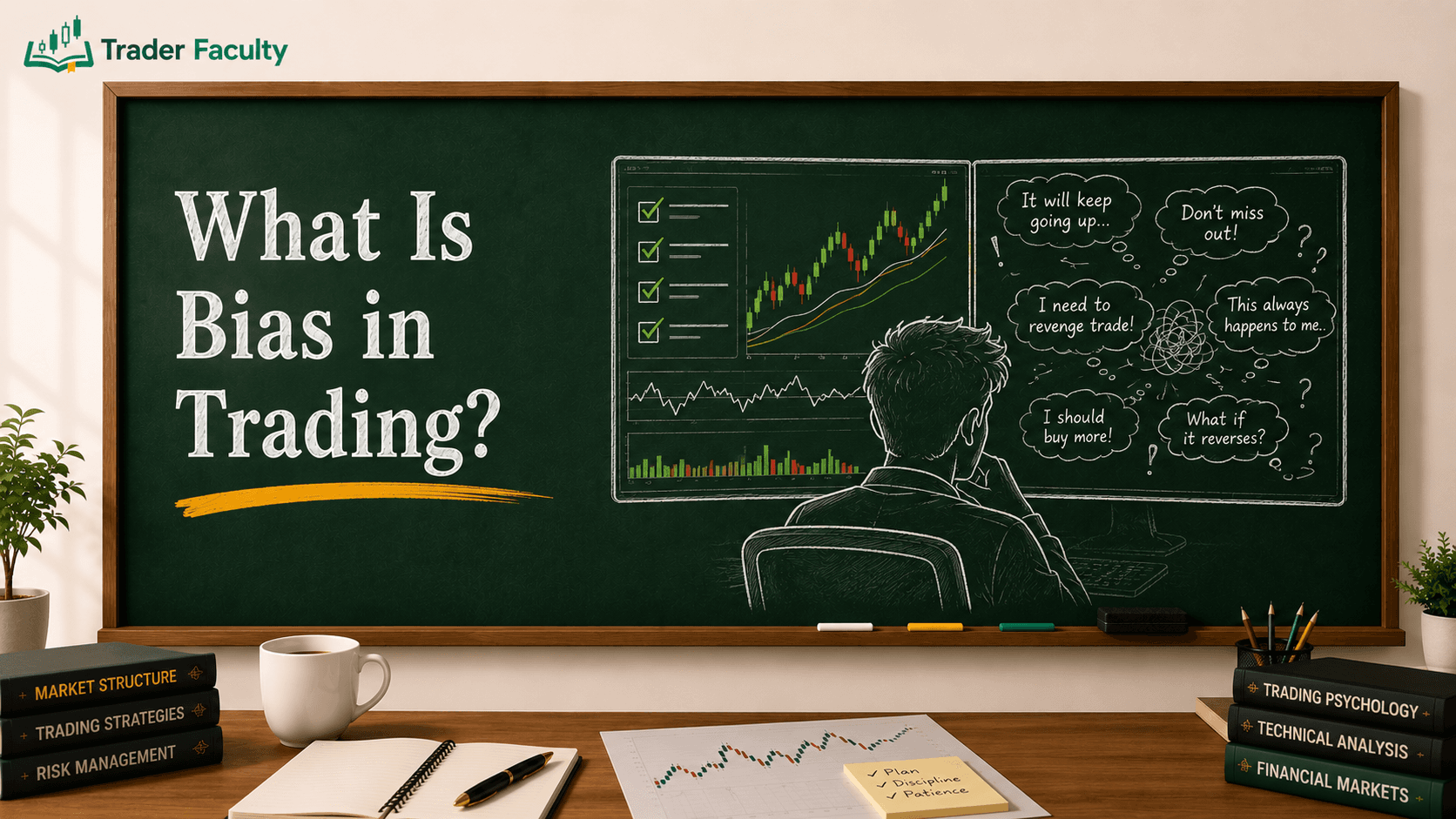
Reckless market execution is almost always a behavioral symptom rather than a technical one. Retail accounts routinely fall victim to cognitive biases that compel them to overtrade when a neutral perspective is required.
- Revenge Trading: This dynamic is triggered by loss aversion. Following a painful losing trade, the human brain seeks immediate financial vindication. A trader will immediately re-enter the market—often with increased size—to "win back" the lost cash, completely disregarding their core strategy.
- FOMO (Fear of Missing Out): When an asset makes a rapid, vertical move, unprepared onlookers experience intense emotional pressure. Out of fear of missing a massive trend, they jump into a mature move at highly unfavorable prices.
- Overconfidence Bias: A temporary streak of winning trades can breed an illusion of control. When a developer believes they can accurately forecast every market turn, they expand position sizes and take random trades outside their plan, mistaking a lucky market regime for personal infallibility.
Symptoms: How to Know If You Are Overtrading
Identifying a structural behavioral issue requires objective self-auditing. Retail participants frequently normalize destructive habits until their balance sheet forces a reality check.
The primary symptom is transaction cost bleed. Every single market execution incurs an operational toll via bid-ask spreads, commissions, or overnight swap rates. When a retail participant scales execution volume unnecessarily, these small friction points compound into a significant drain on equity. Even a break-even strategy can face capital depletion simply due to the sheer weight of structural fees.
Another telltale symptom is continuous screen monitoring paired with mental burnout. A participant caught in an execution loop rarely walks away from the chart. They watch every tick on low-frequency timeframes, second-guess their parameters mid-trade, and continuously modify active positions without strategic justification.
Systematic Strategy vs. Overtrading: The Crucial Difference
An elevated trade count does not automatically mean a market participant is making mistakes. The defining metric that separates a high-frequency system from portfolio damage is strict adherence to a pre-set rule framework.
| Systematic Strategy | Psychological Overtrading |
|---|---|
| Executions are dictated by a tested, rule-based model. | Executions are triggered by boredom, panic, or greed. |
| Transaction fees are accounted for within expected value models. | Unplanned costs quickly drain the available account balance. |
| Risk per trade remains completely uniform and calculated. | Position sizing varies wildly based on emotional state. |
Systematic short-term traders or algorithmic models can execute hundreds of positions daily. However, because each position satisfies strict edge criteria and risk parameters, they are executing a plan, not acting recklessly. True account damage begins when rules are broken, turning calculated risk into random market exposure.
Conclusion
Overtrading is a structural behavioral trap that shifts a participant's focus away from processing probability and toward emotional gratification. Whether fueled by the need to recover losses quickly or the anxiety of missing a sudden market spike, executing unplanned positions places your capital at a structural disadvantage.
Protecting your equity requires establishing strict operational boundaries, tracking the compounding impact of fee drag, and understanding your underlying behavioral blind spots.
Mastering trading psychology is a continuous journey, but your immediate next step should focus on practical boundaries and learning how to stop overtrading before emotional cycles dictate your financial outcomes.
Frequently Asked Questions
What causes a retail trader to overtrade?
Retail overtrading is primarily driven by psychological triggers such as loss aversion, which leads to revenge trading after a loss, and the Fear of Missing Out (FOMO) when catching rapid market moves. Overconfidence bias following a winning streak also causes traders to disregard their core strategy rules.
How do I know if I am overtrading?
You can identify overtrading by reviewing your execution logs against your trading plan checklist. If you are taking unvalidated positions, continuously tweaking parameters mid-trade, experiencing mental exhaustion, or noticing your equity being drained heavily by commissions and spreads, you are likely overtrading.
What is the difference between broker overtrading and trader overtrading?
Trader overtrading is an individual behavioral discipline failure where a participant executes too many emotional positions. Broker overtrading, or account churning, is an unethical institutional practice where a broker enters unauthorized trades in a client's account specifically to generate commission fees.
Is high-frequency scalping considered overtrading?
No, high execution volume is not inherently overtrading. If every single position strictly satisfies a pre-tested system with positive expectancy and uniform risk parameters, it is a systematic strategy. Overtrading specifically means breaking your structural rules to force unplanned market exposure.
How does excessive execution affect trading profits?
It creates a massive transaction cost drag. Every position incurs costs via bid-ask spreads, platform commissions, or overnight swap fees. When volume scales recklessly, these compounding expenses can deplete an account balance even if the underlying trades net a break-even result.
The Trader Faculty Team writes and reviews every guide together — pairing hands-on market experience with a curriculum-first approach to trading education. One good syllabus, taught in the order that makes you better.