What Is Revenge Trading and How Can You Stop It?
Learn what revenge trading is, why it happens, and how mechanical rules protect your account. Read the full guide.
By Trader Faculty Team
Direct Answer
Revenge trading is an emotional market reaction where a trader opens impulsive, unplanned positions to quickly recover recent losses. This behavior shifts execution away from systematic probabilities and into high-risk gambling driven by ego and loss aversion.
Revenge trading is the emotional cycle of attempting to quickly recover market losses by opening impulsive, uncalculated positions outside of a defined strategy.
You have likely experienced the stinging heat of a sudden loss followed by an overwhelming urge to fight back against the market. It feels natural to want your money back immediately, but acting on this impulse is a fast track to severe drawdowns. This guide explains why this destructive habit occurs, how it plays out across different asset classes, and how to build mechanical rules to stop it.
Quick Takeaways
- Revenge trading shifts your execution from structured probabilities to emotional gambling.
- The habit manifests through arbitrary asset hopping, over-leveraging, or changing timeframes mid-session.
- Relying on mechanical operational constraints, rather than pure willpower, is the most reliable way to break the cycle.
What Is Revenge Trading?
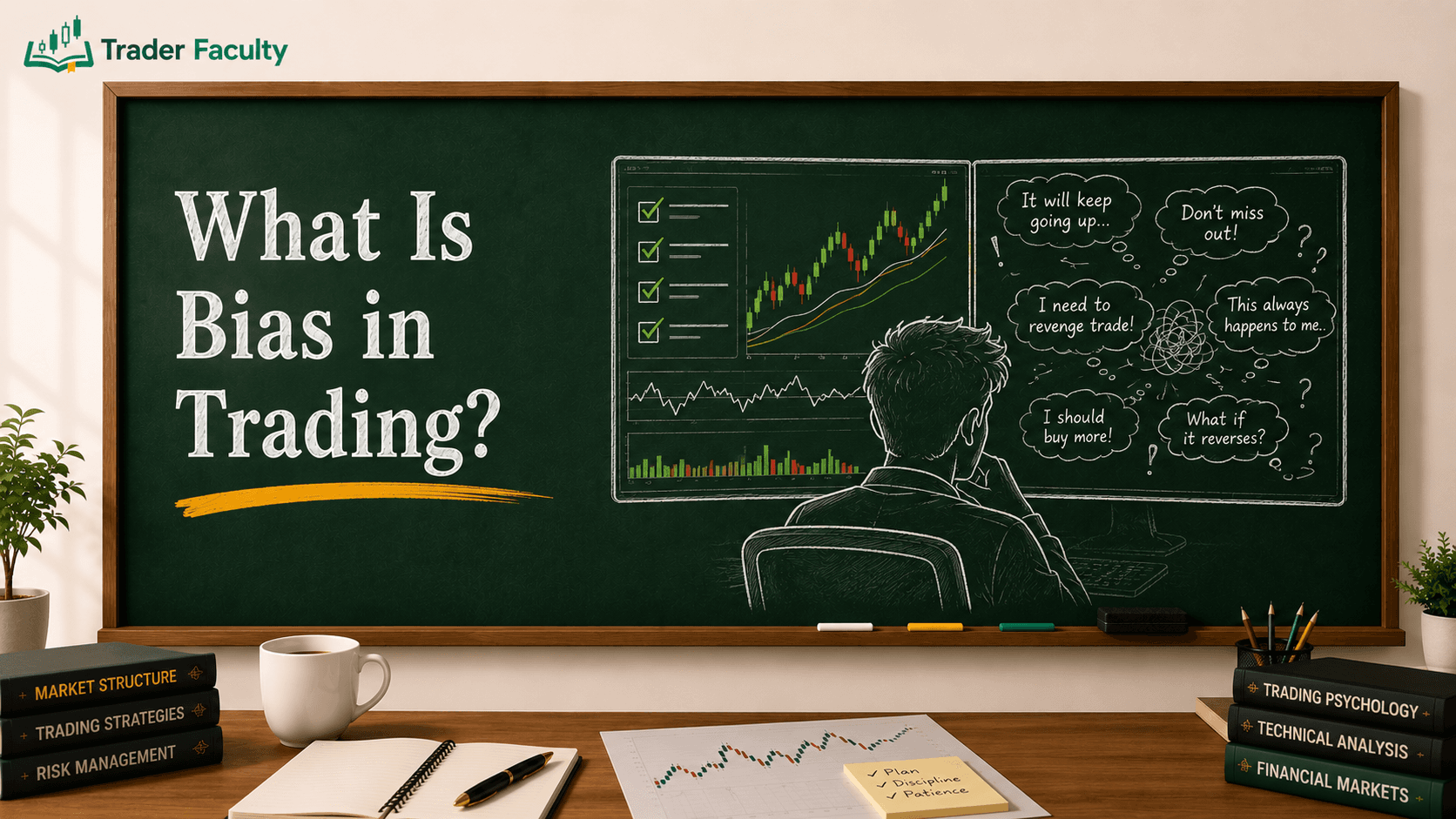
Revenge trading is an emotional response where a market participant attempts to claw back recent losses by forcing new, unplanned trades. When you fall into this trap, you stop operating as a disciplined risk manager and start behaving like a frustrated gambler at a casino table. The primary driving force behind your next position is no longer a high-probability technical setup; it is a direct battle between your ego and the market.
This behavior stems from a fundamental inability to accept that losing is a normal part of the professional process. In a desperate bid to undo a losing trade, positions are opened without proper checklist verification, turning calculated risk into pure chance. Managing this response effectively is one of the most critical steps in mastering your long-term trading psychology.
How a Revenge Trade Manifests in the Market
A revenge trade shows up on a price chart as an immediate, rule-breaking entry executed out of anger or panic. It is rarely a single, isolated mistake; instead, it usually morphs into an escalating cycle of systemic account damage. This behavior typically takes one of three dangerous forms across different asset classes:
- The Double-Down (Martingale Approach): This occurs when you increase your position size on a subsequent trade, hoping a quick reversal will erase the prior loss. If the market continues to move against you, the larger size accelerates your account drawdown.
- Asset Hopping: Out of pure frustration with a specific market—like a major currency pair or a modern stock—you jump randomly into highly volatile, unfamiliar assets like crypto or commodities without running a proper analysis.
- Strategy Abandonment: A patient swing trader might hit two consecutive losses and suddenly pivot to hyper-aggressive, low-timeframe scalping, attempting to squeeze micro-profits out of random price noise just to get back to break-even.
The Psychological Triggers Behind the Urge
The psychological triggers that cause you to force trades after a drawdown are hardwired human biases, primarily loss aversion and a stubborn fear of being wrong. According to Prospect Theory research by psychologists Daniel Kahneman and Amos Tversky, the psychological pain of a financial loss is felt roughly twice as intensely as the pleasure of an equivalent gain. Your brain interprets a financial loss as an active threat, triggering a fight-or-flight response that impairs logical decision-making.
This urgent drive to fix the perceived damage distorts your view of risk and market reality. When you operate under this emotional cloud, it frequently triggers a secondary wave of panic, causing a massive fear of missing out on the next market move because you feel you must capture it to make up for your previous error.
The Institutional Fix: Building Operational Circuit Breakers
Professional traders prevent emotional execution by relying on strict, mechanical systems rather than fluid willpower. If you wait until you are already angry to decide to stop trading, you already lost the battle. You need structural boundaries built into your workspace before the opening bell rings.
- The Hard Daily Loss Limit: Set a firm rule that locks your execution platform once a specific drawdown limit is hit. If your daily cap is reached, your session is officially over.
- The Mandatory Cooling-Off Period: Physical distance is your best defense against an emotional tailspin. Step away from your screens, close your charts, and leave your desk for at least a few hours after a rough loss.
- The Session Audit: Before you place another order after a losing streak, fill out a mandatory journal entry explaining the technical justification for the setup. If the entry is driven by frustration rather than your plan, do not execute it.
Conclusion
Losing trades are simply an unavoidable cost of doing business in any financial market. Breaking the cycle of emotional trading requires moving away from an ego-driven perspective and embracing an operational framework built around capital preservation. By treating your account with professional respect and implementing mechanical rules, you can protect your balance from short-term emotional mistakes.
Frequently Asked Questions
How do I stop revenge trading?
You can stop revenge trading by implementing mechanical operational controls rather than relying purely on willpower. Set a firm daily loss limit within your platform settings that automatically locks your execution when hit. Additionally, enforce a mandatory cooling-off period by stepping away from screens for a set period immediately following consecutive losses.
What causes a trader to take revenge?
Revenge trading is caused by deep-seated psychological biases, primarily loss aversion and a fear of being wrong. Prospect Theory, a well-documented framework in behavioral economics, demonstrates that humans experience the pain of financial loss far more intensely than an equivalent gain. This emotional trigger overrides logical decision-making, forcing impulsive actions to fix the perceived damage.
What is an example of a revenge trade?
An example of a revenge trade is when a stock or forex trader loses a standard position and immediately enters a new trade with double the lot size without a technical setup. They are attempting to use a high-risk martingale strategy to erase the initial financial drawdown in a single market move.
Can revenge trading happen across different asset classes?
Yes, revenge trading routinely spans multiple asset classes. Frustrated traders often engage in asset hopping, moving abruptly from an asset they lost money on to highly volatile instruments like crypto or commodities. They force random entries without running a proper technical analysis or validating a risk profile.
Why do I keep breaking my trading rules after a loss?
Breaking your trading rules after a market loss happens because emotional stress triggers a fight-or-flight biological response. This temporary cognitive impairment distorts your perception of risk and market reality. It generates panic, leaving you susceptible to irrational impulses and a fear of missing out on potential corrective market moves.
Keep learning
Trader Mindset
Strategy is the easy part. Sticking to it is the hard part.
6 lessons quiz
Start Trader MindsetThe Trader Faculty Team writes and reviews every guide together — pairing hands-on market experience with a curriculum-first approach to trading education. One good syllabus, taught in the order that makes you better.