Guaranteed Stop Loss Explained: How to Limit Slippage
Learn how GSLOs work, what they cost, and when paying for one makes sense during price gaps and high volatility. Read the full guide.
By Trader Faculty Team
Direct Answer
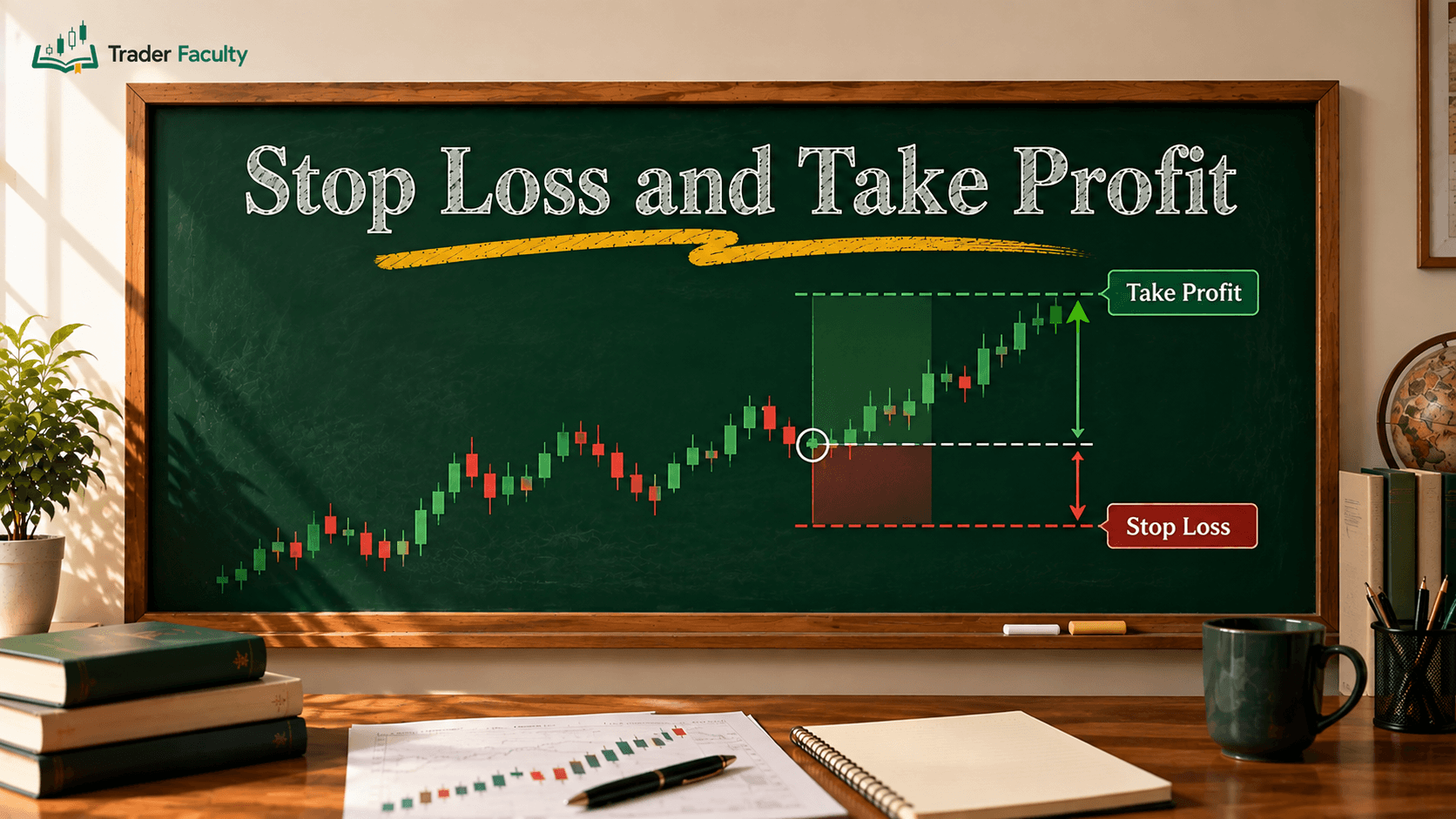
A guaranteed stop loss order (GSLO) is a broker order type designed to close a position at your requested stop price even when the market gaps past it. In exchange for that protection, brokers charge a fee or premium, and terms vary by broker and region.
A guaranteed stop loss order (GSLO) is a broker order type designed to close a trade at your requested stop price, even when the market gaps past it. Availability, fees, and terms vary by broker and region.
Many traders use standard stop loss orders assuming they provide complete protection. However, when sudden economic news breaks or markets gap over the weekend, standard stops can execute at much worse prices than intended. A guaranteed stop loss acts as execution insurance, capping your maximum loss at a defined boundary in exchange for a broker fee.
Quick Takeaways
- A GSLO is designed to fill at your chosen stop price even through price gaps, avoiding slippage on that order.
- Brokers charge a premium or fee for providing a GSLO, which functions like an execution insurance policy.
- Unlike a standard stop loss, a GSLO can protect capital during severe volatility events like central bank rate decisions, earnings reports, and weekend gaps.
- While a GSLO caps execution risk on a specific trade, it does not guarantee overall trading profits or remove broader market risk.
What Is a Guaranteed Stop Loss Order (GSLO)?
If you’ve searched "what is guaranteed stop loss," the answer is a contractual agreement between a trader and a broker to close a trade at a specific price level, usually for a fee.
In standard market conditions, order execution relies on available liquidity. If you set a normal stop loss on a stock at $100 and the price suddenly drops from $102 to $95 without trading at $100, your order fills at $95. That $5 difference is known as slippage — the gap between your expected execution price and the actual fill price.
A GSLO eliminates this execution gap on the order. If market price jumps far past your set stop price, your broker absorbs the difference and fills your order at the level specified. It is a broker commitment, so the terms and the broker’s financial strength matter.
For beginner traders learning risk management trading, understanding the distinction between order types is vital. The "guaranteed stop loss meaning" in one line: your order changes from a conditional market instruction into a price guarantee backed by the broker.
How GSLOs Work: Preventing Market Gapping and Slippage
Market gapping happens when price jumps from one level to another without any trading occurring in between. This frequently occurs during three specific market conditions:
- Weekend Gaps: Financial markets close on Friday evening and reopen on Sunday night. Major news events occurring over the weekend can cause opening prices to jump far beyond Friday's close.
- High-Impact Economic Announcements: Events like Federal Reserve interest rate decisions or non-farm payroll reports can move prices sharply within seconds, which can cause large slippage.
- Corporate Earnings Reports: Single-stock CFDs can gap sharply after hours following earnings announcements or unexpected executive changes.
Standard Stop Loss vs. GSLO Example
Imagine you open a long CFD position on Company XYZ at $50 per share. You place a stop loss at $45 to limit your maximum loss to $5 per share.
Over the weekend, Company XYZ reports lower-than-expected revenue. When markets open on Monday, the stock gaps down and opens at $38.
| Feature | Standard Stop Loss | GSLO |
|---|---|---|
| Set Exit Price | $45 | $45 |
| Market Opening Price | $38 | $38 |
| Actual Execution Price | $38 | $45 |
| Slippage Suffered | $7 per share | $0 per share |
| Broker Premium Paid | $0 | Small fee (e.g., $0.50 per share) |
| Net Loss Per Share | $12 | $5.50 (Loss + Premium) |
In this scenario, a standard stop loss allows $7 of unexpected slippage, resulting in a total loss of $12 per share. The GSLO executes at $45, capping your loss at $5 per share plus the broker premium. The $0.50 premium is an illustrative figure, and real fees vary.
The Cost Structure: Broker Premiums and Fee Models
Because a broker takes on market risk when guaranteeing your exit price, they charge a fee known as a GSLO premium. Brokers typically structure these fees in one of two ways:
- Upfront Premium: The fee is charged immediately when the order is placed, regardless of whether the stop loss is ever triggered.
- Triggered Premium: The fee is charged only if the market reaches your stop level and the order actually executes.
The premium cost is usually quoted as a spread markup, a fixed monetary fee, or a small percentage of the total position value.
Comparing Order Execution Types
Understanding how a GSLO compares to other risk tools helps you choose the right execution model for your strategy:

- Standard Stop Loss: Free to place, but vulnerable to slippage during market gaps.
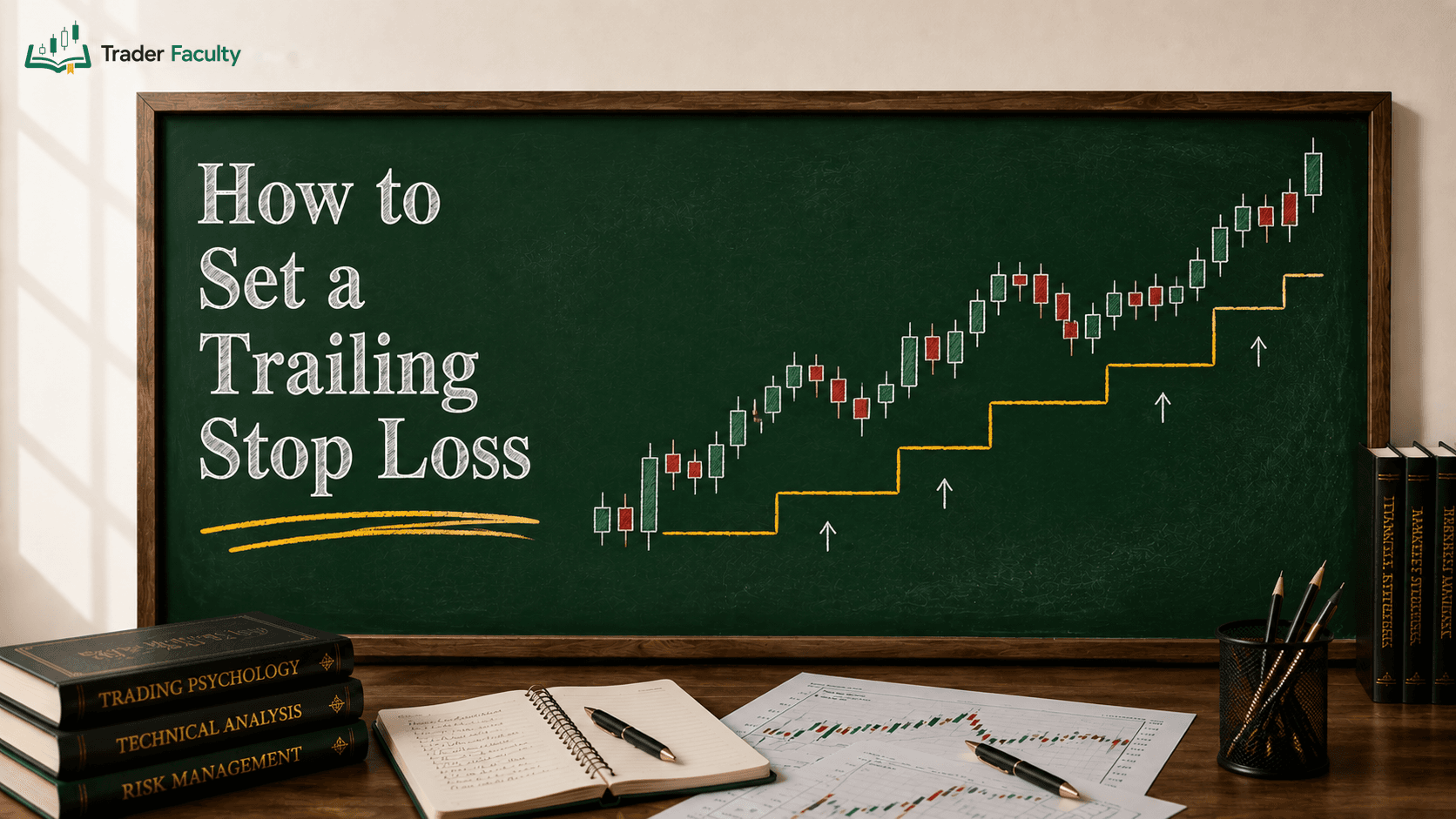
- Trailing Stop Loss: Moves dynamically with favorable price action, but when comparing a trailing stop loss vs trailing stop limit, both standard trailing types still face execution risk if the market gaps sharply.
- Guaranteed Stop Loss: Requires a fee or premium, but is designed to remove slippage on that order by guaranteeing your price boundary.
When Should Traders Pay for a Guaranteed Stop Loss?
Paying an execution premium is not necessary for every trade. However, paying for a GSLO makes sense in specific high-volatility trading scenarios:
- Holding Positions Overnight or Over Weekends: If you hold swing positions across market closes, weekend gap risk is a real risk. A GSLO acts as an insurance policy against unexpected news.
- Trading High-Impact News Events: During major central bank rate announcements, liquidity can thin rapidly. Retail traders face execution slippage during rapid market movements, and a GSLO can reduce execution uncertainty around major announcements.
- Highly Leveraged Trades: Higher leverage amplifies both gains and losses. A sudden gap against a heavily leveraged position can cause large losses or rapid margin liquidation. Some brokers and regions also offer negative balance protection.
- Volatile Asset Classes: Individual stock CFDs and volatile currency pairs experience frequent market gaps compared to broader index tracking products.
Common Mistakes Traders Make with GSLOs
While GSLOs offer useful execution protection, traders frequently misuse them:
- Confusing Execution Protection with Trading Success: A GSLO guarantees your exit price, but it does not make a bad trade profitable. Capping risk is important, but sound technical and fundamental analysis still matters.
- Using GSLOs in Low-Volatility Markets: Paying premiums during quiet trading sessions where slippage rarely occurs adds costs that can reduce your long-term returns.
- Ignoring Minimum Distance Rules: Brokers require GSLOs to be placed a minimum distance away from the current market price. Placing a stop too close to market price is likely to be rejected.
- Forgetting Premium Costs in Position Sizing: Always factor the GSLO fee into your total trade cost when calculating your risk-to-reward ratio.
Conclusion
A GSLO can be a useful tool for managing execution risk during market gaps and high volatility. By paying a broker premium, you convert unpredictable slippage risk into a known trading cost, though you still carry market risk on the trade.
To build a balanced strategy, reserve GSLOs for volatile events, weekend holds, or high-leverage trades where gap risk is elevated. For routine trades in quiet market conditions, standard or trailing stop losses are often more cost-effective. Trading financial instruments always carries the risk of losing money, so treat execution tools as part of a broader, disciplined risk framework.
Frequently Asked Questions
What is a guaranteed stop loss order (GSLO)?
A GSLO is a risk management order type offered by some brokers that guarantees your trade will close at the price you specify, avoiding slippage even if the market gaps over your level. It usually comes with a fee.
How much does a guaranteed stop loss cost?
Brokers charge a GSLO premium, which is structured either as a fixed fee, a spread markup, or a small percentage of position value. Depending on the broker model, this fee is charged either upfront when placing the order or only if the stop loss is triggered.
What is the main difference between a standard stop loss and a GSLO?
A standard stop loss converts into a market order once activated and is vulnerable to slippage during market gaps. A GSLO guarantees the fill price, with the broker absorbing any execution gap in exchange for a fee.
Can a GSLO fail or experience slippage?
Slippage is not expected once the broker accepts the order, but a GSLO isn’t risk-free. Brokers enforce minimum distance rules, premiums add cost, and terms vary by broker and region, so check yours before relying on one.
Is a GSLO worth the extra fee?
It can be, when you hold leveraged positions over weekends, trade through major macroeconomic news releases, or manage highly volatile instruments where gap risk is higher than average. For routine trades in calm markets, the fee may not be worth it.
Keep learning
Risk & Money Management
One good article won't save your account. A risk framework will.
7 lessons quiz
Start the courseThe Trader Faculty Team writes and reviews every guide together — pairing hands-on market experience with a curriculum-first approach to trading education. One good syllabus, taught in the order that makes you better.