What Is Slippage in Trading and How Does It Affect Your Orders?
Learn what slippage in trading means, why price gaps occur behind the scenes, and how to minimize execution costs. Read the full guide.
By Trader Faculty Team
Direct Answer
Price slippage is the variance between a trader's requested execution price and the actual price at which a trade is filled by the market engine. It occurs when rapid market volatility or low order book liquidity causes asset prices to shift during the milliseconds it takes to route the order.
Price slippage is the difference between the price you expect to pay when executing a trade and the actual price at which the trade is filled. It represents the structural variance between your intended transaction entry point and real-world market matching.
You have probably experienced the frustration of clicking an entry button at a clean chart level, only to watch your platform execute the position a few pips or cents higher than you wanted. This unexpected gap directly impacts your trading account balance before your position even gets moving.
This guide breaks down exactly why these price shifts occur, how they vary across different markets, and the practical choices you can make to control them.
Quick Takeaways
- Slippage is an inherent structural market reality caused by rapid price updates or thin order books during execution.
- Execution shifts can be negative or positive, meaning it is a natural matching process rather than a platform defect.
- Standard immediate fills invite execution gaps, whereas price-protected orders let you eliminate price variance at the cost of fill certainty.
What Does Slippage Mean to a Trader?
Understanding what is slippage in trading starts with recognizing that execution prices rarely match your screen price exactly. Slippage represents the hidden frictional cost of entering or exiting a live financial market when buyers and sellers cannot be instantly matched at a single static price.
The structural root of the slippage meaning lies in your choice of execution instructions. When you use a regular market order to enter a trade, you are instructing your platform to fill your position at the best available price right now.
However, if the market is moving quickly, the price you see on your screen can change during the fractions of a second it takes for your instruction to reach the exchange matching engine. This variance manifests in two ways:
- Negative Slippage: Your order fills at a less favorable price. For instance, you try to buy an asset at $10.00, but the market surges instantly, filling your order at $10.05. You have paid more than intended.
- Positive Slippage: Your order fills at a more advantageous price. If you try to buy at $10.00 and the price suddenly drops during routing, you might get filled at $9.95, giving you a better entry price.
How Price Slippage Works Behind the Scenes
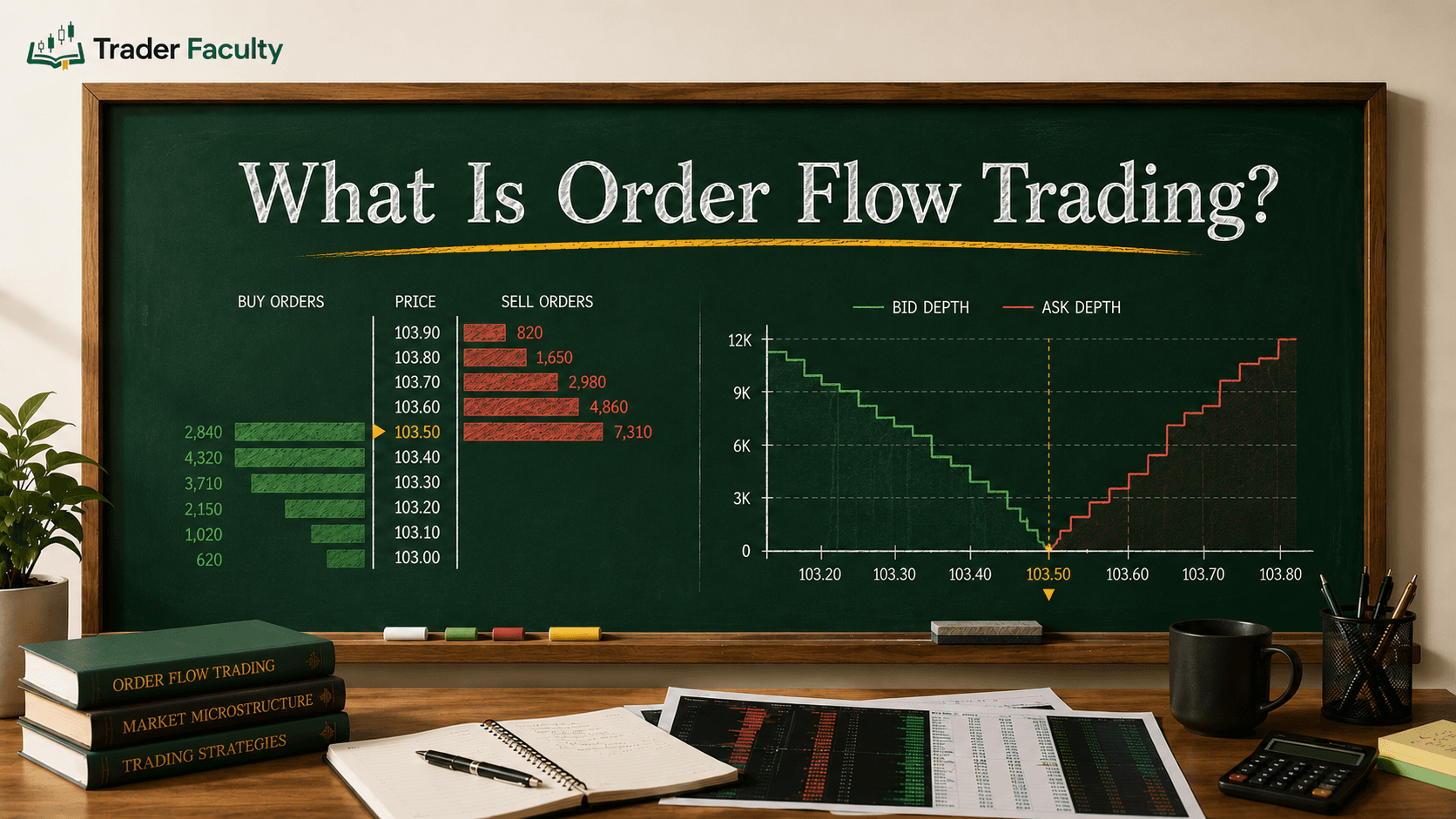
Price slippage occurs because of the physical time lag between your software transmitting an execution command and the backend exchange matching engine pairing it against a live counterparty. To understand what price slippage is, you must look closely at how order books function. Every trade requires a matching buyer and seller at an agreed price tier.
The process is driven entirely by two core market elements:
- High Volatility: During major market shocks, prices change rapidly within milliseconds. The targeted liquidity tier vanishes before your command arrives.
- Low Market Liquidity: If the prevailing market liquidity is low, the order book becomes thin. A larger trade cannot find enough counterparties at the top price tier, forcing the rest of the order to sweep through deeper, worsening price layers to fully execute.
Network infrastructure also plays an undeniable role, since it takes a measurable amount of time for your order packets to travel from your local router to your broker's infrastructure and onward to the exchange, with the exact delay varying depending on your connection quality and your broker's server location.
Market Realities: Slippage in Crypto vs. Forex Markets
Slippage profiles vary heavily by asset class, shifting from deep, fast-moving institutional order books in fiat currencies to automated math-driven liquidity pools in digital assets. In traditional foreign exchange environments, forex slippage typically spikes around massive macroeconomic announcements, such as interest rate decisions.
Even though these global pairs are highly liquid, institutional market makers frequently pull their quotes right before a major news release, causing liquidity to evaporate and leaving wide execution gaps.
When evaluating what is slippage in crypto, the core mechanics shift drastically if you step out of centralized exchanges and into decentralized finance (DeFi). On decentralized platforms, trades match against automated market makers (AMMs) rather than standard order books.
Because these pools price assets based on strict mathematical ratios, larger transactions inherently shift the underlying asset balance. This triggers immediate price impact, creating a form of structural slippage that users must manually configure using tolerance sliders in their Web3 wallets before attempting a transaction.
Strategic Mitigation: Using Your Trading Tools to Fight Slippage
You can minimize execution friction by using advanced platform configurations and shifting from immediate execution orders to price-protected entry types. Protecting your capital requires deploying the right trading tools effectively rather than relying blindly on automated setups.
The most straightforward defensive step is replacing market orders with limit orders. A limit order sets a strict ceiling on what you are willing to pay (or a floor for what you will accept when selling). This completely eliminates price gaps. The trade-off is execution certainty: if the market sprints away from your target tier, your position will simply not fill.
The Stop-Loss Trap and Other Execution Pitfalls
The most common execution mistake beginners make is assuming that standard risk-management boundaries are completely immune to rapid market gaps. Many retail participants fall directly into the stop-loss trap by believing that a stop-loss acts as an absolute price guarantee.
In reality, a standard stop-loss order operates as a conditional trigger. The moment the market touches your specified price boundary, your stop-loss instantly converts into a standard market order. If the market is gapping violently over a weekend open or a breaking news event, your position will execute at the next available market price, which could be significantly worse than your intended exit point.
Another major pitfall is placing large transaction sizes directly into thin, illiquid instruments without checking the order book depth first, causing self-inflicted execution friction.
Conclusion
Managing execution slippage is an essential part of controlling your overall trading frictional costs over the long run. Slippage is not a sign of platform manipulation; it is a natural technical outcome of matching speeds, fluctuating volatility, and order book depth.
By utilizing limit orders, avoiding high-impact data releases, and establishing strict platform tolerance limits, you can protect your account from execution gaps. Shifting your focus toward these structural variables is an essential milestone in setting up your trading setup.
Frequently Asked Questions
What causes price slippage during trade execution?
Price slippage is primarily caused by high market volatility and low liquidity levels. When asset prices move rapidly within milliseconds, or when there are not enough counterparties at your requested price tier, the matching engine is forced to fill your order at the next best available price layers.
Is slippage a loss in trading?
Slippage is not inherently a loss, but negative slippage increases your transaction friction by causing you to buy at a higher price or sell at a lower price. Conversely, positive slippage can result in a minor financial gain by executing your order at a more favorable rate than expected.
What is a normal slippage tolerance?
For highly liquid assets like major forex pairs, traders generally keep their slippage tolerance narrow, while in highly volatile crypto decentralized exchanges (DEXs), traders often allow a wider tolerance range to ensure orders complete successfully during rapid price swings; exact recommended tolerance levels vary by broker and platform, so check your provider's official documentation before setting this parameter.
Why does my stop-loss suffer from slippage?
A standard stop-loss order does not provide a guaranteed execution price. The moment your pre-set trigger price is touched, the stop-loss instantly converts into a regular market order, which is fully exposed to whatever liquidity gaps or price drops are currently occurring in the live order book.
What is the difference between slippage and the spread?
The bid-ask spread is a visible, predictable transaction fee representing the gap between the highest buyer and lowest seller. Slippage, however, is an unpredictable post-click execution variance caused by market movement or order routing delays that occur while your trade is traveling to the exchange.
Keep learning
Setting Up Your Trading Setup
Set up your broker, platform, and demo the right way.
8 lessons quiz
Set up your toolsThe Trader Faculty Team writes and reviews every guide together — pairing hands-on market experience with a curriculum-first approach to trading education. One good syllabus, taught in the order that makes you better.