Portfolio Risk Management: A Complete Guide for Traders
Learn how portfolio risk management works, from key metrics to position sizing and correlation risk. Read the full guide.
By Trader Faculty Team
Direct Answer
Portfolio risk management is the process of identifying, measuring, and controlling downside exposure across all your open trading positions. By looking at correlations between assets, total account leverage, and maximum drawdown limits, traders can help protect capital and keep their accounts steadier across changing market conditions.
In plain terms, it means treating all your open positions as one portfolio instead of separate bets.
Some traders spend years perfecting trade entry signals while overlooking how their positions interact as a single capital pool. When market conditions shift unexpectedly, holding several correlated positions (positions that tend to move together) without clear allocation rules can lead to rapid drawdowns and margin calls.
Understanding risk management principles at the portfolio level can help you keep your account steadier through market volatility and support more consistent long-term results, though no approach removes risk.
Quick Takeaways
- This approach evaluates total account exposure and asset interaction rather than viewing individual trade setups in isolation.
- Quantitative risk metrics like standard deviation, beta, Value at Risk (VaR), and maximum drawdown give you benchmarks for measuring portfolio vulnerability.
- Asset correlations have risen toward 1.0 in some past market panics, so diversification alone may not fully protect an account without leverage controls.
- Position sizing, stop-loss discipline, and routine portfolio rebalancing are common tools for managing risk across market cycles.
What Is Portfolio Risk Management?
If you're searching for the "portfolio risk management meaning," it's the structured approach of managing aggregate capital exposure (the total amount you could lose) across all open positions to help limit large losses.
While individual trade risk management focuses on single-trade parameters—such as stop-loss placement and individual lot sizing—portfolio risk management evaluates how multiple positions behave together. It accounts for cross-asset correlation, cumulative leverage (leverage across all positions combined), total account margin requirements, and maximum acceptable equity drawdown.
The main objective of this practice is capital preservation. By balancing upside return potential against downside account exposure, traders can reduce the chance that a run of consecutive losses in one sector or asset class seriously damages their trading capital. Understanding how broader portfolio management principles apply to active trading helps turn individual setups into a structured investment approach.
Core Metrics to Measure Portfolio Risk
Managing risk across a portfolio requires objective, quantitative tools to measure exposure and market sensitivity. Traders use five primary metrics to evaluate portfolio vulnerability:
1. Standard Deviation and Volatility
Standard deviation measures how much a portfolio’s returns deviate from its average return over a specific period. Higher standard deviation indicates greater price fluctuation, signaling increased portfolio volatility and risk exposure.
2. Beta
Beta measures a portfolio’s price sensitivity relative to a benchmark market index (such as the S&P 500). A beta greater than 1.0 indicates that the portfolio is more volatile than the benchmark market, while a beta less than 1.0 indicates lower relative sensitivity.
3. Maximum Drawdown (MDD)
Maximum drawdown measures the peak-to-trough decline in total portfolio equity before a new peak is reached. Expressed as a percentage, it shows the worst capital loss over a specific period.
Maximum Drawdown = (Peak Value - Trough Value) / Peak Value
4. Value at Risk (VaR)
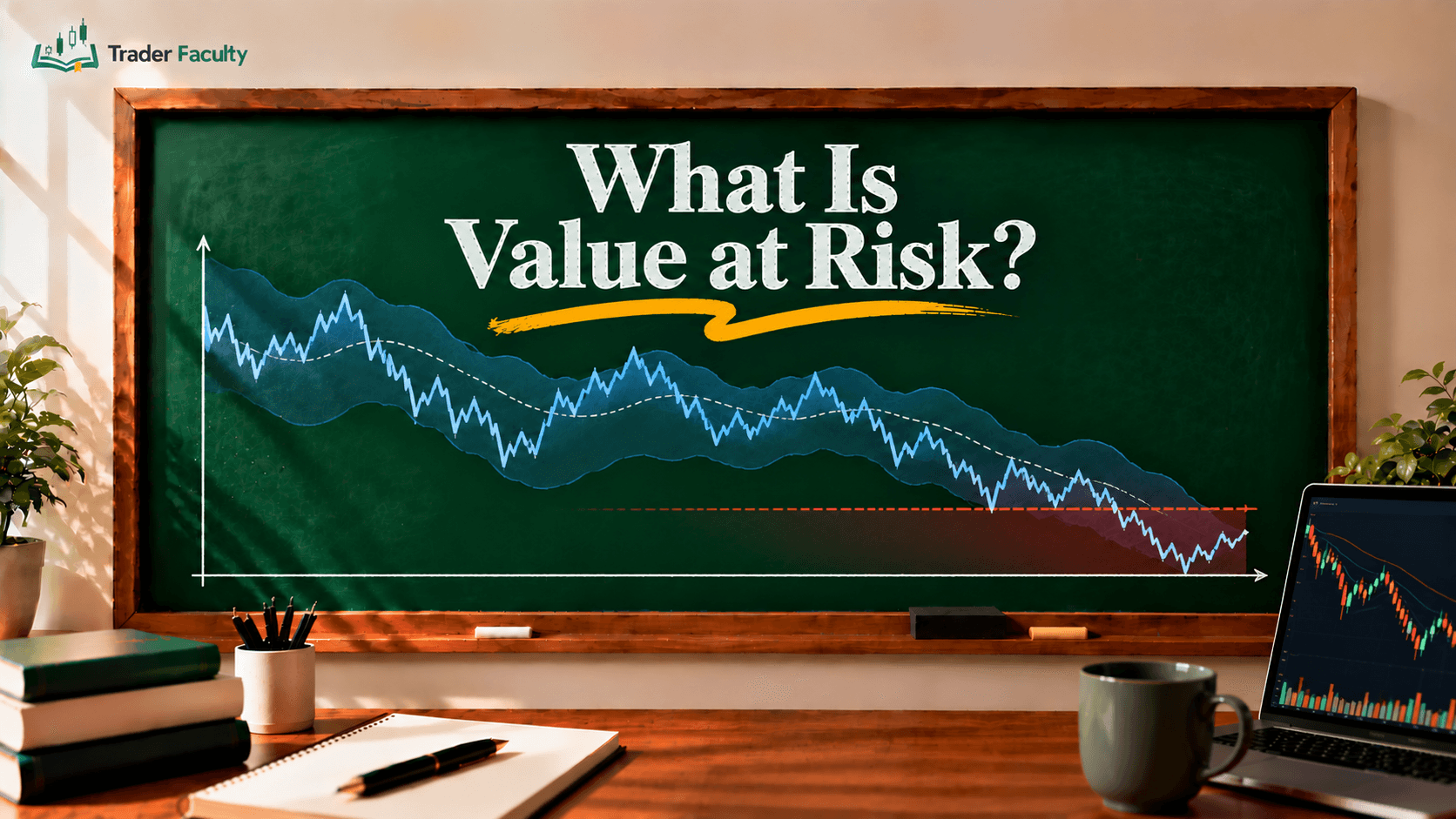
Value at Risk (VaR) provides a statistical estimate of the loss a portfolio could face over a given timeframe at a specific confidence level (such as 95% or 99%). For example, a daily VaR of $2,000 at 95% confidence means there is a 5% chance of losing more than $2,000 in a single trading day under normal market conditions. VaR doesn't tell you how large losses could be beyond that threshold.
5. Sharpe Ratio
The Sharpe ratio evaluates risk-adjusted performance by comparing excess return (return above the risk-free rate, such as short-term Treasury yields) with the portfolio's standard deviation. A higher Sharpe ratio indicates better return per unit of risk taken.
Sharpe Ratio = (Portfolio Return - Risk-Free Rate) / Portfolio Standard Deviation
Key Strategies for Managing Portfolio Risk
Active controls can help limit the damage from unexpected price shocks and prolonged losing streaks.
Strategic Asset Allocation and Diversification
Spreading trading capital across assets that don't move closely together, such as foreign exchange pairs, global stock indices, commodities, and fixed income, can reduce overall portfolio vulnerability. The SEC's investor education site explains that asset allocation means dividing your investments among different assets, and that the right mix depends on your time horizon and risk tolerance.
Position Sizing Frameworks
To keep any single trade from threatening account equity, traders use defined position-sizing rules:
- Fixed-Fractional Sizing: Risking a fixed percentage of total account equity (a common guideline is 1% to 2%) per position.
- Volatility-Adjusted Sizing: Adjusting position sizes using tools like the Average True Range (ATR, a measure of typical daily price movement) so that higher-volatility assets get smaller position sizes.
Here's a simple example. Say you risk 1% of a $20,000 account on each of three long positions (EUR/USD, GBP/USD, and AUD/USD) that all depend on the U.S. dollar weakening. If the dollar rallies, all three may lose at once, so your real exposure could be closer to 3% ($600) on one idea than 1% ($200) on three separate ideas.
Stop-Loss Discipline and Margin Awareness
Stop-loss orders can help limit individual losses before they grow into portfolio-level problems, though price gaps can fill them beyond your price. You also need a clear understanding of margin trading and leverage products to help avoid unwanted margin calls (demands to add funds) during high-volatility events.
Portfolio Rebalancing
Over time, winning positions can grow into an outsized share of your account. Periodic portfolio rebalancing means trimming over-allocated winners and moving funds back toward your planned risk limits.
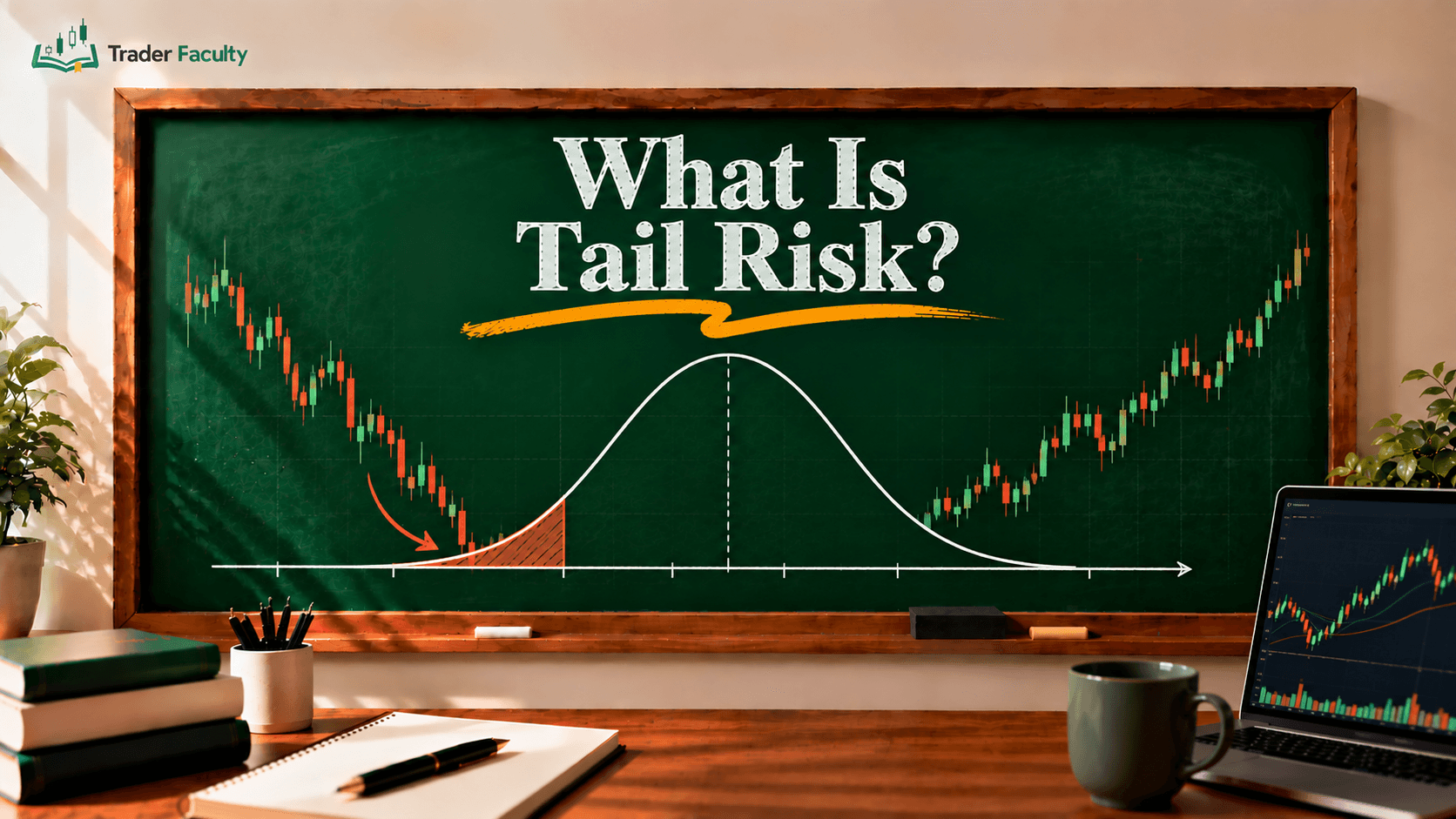
Correlation Breakdown and Tail Risk in Market Panics
A key challenge is correlation breakdown during market panics. Under normal conditions, asset classes like gold, government bonds, equities, and currency pairs may show low or negative correlations.
However, during liquidity crises or systemic shocks (stress that hits the whole financial system), correlations have at times moved toward +1.0. When market participants sell positions across all asset classes at once to raise cash, historically diversified holdings can decline together.
Traders who rely only on basic diversification may be over-exposed during these tail-risk events (rare, large losses). Reducing that risk may involve caps on total account leverage, keeping cash reserves available, and using stop-loss rules across open trades.
Common Portfolio Risk Mistakes
Avoidable structural mistakes can lead to unexpected portfolio losses:
- Over-Concentration in Correlated Assets: Opening several long positions in assets driven by the same macro forces (such as EUR/USD, GBP/USD, and AUD/USD during a U.S. dollar sell-off).
- Equating Position Count with True Diversification: Holding ten stock positions in the same sector without reducing industry-wide risk.
- Ignoring Account-Level Drawdown Limits: Failing to reduce position sizes after consecutive losses, which can lead to accelerating drawdowns.
- Over-Leveraging Account Equity: Using high broker leverage across several open trades without tracking total market exposure.
Conclusion
With portfolio risk management explained above, you can see that it combines quantitative measurement, disciplined position sizing, and awareness of correlation breakdowns. By focusing on overall account risk rather than isolated trade setups, active traders can build steadier results across changing markets.
To keep building your risk toolkit, explore our guide to position sizing for practical allocation techniques. Trading always carries a risk of loss. Risk management controls can help reduce downside exposure but can't eliminate market risk, and past performance doesn't guarantee future results.
Frequently Asked Questions
What is portfolio risk management in active trading?
It's the practice of evaluating and controlling total account exposure across all open positions. Rather than viewing trades in isolation, it accounts for cross-asset correlation, cumulative leverage, and overall equity drawdown limits to help protect capital.
What is the difference between single-trade risk and portfolio risk?
Single-trade risk management focuses on individual position parameters like stop-loss placement and lot size. Portfolio risk management evaluates how multiple positions interact together, managing account-wide leverage, asset correlations, and total drawdown limits.
How do you measure portfolio risk?
Traders measure portfolio risk using quantitative metrics including Standard Deviation (volatility), Beta (market sensitivity), Maximum Drawdown (peak-to-trough decline), Value at Risk (maximum expected loss), and the Sharpe Ratio (risk-adjusted return).
What happens to portfolio diversification during a market crash?
During severe market crises or liquidity shocks, asset correlations have at times moved toward +1.0. That means diverse holdings can drop together, which reduces the protection basic diversification offers unless leverage is tightly controlled.
How does position sizing help control portfolio risk?
Position sizing limits the capital allocated to any single trade setup. Frameworks like fixed-fractional sizing (risking 1–2% of equity per trade) or volatility-adjusted sizing (ATR-based) can help keep losing trades from threatening your total account balance.
Keep learning
Risk & Money Management
One good article won't save your account. A risk framework will.
7 lessons quiz
Start the courseThe Trader Faculty Team writes and reviews every guide together — pairing hands-on market experience with a curriculum-first approach to trading education. One good syllabus, taught in the order that makes you better.