Trading Psychology: The Complete Guide to Market Mindset

Direct Answer
Trading psychology is the collective emotional state, mental discipline, and cognitive framework that dictates how a trader processes risk and executes decisions under market pressure. It involves managing behavioral traps like fear and greed to ensure consistent execution of a trading system.
Trading psychology is the collective emotional state, mental discipline, and cognitive framework that dictates how a trader executes decisions under market pressure. It encompasses the psychological traits, behavioral biases, and emotional triggers that influence whether a trader follows a structured plan or succumbs to impulsive actions.
Most developing traders spend months optimizing technical indicators or hunting for a perfect strategy, only to watch their accounts suffer when real capital is on the line. The reality is that even a highly profitable system will lose money if you lack the mental resilience to execute it consistently without interference.
This guide outlines the core behavioral challenges covered in the Trader Mindset curriculum and maps out a structural path to build professional market discipline.
Quick Takeaways
- Trading psychology, more than any single technical entry, is what dictates long-term performance.
- Emotional execution, such as chasing quick wins or panic-selling out of fear, systematically destroys statistical edges.
- A structured trading plan combined with rigorous data tracking is the only proven method to remove psychological blind spots.
- True professional competence requires recognizing cognitive biases before they manifest as costly mechanical errors.
What Is Trading Psychology?
Trading psychology refers to the specific mental and emotional states that actively govern a person's execution and decision-making while navigating the financial markets. Unlike traditional academic psychology, it functions as a highly practical study of behavioral economics under real-time financial risk. It looks closely at how human survival instincts interact with a highly volatile, uncertain, and unfeeling environment.
At its core, your mindset functions on three distinct layers: cognitive (how you process data), behavioral (how you execute actions), and affective (how emotions feel in the moment). The primary challenge is that the natural human brain is wired to seek comfort and avoid pain.
In trading, this survival mechanism completely backfires, causing retail traders to routinely cut winning trades short out of a fear of losing gains, or let losing trades run out of hope that the market will reverse. Developing a professional mindset means transitioning from an emotional, reactive state to an objective, rules-based operation.
The Core Sub-Areas of Trader Mindset and Psychology
To master your trading psychology, you must break down your behavior into distinct, measurable disciplines. The Trader Mindset curriculum breaks this down into several key components that address specific execution failure modes.
Managing Fear and FOMO (Fear of Missing Out)
When you watch a market asset break out sharply without you, a powerful trading psychology reaction takes over. The fear of missing out in trading triggers an impulsive urge to chase the move, forcing you to enter at a terrible price right as the smart money begins taking profits.
Overcoming this instinct requires learning to view missed opportunities simply as data points rather than lost money.
Overcoming Overtrading and Maintaining Balance
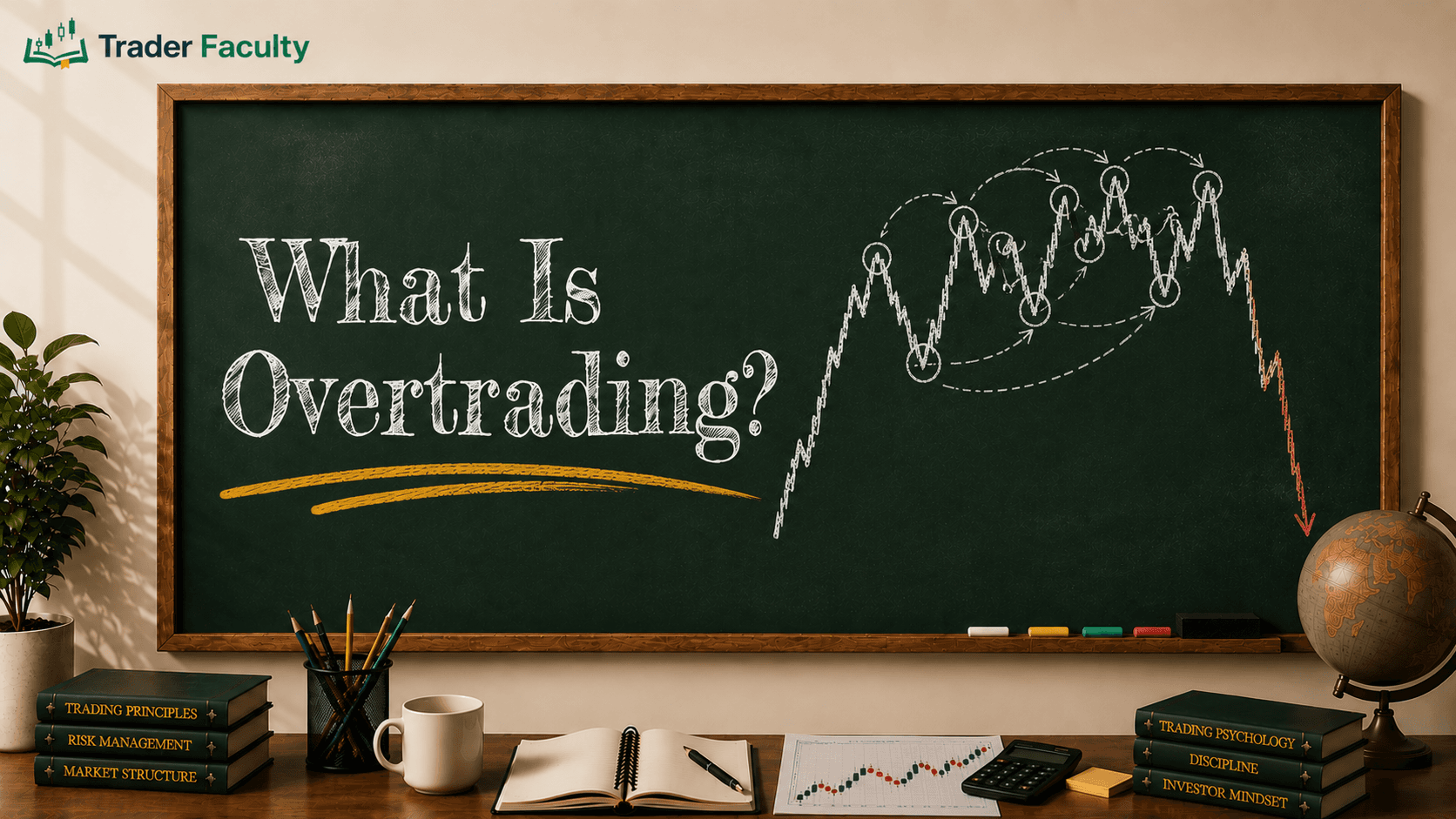
A lack of structural discipline frequently manifests as a severe over-allocation of capital or trade frequency. Engaging in overtrading means stepping outside your defined parameters due to boredom, impatience, or greed.
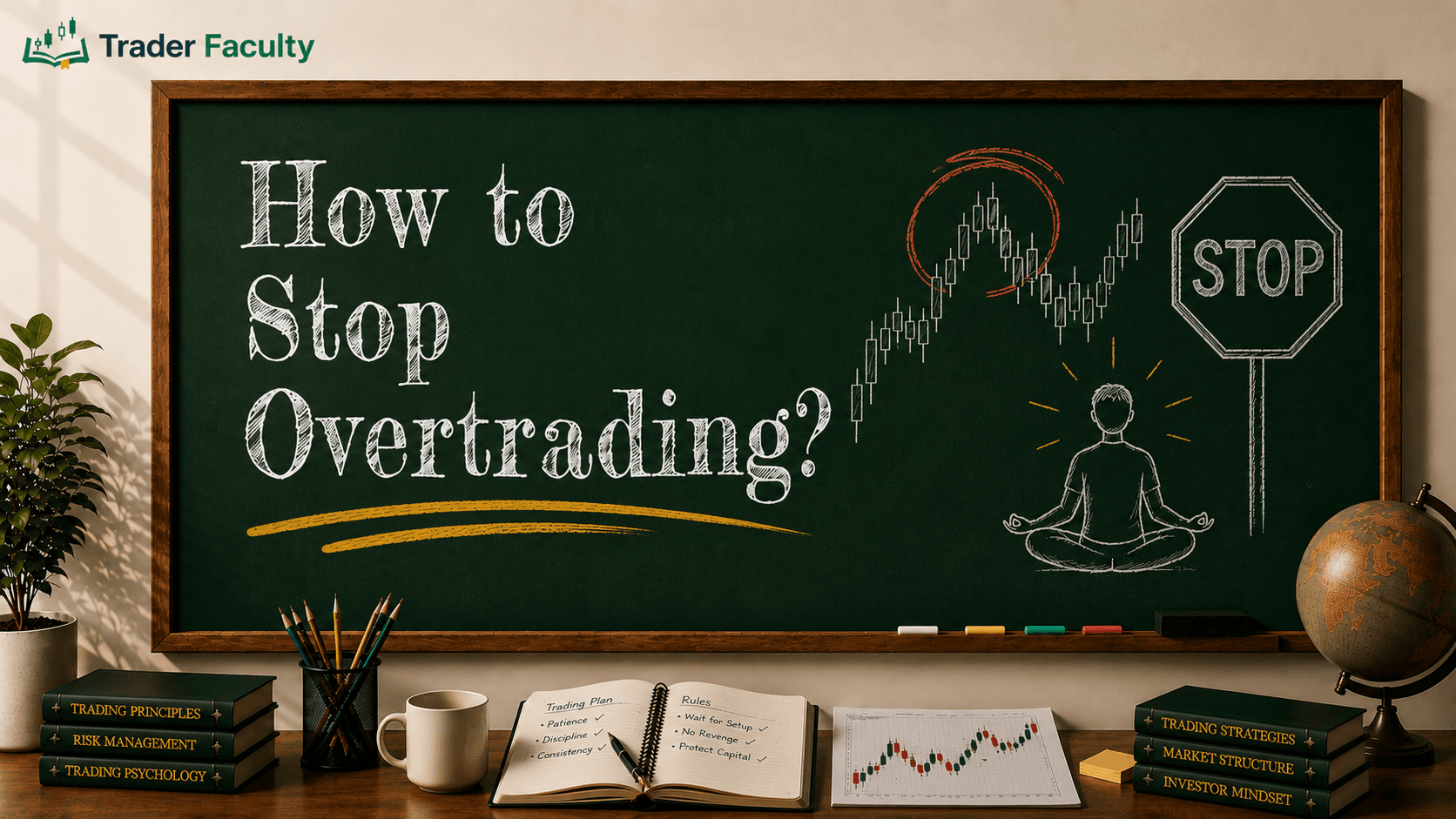
This is one of the clearest examples of trading psychology in action: true professional consistency requires learning how to stop overtrading by viewing patience as an active, profitable strategy rather than an absence of action.
Emotional Control and Preventing Revenge Trading
The moments immediately following a major loss are the most volatile for a trader’s capital. Slipping into revenge trading occurs when you try to aggressively win back lost money by immediately forcing an oversized, undisciplined position.
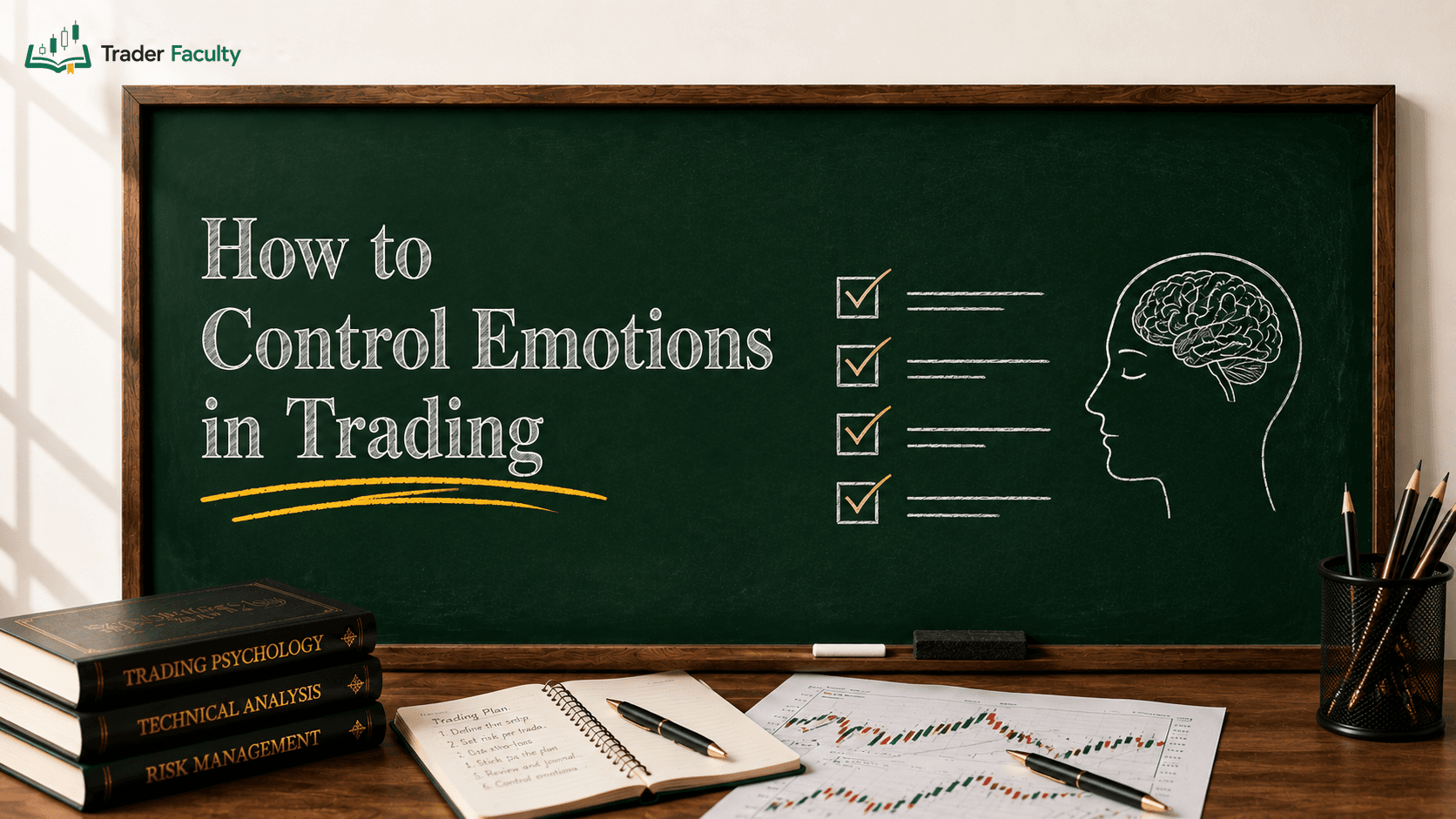
Knowing how to control emotions in trading is not about eliminating your feelings entirely—it is about building structural buffers that prevent those intense emotions from touching your broker terminal.
Identifying Cognitive Biases
Your brain naturally relies on mental shortcuts to save energy, but these shortcuts create major blind spots when managing risk. Encountering a bias in trading means you are systematically misinterpreting information—such as only looking for news that confirms your current trade while completely ignoring warning signs. Recognizing these mental traps allows you to step back and analyze chart data objectively.
Leveraging Structural Tools for Mindset Development
You cannot fix a trading psychology issue that you do not actively track with real data. Maintaining a trading journal serves as your ultimate diagnostic mirror, showing you exactly when and why your emotions overrode your system rules. Reviewing a detailed log of your past decisions helps convert abstract mental concepts into concrete, correctable trading patterns.
How These Psychology Topics Connect: The Learning Order
Building a resilient trading psychology is a progressive, structural process that follows a very specific curriculum path. You cannot effectively fix deep-seated cognitive blind spots if your daily capital is actively leaking from raw emotional reactions.
The learning order begins by installing immediate, protective boundaries around your behavior. First, you must confront and patch active execution leaks like chasing breakout candles and entering erratic, oversized positions.
Once those raw, emotional errors are managed, you can shift your focus to intermediate behavioral adjustments, discovering how to halt the cycle of forcing reckless trades immediately after experiencing a loss.
With baseline behavioral control established, you can safely look inward to identify hidden cognitive biases that secretly distort your technical analysis.
Finally, you tie the entire system together using a structural tracking routine. Your daily journal acts as the ultimate link, transforming abstract psychological advice into cold, hard metrics that prove whether your discipline is genuinely improving over time.
Where to Start: Building Your Psychological Foundation
If you want to transition from an emotional retail participant to a disciplined, consistent market operator, you must stop treating trading psychology as vague, motivational self-help advice. It requires implementing hard, concrete constraints.
To establish a solid foundation today, focus entirely on these primary steps:
- Accept the statistical reality: Understand that individual trade outcomes carry a high degree of randomness, but a well-tested strategy's long-term edge tends to hold true over a large enough sample of trades.
- Standardize your pre-trade routine: Never open your execution terminal until you have clearly documented your precise invalidation points and position sizes on paper.
- Automate your risk control: Use bracket orders to ensure your protective stops and profit targets are sent to the exchange at the exact same millisecond your trade is executed. Never move them manually mid-trade.
Conclusion
Mastering trading psychology is the ultimate differentiating factor that separates struggling retail accounts from professional operators. While tools, indicators, and macro data provide the necessary context for finding market opportunities, your trading psychology remains the final gatekeeper of your capital.
By structurally working through the Trader Mindset curriculum, you will learn to dismantle destructive behavioral patterns and transform execution discipline into a permanent competitive advantage.
Frequently Asked Questions
What is trading psychology and why does it matter?
Trading psychology represents the mental and emotional states that dictate your decision-making in live markets. It is critical because even a highly profitable technical strategy with an excellent statistical edge will fail if a trader lacks the psychological resilience and discipline to execute its rules consistently.
How do I control my emotions while actively trading?
You do not control emotions by ignoring them; you control them by building structural boundaries that prevent feelings from altering your execution. Implementing hard automation, using strict bracket orders, and locking platform-level daily loss limits prevent emotional states from hijacking your terminal.
What causes overtrading and how can I stop it?
Overtrading is usually caused by impatience, boredom, or greed when a trader steps outside their defined strategy parameters to chase market noise. You can stop it by adopting strict mechanical rules, maintaining a pre-trade checklist, and viewing patient inaction as an active, professional strategy.
What is revenge trading?
Revenge trading is an impulsive behavior where a trader attempts to aggressively win back lost capital by immediately entering an oversized, unplanned position after a losing trade. This destructive cycle bypasses risk parameters and frequently leads to severe, rapid account drawdown.
How does a trading journal help your mindset?
A trading journal serves as a diagnostic data log that exposes systematic behavioral errors. By tracking metrics alongside the emotional context of every trade, it strips away subjective memory biases and highlights the exact psychological triggers causing execution errors.
The Trader Faculty Team writes and reviews every guide together — pairing hands-on market experience with a curriculum-first approach to trading education. One good syllabus, taught in the order that makes you better.